








Need help?
Rose Waters Frequently Asked Questions
Rose Waters
What makes Alteya Organics Rose Water different from others?
Alteya Organics Rose Water is made in Bulgaria’s Rose Valley from freshly hand-picked organic roses. Unlike many rose waters that are by-products of rose oil distillation, ours is distilled specifically to produce rose water, helping retain a fuller aromatic profile and more of the rose’s naturally occurring components. The result is a 100% pure, USDA-certified rose water with no added alcohol, preservatives, or synthetic fragrance.
Can rose water replace toner in my skincare routine?
Absolutely. Rose water acts as a natural toner, balancing pH and prepping the skin for serums or moisturizers without drying it out.
What’s the difference between rose water and rose hydrosol?
Rose hydrosol is the pure aromatic water naturally produced during the steam distillation of rose blooms. True rose water is essentially the same when it is obtained through this process. However, many commercial “rose waters” are not true hydrosols - they are made by adding fragrance or rose extract to water, rather than through distillation.
Can I use rose water on my hair?
Yes. Rose water can be used for both scalp care and styling. Applied to the scalp, it helps refresh and support a balanced, hydrated feel. On the lengths of the hair, it helps enhance natural shine and smooth the appearance of frizz and flyaways. Spritz directly onto the scalp or hair, or mix into your conditioner for a lightweight hydration boost and a delicate floral scent.
Is rose water suitable for sensitive skin?
Yes. Alteya’s rose water is alcohol-free and gentle, making it suitable for sensitive, dry, or easily irritated skin. It is often chosen by those with reactive or eczema-prone skin, as it helps soothe and refresh while supporting a balanced, hydrated feel.
Can a rose water mist help calm irritated or sensitive skin?
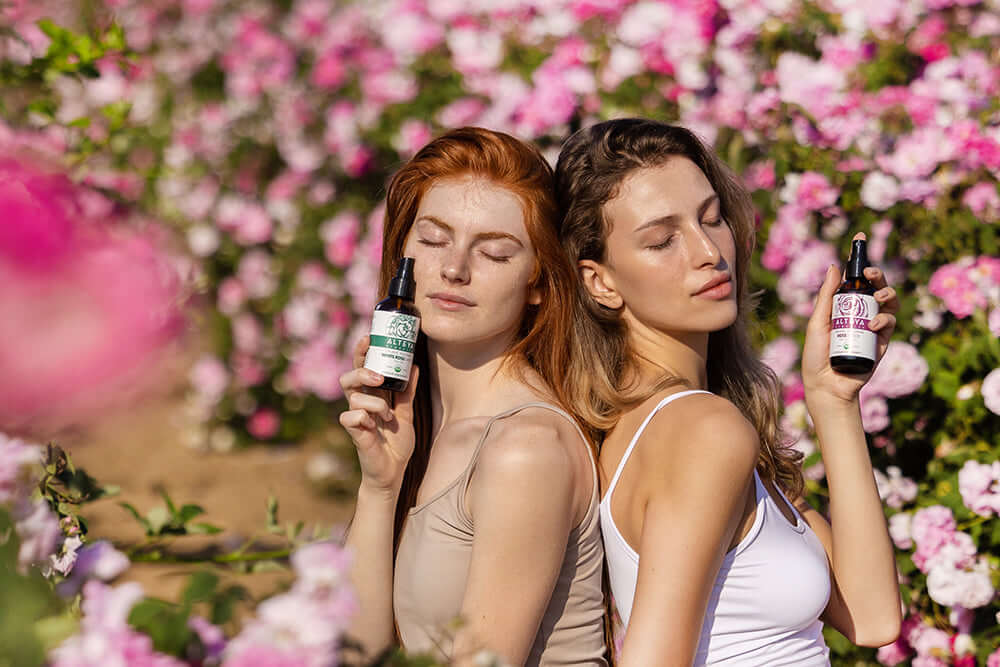
Yes, floral waters like rose hydrosol can help reduce redness and calm skin that feels irritated or stressed. Our Bulgarian Organic Rose Water Glass Spray is known for its calming and balancing properties, making it suitable for sensitive skin.
How should I store rose water?
Keep it in a cool, dark place away from direct sunlight. For maximum freshness, store in the refrigerator - especially during summer.
Can rose water be used with clay masks or scrubs?
Yes, it’s perfect for mixing with facial clays, scrubs, or powders to create soothing, aromatic DIY masks.
What makes rose water suitable for sensitive skin?
Pure rose water contains gentle botanical compounds that can calm redness and irritation. Our Organic Bulgarian Rose Water is made from organic roses and provides soothing hydration that’s gentle enough for sensitive or reactive skin.
Does rose water help with sunburn or irritation?
Its naturally soothing and cooling properties make rose water ideal for calming sunburned or irritated skin, including redness after shaving and post-shave irritation.
What are the benefits of rose water for skin?
helps hydrate and refresh the skin while supporting its natural pH balance. It soothes irritation, reduces the appearance of redness, and enhances overall radiance. Gentle and versatile, it works well as a daily natural toner or facial mist for all skin types, including sensitive skin.
Can I use rose water every day?
Yes, rose water is gentle enough for everyday use morning and night to refresh and tone the skin.
Is rose water good for acne-prone skin?
Yes. Rose water helps refresh the skin and support a balanced, less oily appearance, making it suitable for acne-prone skin. It also has gentle purifying properties and can help reduce the appearance of breakouts while keeping the skin calm and hydrated.
Can rose water be used as a makeup remover?
Rose water can gently remove light makeup and residue, especially when combined with a few drops of natural oil.
How is Alteya Organics Rose Water made?
Alteya Organics Rose Water is steam-distilled from freshly hand-picked organic roses grown in our own certified organic fields in Bulgaria’s Rose Valley. From cultivation and harvest to distillation and final bottling, the entire process is carried out in-house, ensuring full control over quality at every step.
Why choose certified organic rose water for skincare?
Certified organic rose water is made from roses grown without synthetic pesticides or artificial fertilizers and verified by an independent certification body. This ensures stricter agricultural standards and full traceability from the field to the final distillate.
For skincare, this matters because rose water is applied directly to the face. Choosing a certified organic option provides added assurance about the purity of the raw material and the integrity of the production process.
What is the difference between Rosa Damascena, Rosa Alba, and Rosa Centifolia rose water?
Rose waters differ depending on the rose species used during distillation.
Rosa Damascena rose water is known for its rich, classic floral aroma and is widely used in skincare. Rosa Alba rose water typically has a lighter, softer scent profile. Rosa Centifolia rose water has a sweeter and slightly fruitier aromatic character and is often associated with perfumery traditions.
Each type contains naturally occurring aromatic compounds unique to the specific rose variety, which influence both scent and cosmetic characteristics.
What is the difference between rose hydrosol and rose hydrolat?
There is no technical difference between rose hydrosol and rose hydrolat. Both terms describe the aromatic water obtained through the steam distillation of rose petals.
The terminology varies by region and industry preference, but the substance itself is the same a water-based distillate containing naturally occurring, water-soluble aromatic compounds from the rose.
Some producers obtain rose water as a co-product of essential oil distillation, while others distill specifically to produce rose water. The quality and characteristics of the final product depend on the distillation approach and the raw material used.


