








Need help?
Rose Oil Frequently Asked Questions
Rose Oil
What is the difference between rose oil and rose absolute?
Rose oil (also known as rose otto) and rose absolute differ primarily in their extraction methods and resulting composition.
Rose oil is obtained through steam distillation of fresh Rosa Damascena blossoms. It is a clear to pale-yellow liquid with a refined floral aroma and a chemical profile shaped by the distillation process.
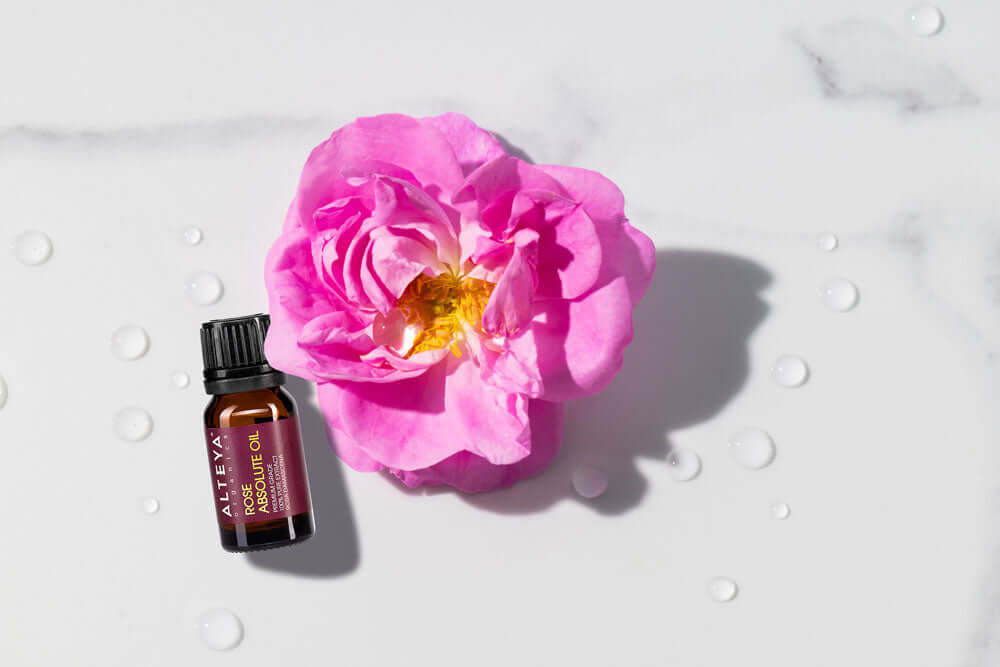
Rose absolute is produced through solvent extraction. The process first creates a rose concrete, from which the absolute is separated. The result is a more viscous liquid with a concentrated scent profile.
Because of these different extraction methods, rose oil and rose absolute have distinct compositions, textures, and aromatic characteristics.
What is the difference between conventional rose oil and certified organic rose oil?
The main difference lies in cultivation standards. Certified organic rose oil is produced from roses grown without synthetic pesticides, herbicides, or artificial fertilizers, according to recognized organic certification guidelines.
Conventional rose oil may come from roses cultivated using standard agricultural practices, which can include synthetic inputs. Organic certification also requires traceability and compliance with strict production and processing standards. For skincare applications, certified organic rose oil offers additional assurance regarding farming methods and ingredient integrity.
Why does rose oil solidify or crystallize?
Rose oil naturally solidifies or crystallizes at cooler temperatures. This occurs because some of its natural aromatic components have higher melting points and become solid when exposed to lower temperatures.
Crystallization is a normal physical characteristic of pure rose oil and does not indicate spoilage or reduced quality. When returned to room temperature, the oil gradually liquefies and regains its original consistency without affecting its properties.
How do you use rose oil when it has solidified or crystallized?
If rose oil has solidified, it can be gently warmed to return it to liquid form. Placing the closed bottle in your hands or in a container of lukewarm (not hot) water allows it to melt naturally.
Once liquefied, the oil can be used as usual. Repeated solidifying and liquefying does not damage pure rose oil, as this is a natural characteristic of its composition.
Why is Bulgarian rose oil considered one of the highest quality in the world?
Bulgarian rose oil, produced from Rosa Damascena in the Rose Valley, is known for its exceptional purity and aromatic balance. The region’s unique climate and soil create ideal conditions for cultivating roses with a refined and complex profile. Combined with long-standing distillation traditions, this results in consistent quality and global recognition.
What are the main benefits of Rose Oil for skin?
Rose oil helps nourish and soften the skin, supporting a smooth, radiant look. It helps maintain moisture, improves the appearance of uneven tone, and enhances natural glow. Rich in antioxidants, it also helps protect the skin from everyday environmental stressors.
How is Bulgarian Rose Oil different from other rose oils?
Bulgarian rose oil is distinguished by its rich, multi-layered scent and naturally balanced composition. Compared to other rose oils, it offers greater depth and consistency, making it especially valued in premium skincare and fine perfumery.
How can I use Rose Oil on my face?
Dilute 1–2 drops of rose oil in a carrier oil such as jojoba or almond, then apply to clean, slightly damp skin. Use as the final step in your skincare routine, morning or evening, to help support moisture retention and leave the skin feeling soft, smooth, and nourished.
Can Rose Oil help with scars and pigmentation?
Rose oil is valued for its ability to visibly improve skin tone and texture, helping reduce the appearance of uneven areas and post-blemish marks over time. Its naturally occurring vitamins and antioxidants support the skin’s renewal processes, contributing to a smoother, more even, and radiant-looking complexion.
What are the aromatherapy benefits of Rose Oil?
Rose oil is valued in aromatherapy for its calming and emotionally balancing aroma. Its rich floral scent helps ease tension, promote relaxation, and support a sense of well-being. Often associated with warmth and sensuality, it is also used to create a more intimate, comforting atmosphere and enhance moments of self-care and connection.
Can I use Rose Oil in hair care?
Yes. Rose oil can be used in hair care when diluted in a carrier oil or added to your conditioner. It helps nourish the scalp, support softer, smoother-looking hair, and adds a natural floral scent to your routine.
How should Rose Oil be stored?
Store rose oil tightly closed in a cool, dark place, away from direct light and heat. Due to its natural composition, authentic rose oil may solidify at lower temperatures - this is normal. Gently warm the bottle in your hands to restore its liquid form.
Can Alteya Organics essential or botanical oils be used internally?
Alteya Organics essential and botanical oils are intended for external use only. They should be properly diluted before topical application and are not intended for internal consumption.


