



Skip to content
USDA Organic NATRUE EU Organic Alteya Distillery

Cart

Your cart is empty

how to use organic face oils in your skincare routine desktop banner

How to Use Organic Face Oils in Your Skincare Routine

The fear of putting oil on your face is understandable. Decades of oil-free marketing convinced an entire generation that facial oils cause breakouts. The reality is more specific: it depends entirely on the oil.

Comedogenicity — the tendency of an ingredient to block pores — varies significantly between botanical oils. Cold-pressed rosehip seed oil has a comedogenic rating of 1 (on a scale of 0–5), making it one of the least pore-blocking oils available. Castor oil sits at 1 as well. Jojoba, used in Alteya's Rose Otto Face Serum alongside sea buckthorn, has a rating of 2 and is structurally similar to the skin's own sebum, which means it is recognised by the skin rather than treated as a foreign substance.

Oils that do block pores — coconut oil (4), wheat germ oil (5) — are not in Alteya's face oil range for exactly this reason. Certified organic face oils chosen for their low comedogenic profile work with the skin's natural lipid system, not against it.

Which Organic Face Oil Is Right for Your Skin? A Quick Reference

Comparison of rosehip seed oil, castor oil, black seed oil and Rose Otto Face Serum by INCI name, comedogenic rating, recommended skin types, key properties and application instructions.

Oil

INCI Name

Comedogenic Rating

Best For

Key Properties

How to Use

Rosehip Seed Oil

INCI Name

Rosa Canina Fruit Oil

Comedogenic Rating

1

Best For

Dry, mature, uneven tone, dark spots

Key Properties

Naturally high in linoleic acid and beta-carotene, helps skin look smoother and more even

How to Use

3–4 drops, evening routine after serum

Castor Oil

INCI Name

Ricinus Communis Seed Oil

Comedogenic Rating

1

Best For

Dry skin, lashes, brows, cuticles

Key Properties

Thick, occlusive; rich in ricinoleic acid; seals in moisture effectively

How to Use

1–2 drops mixed with a lighter oil or applied to targeted areas

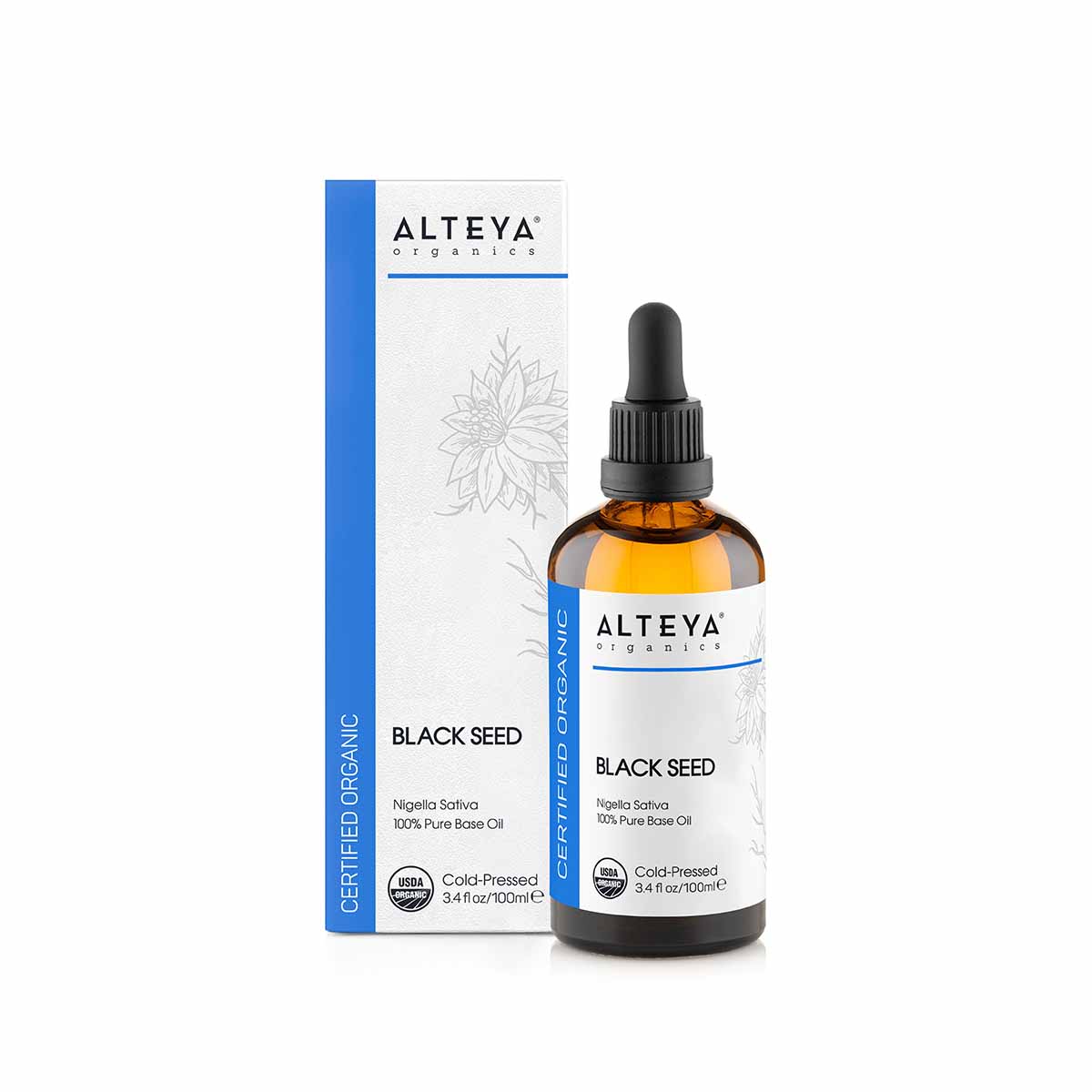
Black Seed Oil (Nigella sativa)

INCI Name

Nigella Sativa Seed Oil

Comedogenic Rating

2

Best For

Sensitive skin or skin that feels easily irritated

Key Properties

Extra-virgin, high thymoquinone content; traditionally valued for soothing properties

How to Use

2–3 drops, morning or evening; patch test first

Rose Otto Face Serum

INCI Name

Rosa Damascena Flower Oil, Simmondsia Chinensis, Hippophae Rhamnoides

Comedogenic Rating

1–2

Best For

All skin types; especially dry and mature

Key Properties

Multi-oil blend: Bulgarian Rose Otto + jojoba + sea buckthorn; USDA Certified Organic

How to Use

3–5 drops, morning or evening on damp skin

Face Oil vs Moisturiser: Do You Need Both?

A face oil and a moisturiser do different things, and that is why they work better together than as substitutes for each other.

A moisturiser — particularly a water-based cream or lotion — delivers humectants: ingredients like hyaluronic acid or glycerin that draw water into the skin and hold it there. What most moisturisers lack is an effective occlusive barrier to prevent that water from evaporating. This is where a face oil steps in.

Botanical oils are lipophilic — they are drawn to the skin's lipid layer and form a permeable barrier that slows water loss without fully blocking oxygen exchange. Applied over a moisturiser (or a damp face after a flower water toner), a face oil locks in the hydration delivered by the layers beneath it. The result is better moisture retention over several hours compared to using either product alone.

The exception is very dry or mature skin during winter months, where a richer facial oil like Rosehip Seed Oil or the Rose Otto Serum can sometimes replace the moisturiser entirely in an evening routine — acting as both treatment and barrier in one step.

How to Layer Face Oils in Your Morning and Evening Routine 

The most common mistake with face oils is applying them too early in a routine. Oils are occlusive — meaning they slow the absorption of water-based products applied on top. The correct sequence is thinnest to thickest: water-based products first, oil-based products last.

 Morning Routine 

Remove overnight products and refresh the skin.

Evening Routine 

Warming the oil between your palms for 5–8 seconds before application makes a noticeable difference to absorption. Cold oil applied directly to the face tends to sit on the surface; warmed oil presses into the skin more evenly and absorbs within 60–90 seconds rather than leaving a greasy residue for several minutes.

Rosehip Seed Oil: The Organic Choice for Uneven Tone and Texture

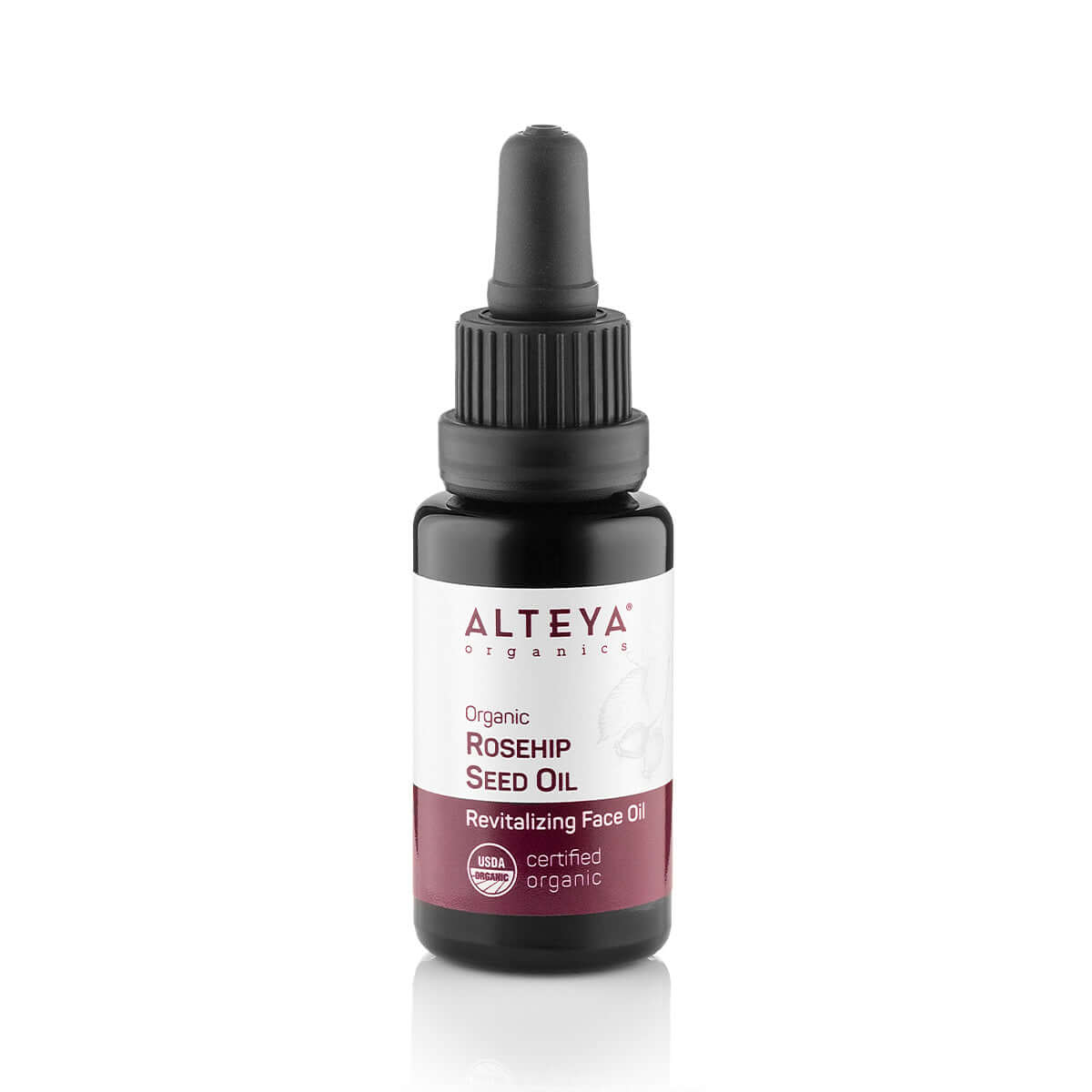
Cold-pressed rosehip seed oil — extracted from Rosa canina hips — is one of the most widely used carrier oils in natural skincare. It is naturally rich in linoleic acid (omega-6), a fatty acid naturally found in the skin's own surface lipids. It also contains a meaningful concentration of beta-carotene, the precursor to vitamin A, which helps skin look smoother and more even-toned over time.

Alteya's Rosehip Seed Oil is sourced from a specialist Turkish producer — Turkey is one of the recognised quality-producing countries for rosehip seed oil — and bottled at Alteya's Bulgarian base in amber glass with a pipette for precise application. Amber glass protects the oil's linoleic acid content from UV degradation, which matters because rosehip oil oxidises faster than more saturated oils.

Store it in a cool, dark place or in the fridge. If the oil develops a noticeably sharp or rancid smell, it has oxidised and should be replaced. Fresh rosehip oil has a mild, slightly earthy scent — pleasant but distinct.

Black Seed Oil (Nigella Sativa): The Extra-Virgin Option for Sensitive Skin

Black seed oil — pressed from Nigella sativa seeds — is one of the most traditionally used botanical oils in the Middle East and North Africa, valued for centuries for its soothing and skin-calming properties. Its primary characteristic compound is thymoquinone.

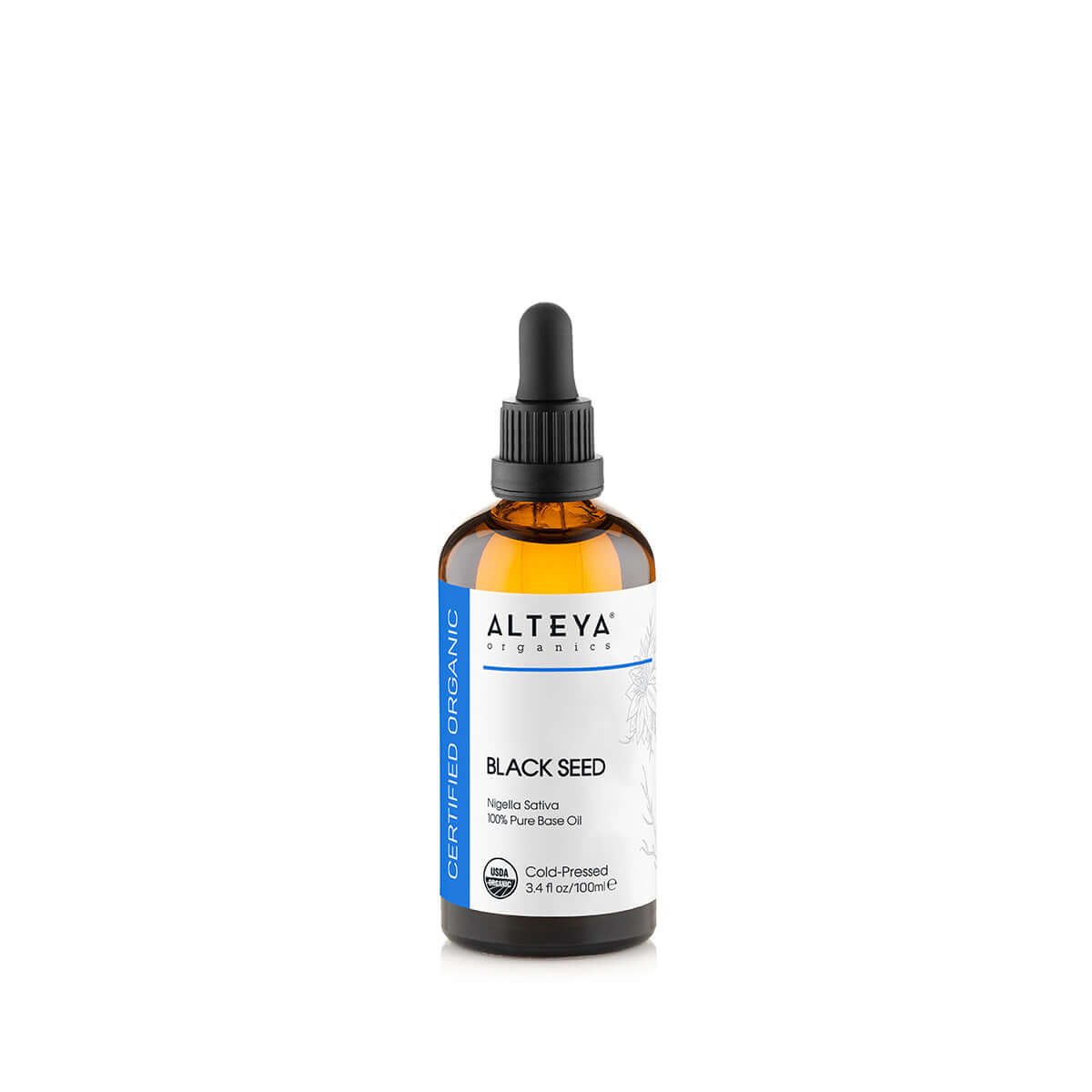
Alteya's Black Seed Oil is extra-virgin, cold-pressed, and sourced from a Turkish producer — Turkey is a well-established producer of Nigella sativa. It has a distinctly pungent, spiced aroma that some people find strong; if you are applying it to your face, a patch test and a small quantity (2–3 drops) is the sensible starting point. It can also be diluted with rosehip oil or the Rose Otto Serum if you want the benefits with a milder sensory experience.

For those with consistently reactive, sensitised, or redness-prone skin who have not responded well to other oils, black seed oil is worth trying — particularly in an evening routine where the scent dissipates overnight.

Castor Oil: Not Just for Hair — How to Use It on the Face

Castor oil is a long-standing favourite for hair, brows, and lashes, but it earns its place in a facial routine too — specifically as a sealing and occlusive oil for very dry or dehydrated skin. Its main fatty acid, ricinoleic acid, is not found in significant quantities in most other botanical oils. This gives castor oil an unusually thick texture and strong occlusive properties — it locks in moisture more effectively than lighter oils.

Because of its thickness, castor oil is rarely used alone on the face. The most practical approach is to mix 1 drop of castor oil with 3–4 drops of rosehip or the Rose Otto Serum. This blend delivers the sealing effect of castor oil with a lighter, more spreadable texture. Applied as the final step of an evening routine, this combination suits anyone dealing with severely dry cheeks, tight skin after cleansing, or flaking around the nose and chin in cold weather.

Castor oil is also useful applied undiluted to brows and lashes — a single drop on a clean spoolie, brushed through brows before bed, is a simple addition that does not require mixing.

Rose Otto Face Serum: When You Want One Certified Organic Oil That Does Everything

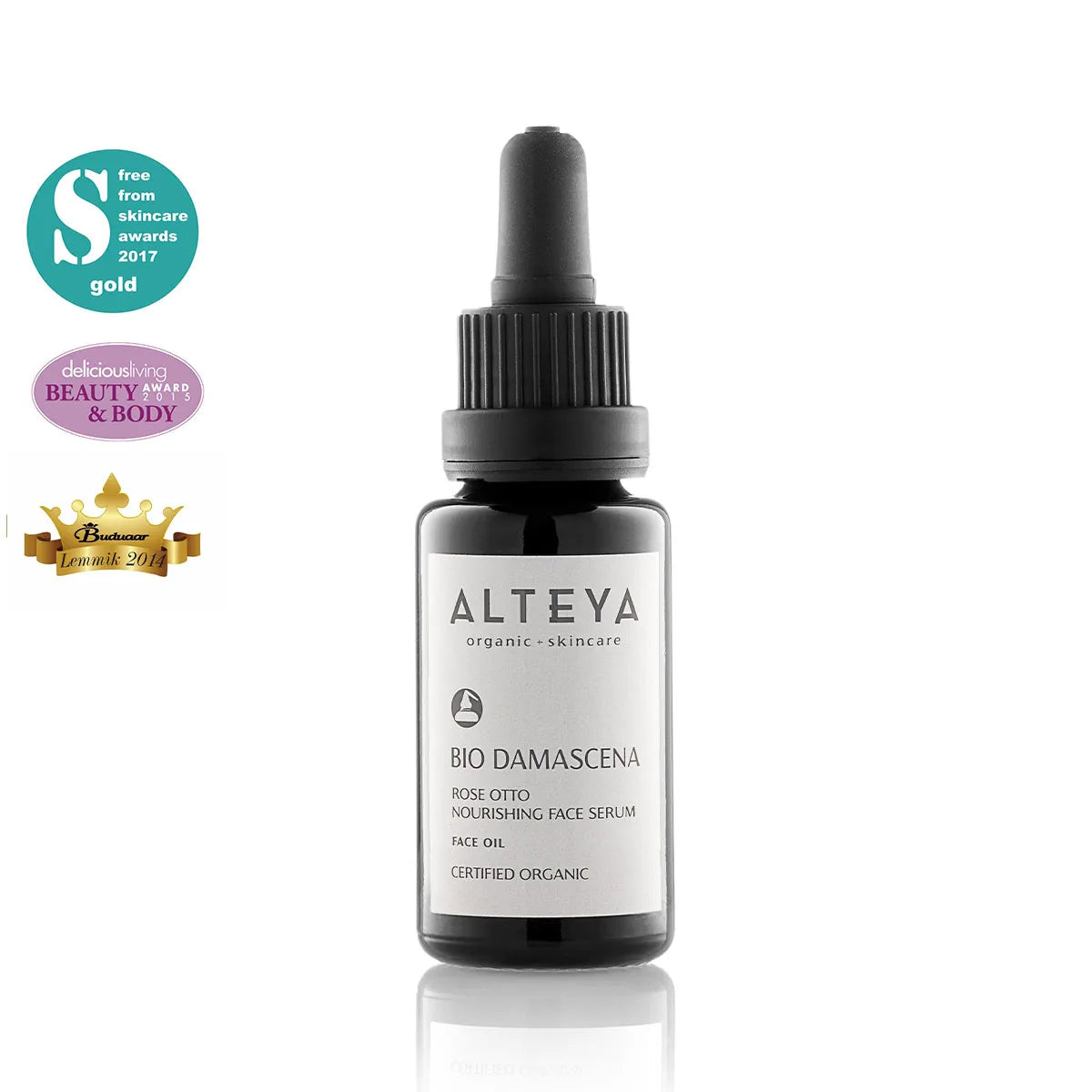
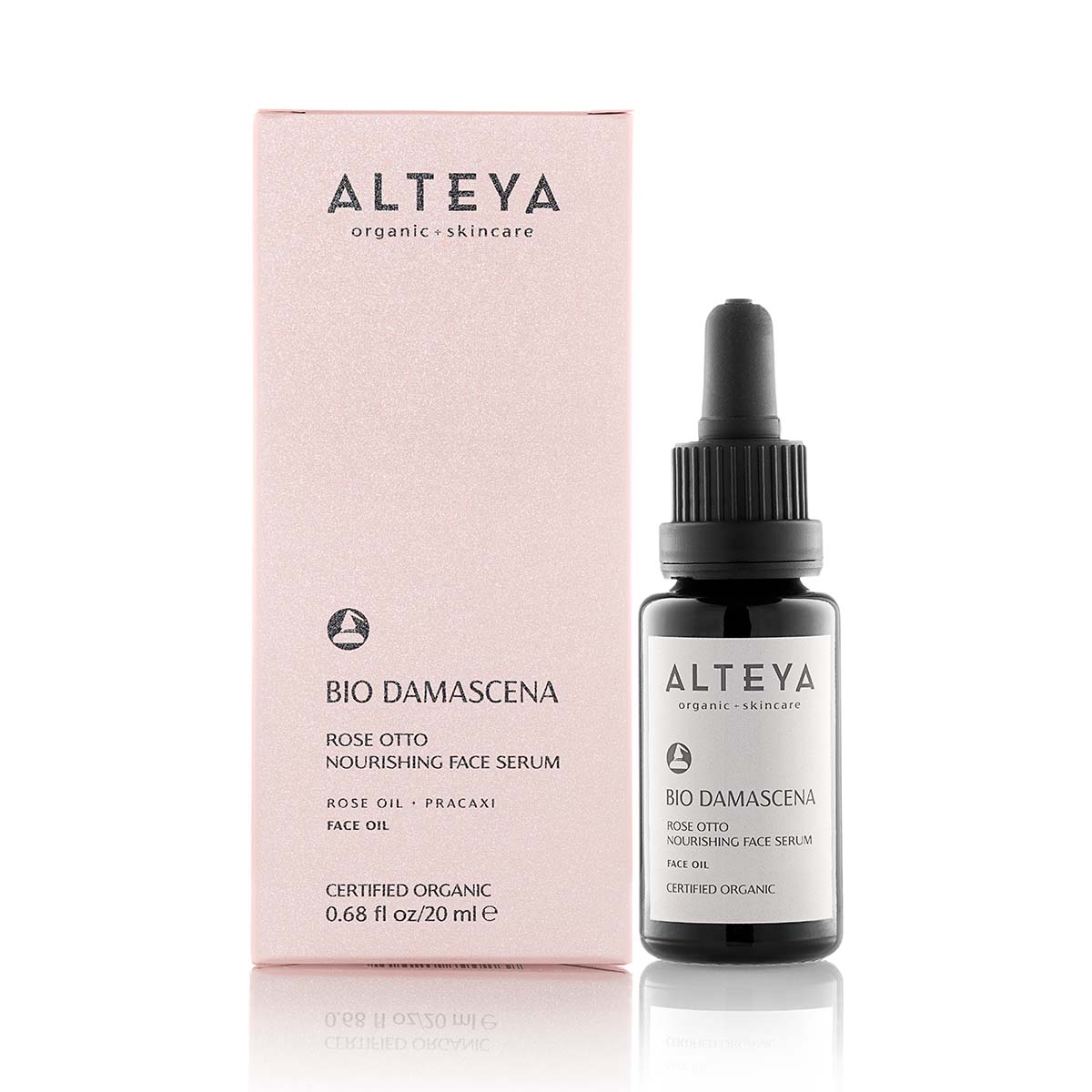
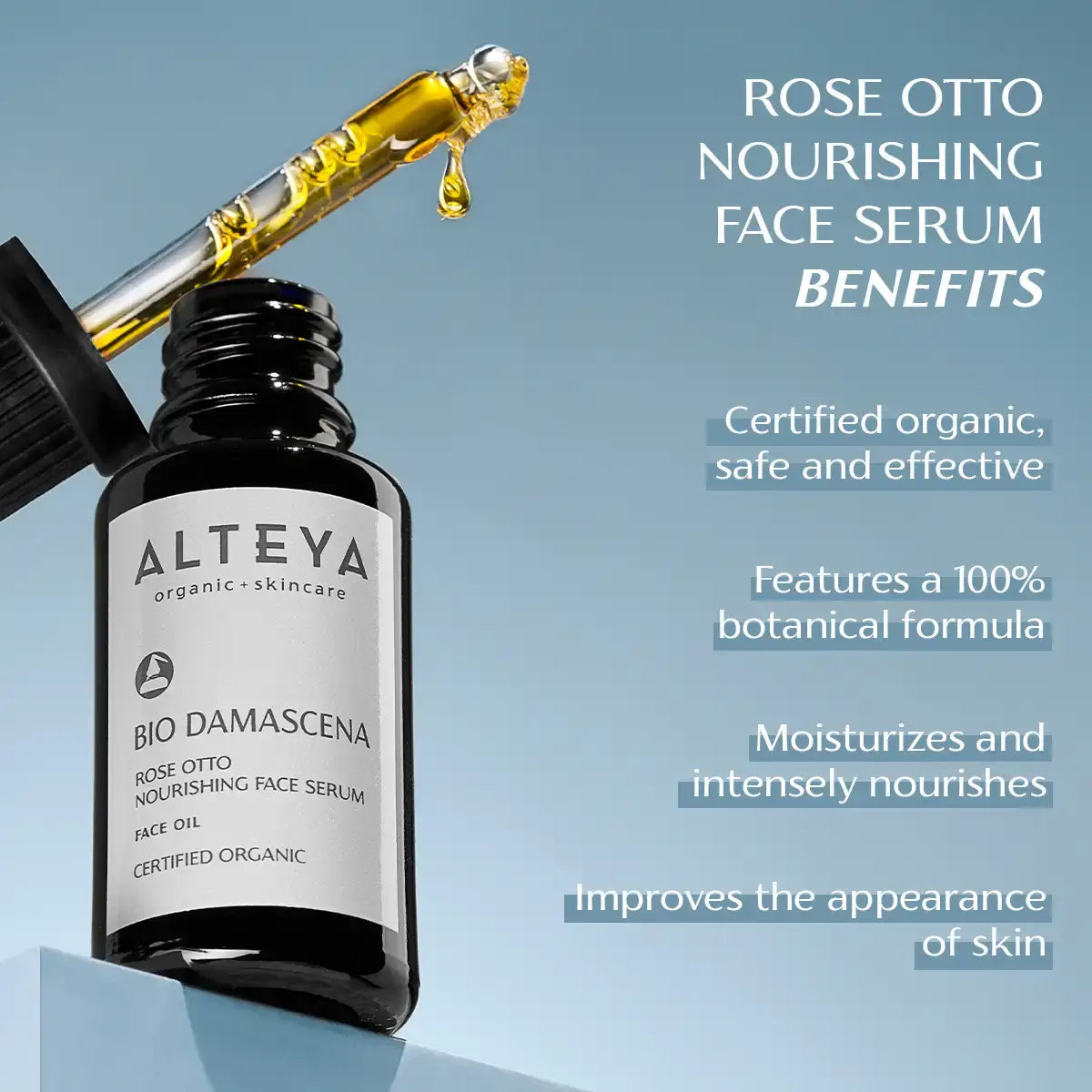
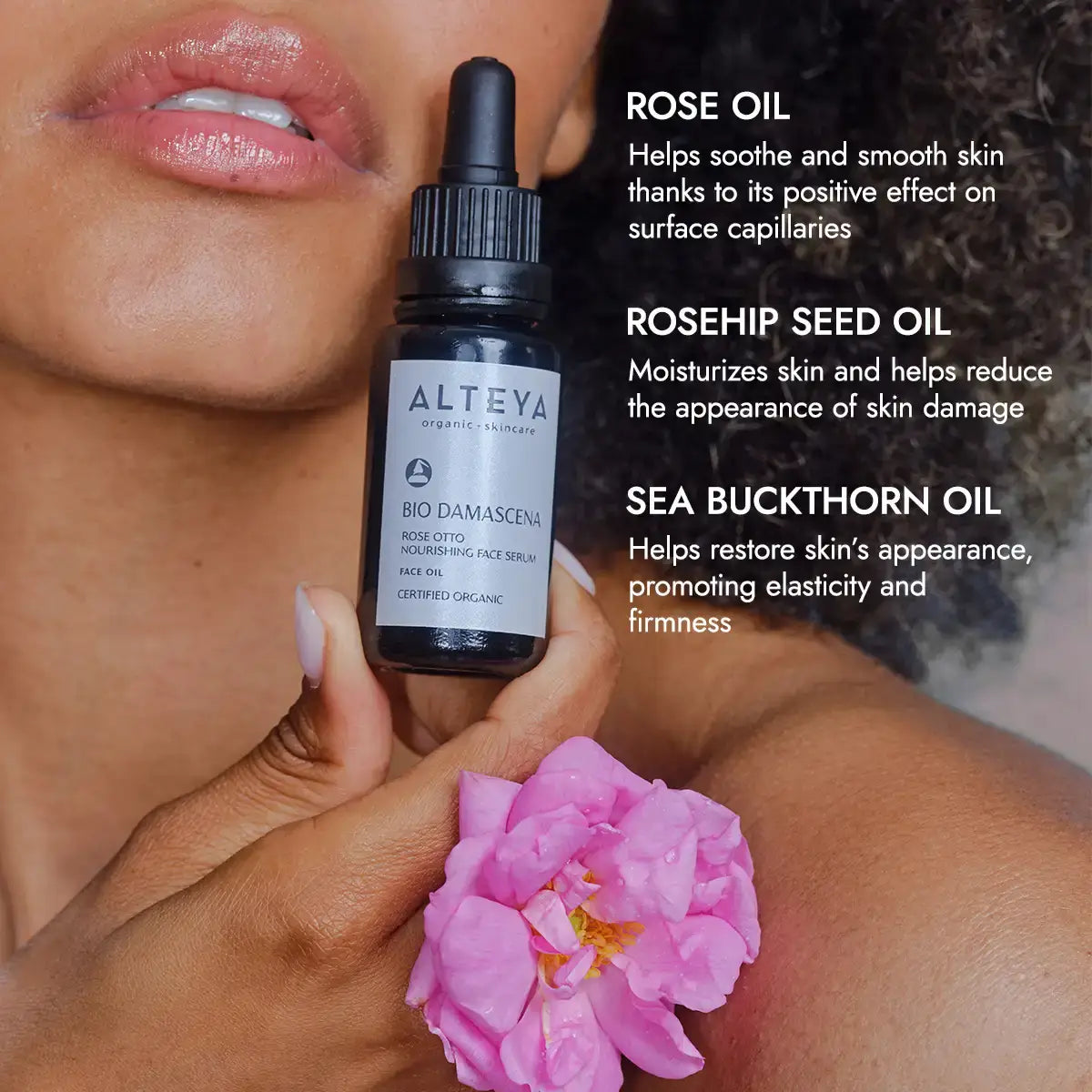
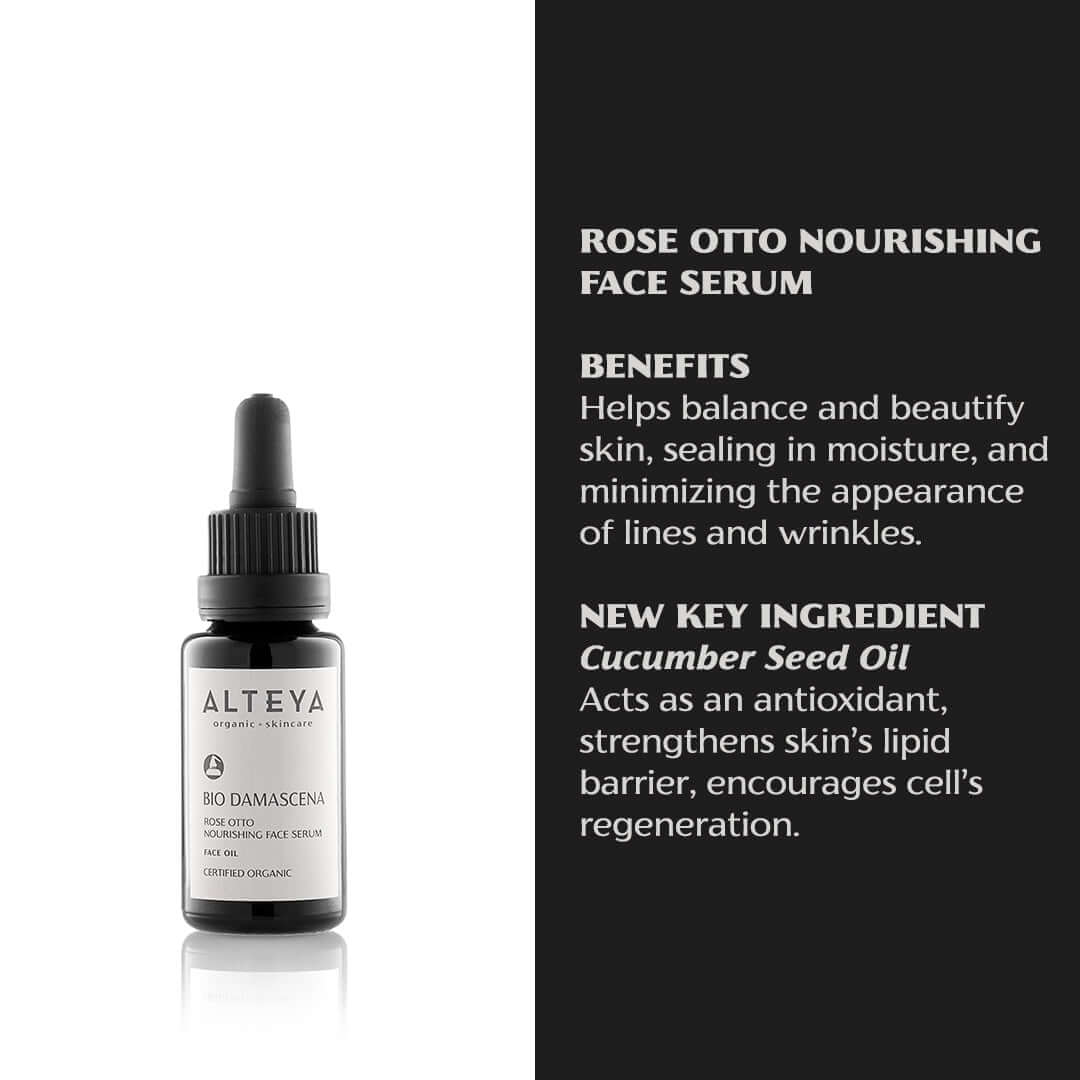
For anyone who wants to simplify their routine to a single face oil, the Bio Damascena Rose Otto Nourishing Face Serum is the most complete option in Alteya's range. It combines three oils — Bulgarian Rose Otto, jojoba, and sea buckthorn — in one USDA Certified Organic, NATRUE Certified formula.

The jojoba component provides the structural similarity to the skin's own sebum that makes it exceptionally well-tolerated. Sea buckthorn brings a concentrated dose of carotenoids and vitamin E. And Bulgarian Rose Otto — distilled from Rosa Damascena grown on Alteya's own certified organic fields — adds the full aromatic and skin-conditioning signature of the rose in its most concentrated oil form.

The practical advantage over single-ingredient oils is versatility: the serum is balanced enough to use morning and evening, on dry and combination skin alike, without the heavier finish that a pure castor or thick rosehip application can leave. It is the starting point Alteya recommends for anyone new to botanical face oils.

Seasonal Facial Oil Recommendations
Seasonal facial oil recommendations comparing suitable oils, application tips and benefits for different seasons and skin conditions.

Season

Recommended Oil

Application Tip

Why

Spring / Autumn (transitional)

Recommended Oil

Rosehip Seed Oil

Application Tip

3 drops, evening only

Why

Lighter texture; supports skin through barrier fluctuations during temperature change

Summer (humid)

Recommended Oil

Rose Otto Face Serum

Application Tip

2–3 drops, morning; skip in humid heat if skin feels heavy

Why

Balanced multi-oil; less occlusive than castor or pure rosehip in high humidity

Winter (dry indoor air)

Recommended Oil

Castor Oil blend (1 drop castor + 3 drops rosehip)

Application Tip

Evening, as final step

Why

Strong occlusive seal counteracts central heating dehydration

Year-round sensitive skin

Recommended Oil

Black Seed Oil (diluted) or Rose Otto Serum

Application Tip

Patch test; 2–3 drops evening

Why

Traditionally soothing oil; introduce gradually and monitor reactivity

FREQUENTLY ASKED QUESTIONS

Yes — but oil selection matters. Rosehip Seed Oil (comedogenic rating 1) and the Rose Otto Serum (rating 1–2) are well-suited to oily and combination skin. Use 2–3 drops in the evening only to start. Avoid castor oil as a standalone on oily skin; its thick, occlusive texture can feel congesting if used alone.

Article: How to Use Organic Face Oils in Your Skincare Routine

skincare

How to Use Organic Face Oils in Your Skincare Routine

The fear of putting oil on your face is understandable. Decades of oil-free marketing convinced an entire generation that facial oils cause breakouts. The reality is more specific: it depends entirely on the oil.

Comedogenicity — the tendency of an ingredient to block pores — varies significantly between botanical oils. Cold-pressed rosehip seed oil has a comedogenic rating of 1 (on a scale of 0–5), making it one of the least pore-blocking oils available. Castor oil sits at 1 as well. Jojoba, used in Alteya's Rose Otto Face Serum alongside sea buckthorn, has a rating of 2 and is structurally similar to the skin's own sebum, which means it is recognised by the skin rather than treated as a foreign substance.

Oils that do block pores — coconut oil (4), wheat germ oil (5) — are not in Alteya's face oil range for exactly this reason. Certified organic face oils chosen for their low comedogenic profile work with the skin's natural lipid system, not against it.

Leave a comment

This site is protected by hCaptcha and the hCaptcha Privacy Policy and Terms of Service apply.

Read more

Botanical Flower Waters for Every Skin Type
skincare

The Best Botanical Flower Waters for Every Skin Type

A botanical flower water — also called a floral hydrosol or distillate water — is the water-phase co-product of steam distillation. When steam passes through fresh botanical material, it carries wa...

Read more