Skip to content
Utility Bar – Alteya

Cart

Your cart is empty

rose ingredients comparison banner

Rose Otto, Rose Absolute, Rose Concrete, Rosehip Oil, and Rose Water: Understanding the Difference

In skincare, aromatherapy, and fragrance, the word “rose” is often used to describe very different ingredients. Rose otto, rose absolute, rose concrete, rosehip oil, and rose water may sound related, but they differ in source, production method, composition, concentration, and typical use.

At Alteya Organics, rose ingredients are part of our daily work - from growing organic Rosa Damascena in Bulgaria’s Rose Valley to distilling organic Bulgarian rose oil and rose water in our own facility. This field-to-distillery experience gives us a clear view of how different rose-derived materials are created and why their names are often misunderstood.

If you have ever looked at a skincare label and wondered whether rose otto, rose oil, rose absolute, rosehip oil, and rose water are the same thing, you are not alone. These ingredients may all be connected to the word “rose,” but they can come from different plant parts, be produced in different ways, and play very different roles in skincare, fragrance, or DIY beauty preparations.

Why the word “rose” can be confusing

Many ingredients in beauty and fragrance include the word “rose,” but they are not always made from the same part of the plant or through the same process. Some materials come from fresh rose blossoms. Others come from rosehip seeds. Some are produced through steam distillation, while others are obtained through solvent extraction or pressing. Some are aromatic ingredients used in very small amounts, while others are water-based or lipid-based materials with different formulation roles.

Understanding these differences helps clarify what an ingredient is, how it is produced, and how it can be approached - whether it is used in a finished formula, as a standalone product, or as part of a personal DIY routine.

What is rose otto?

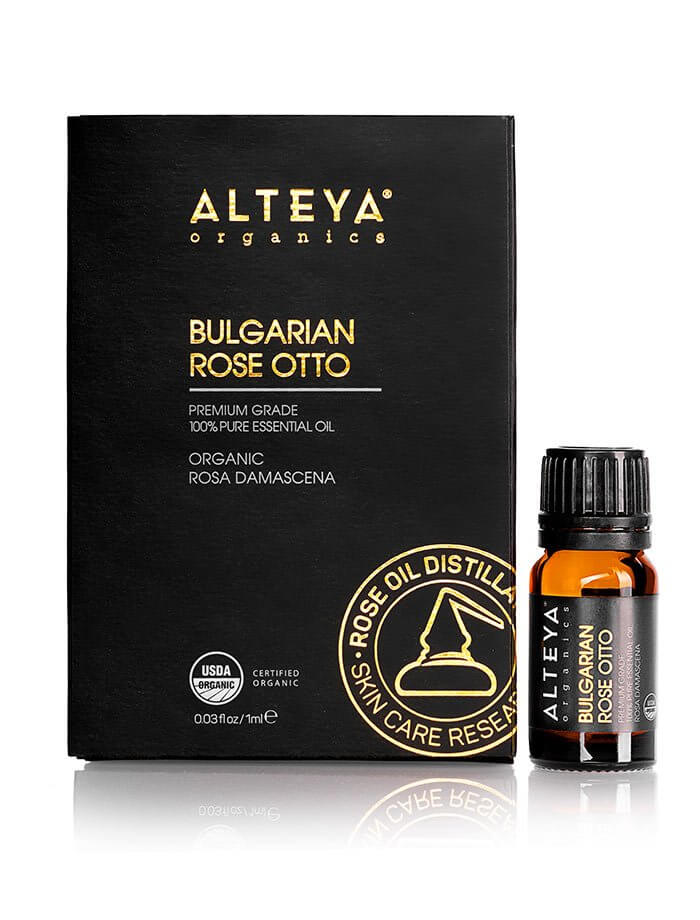
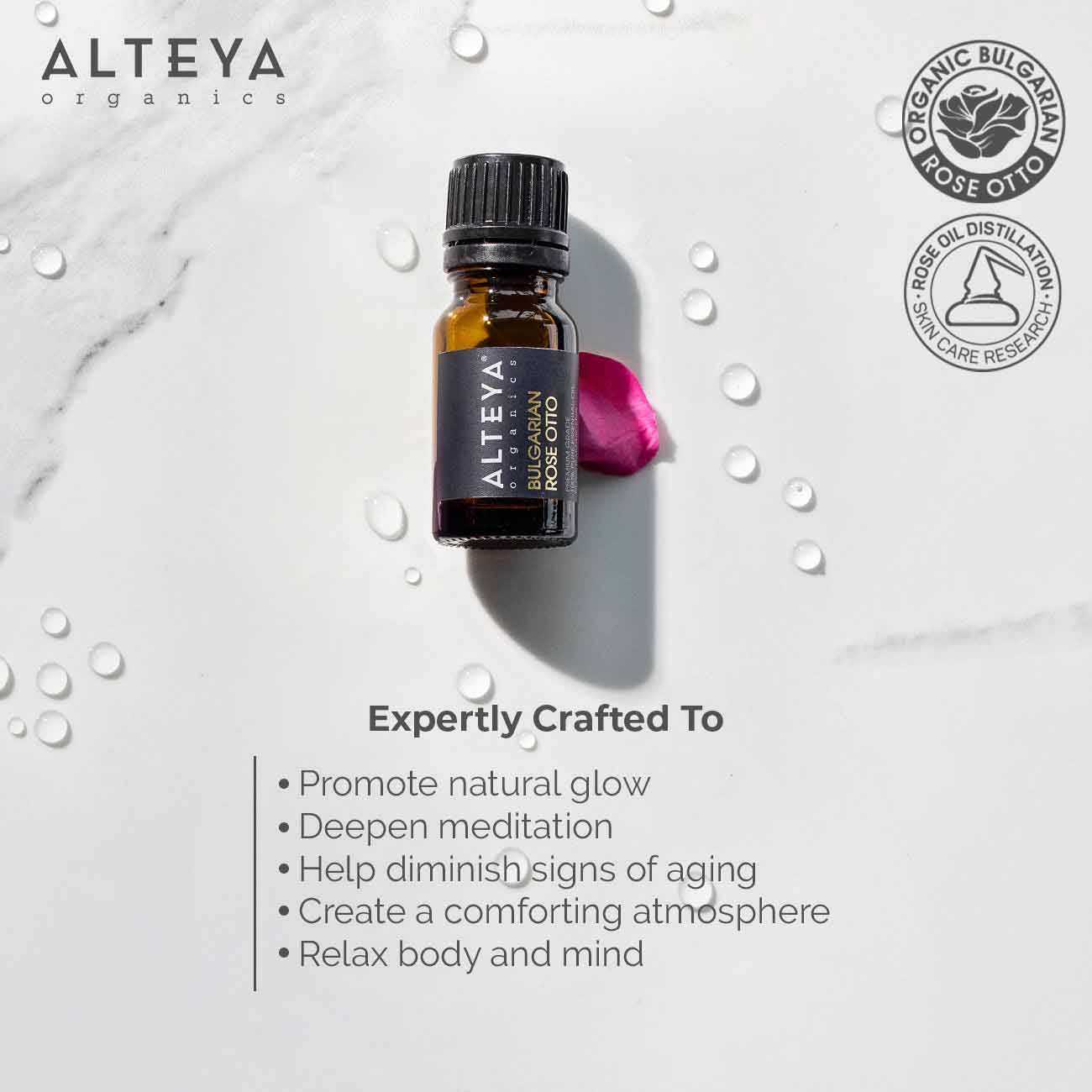
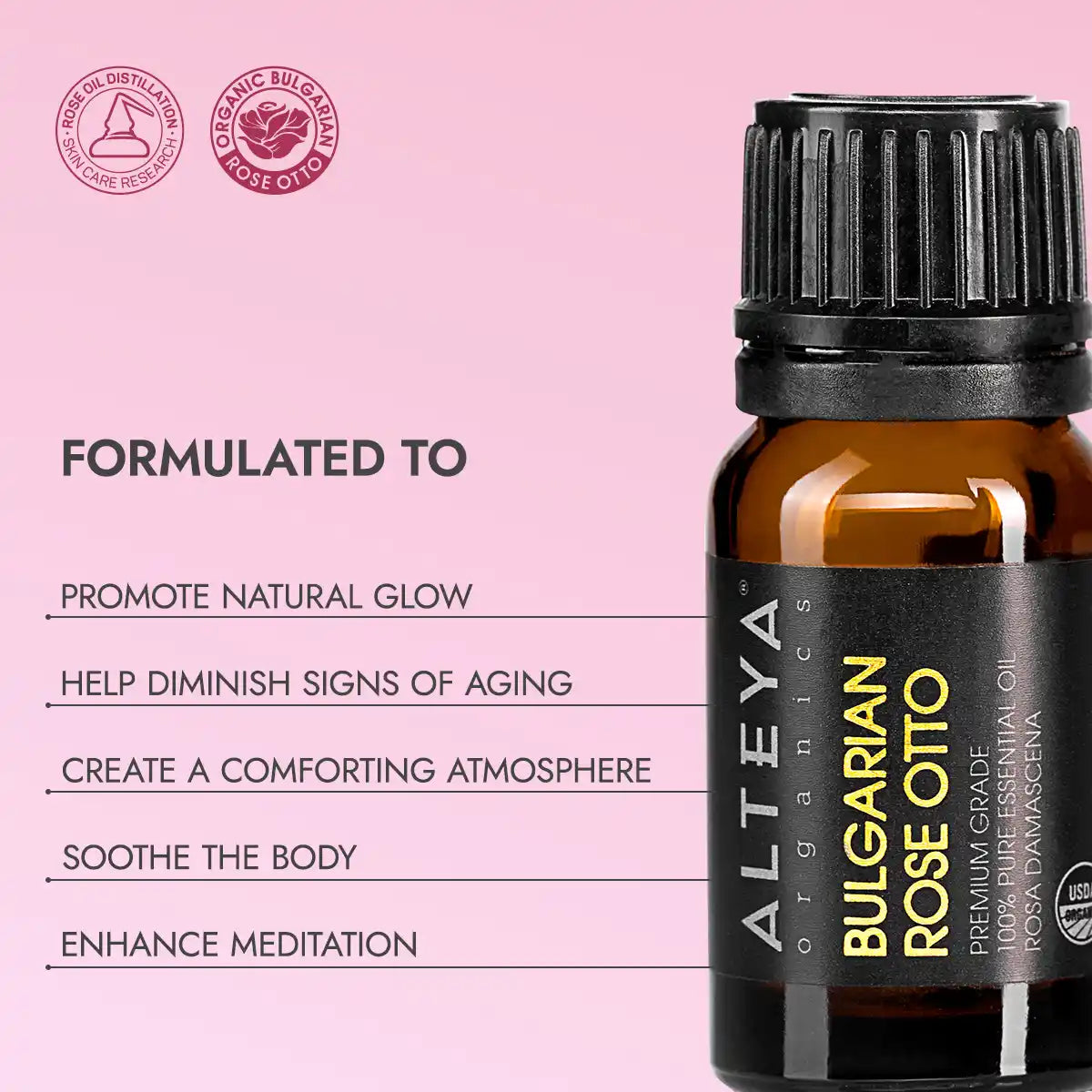
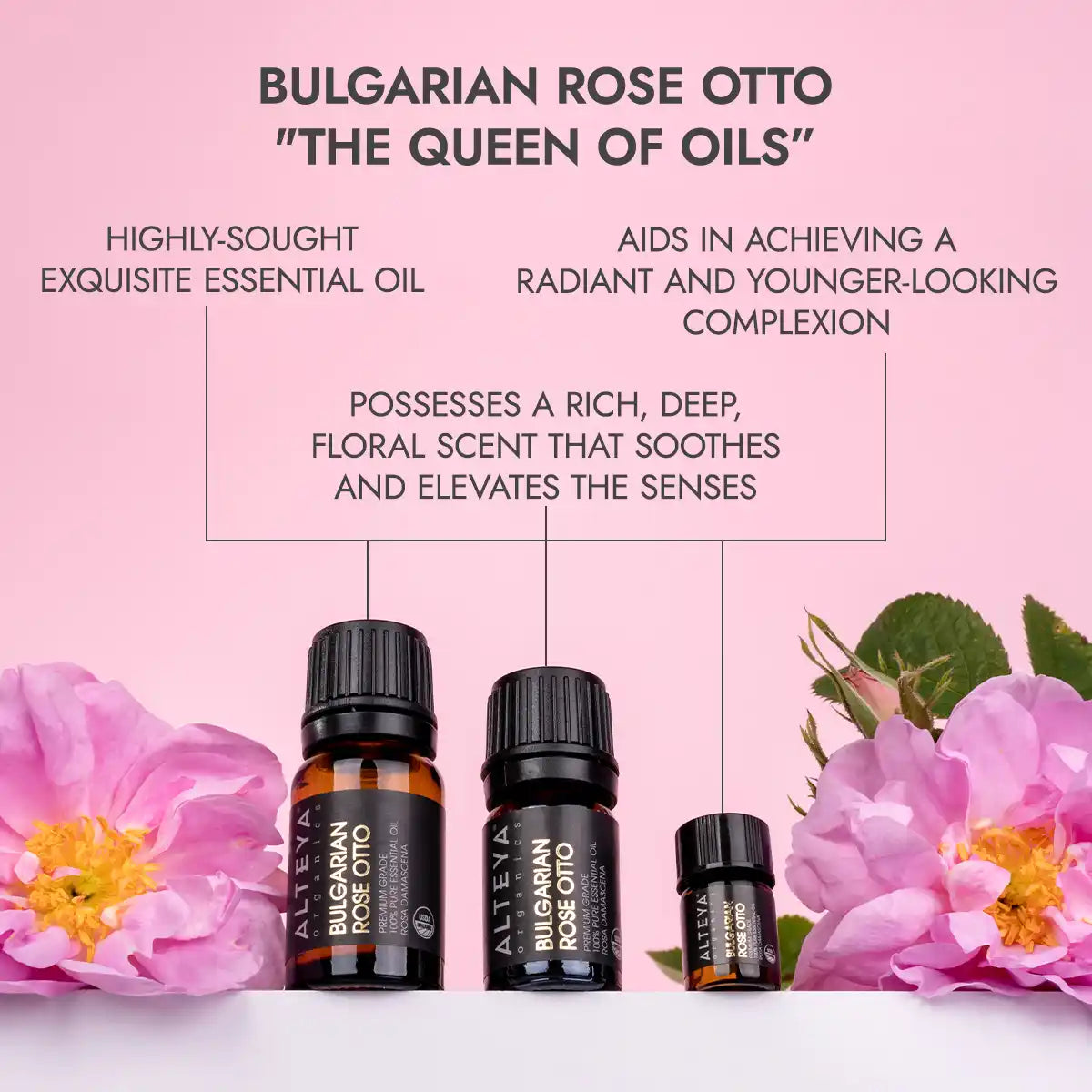
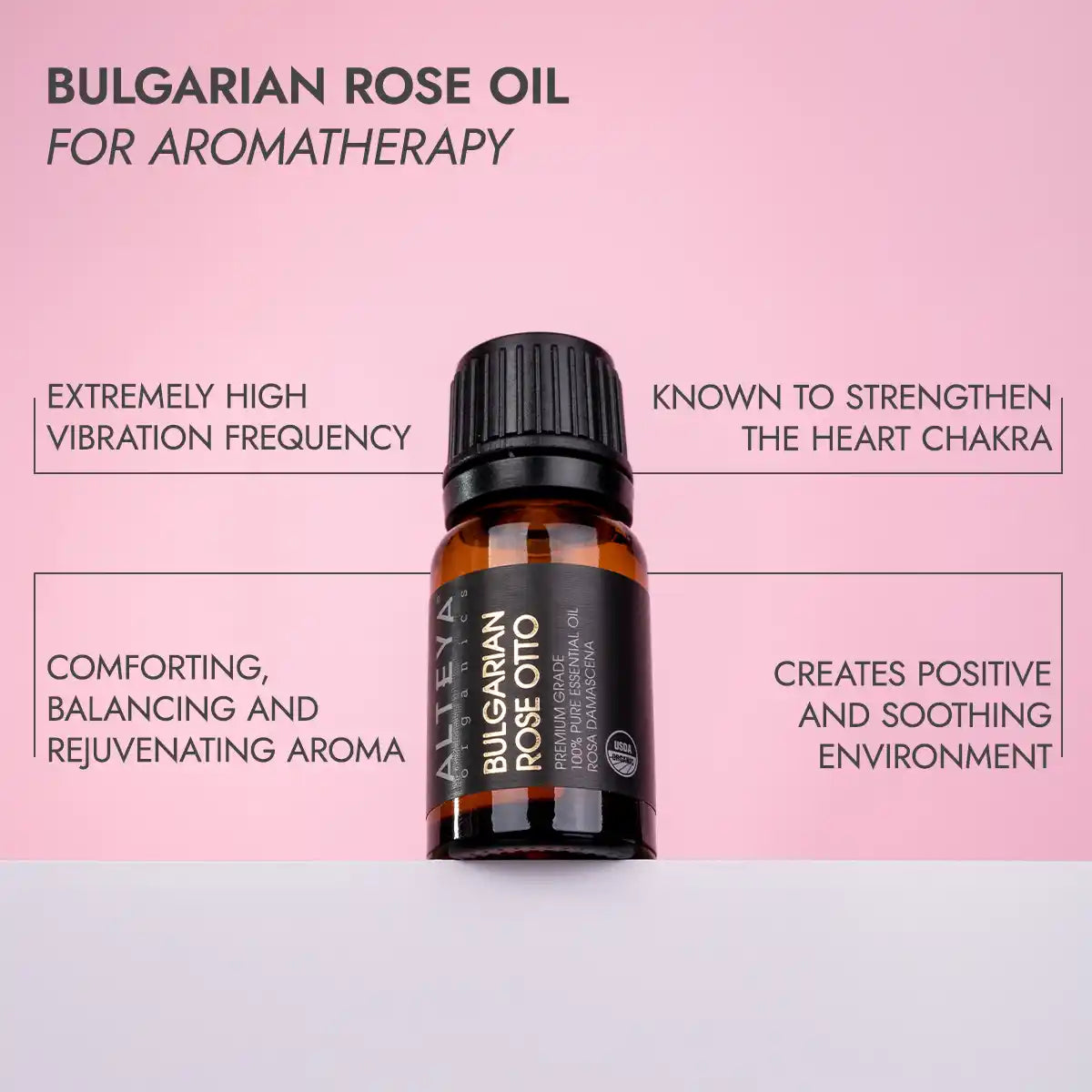
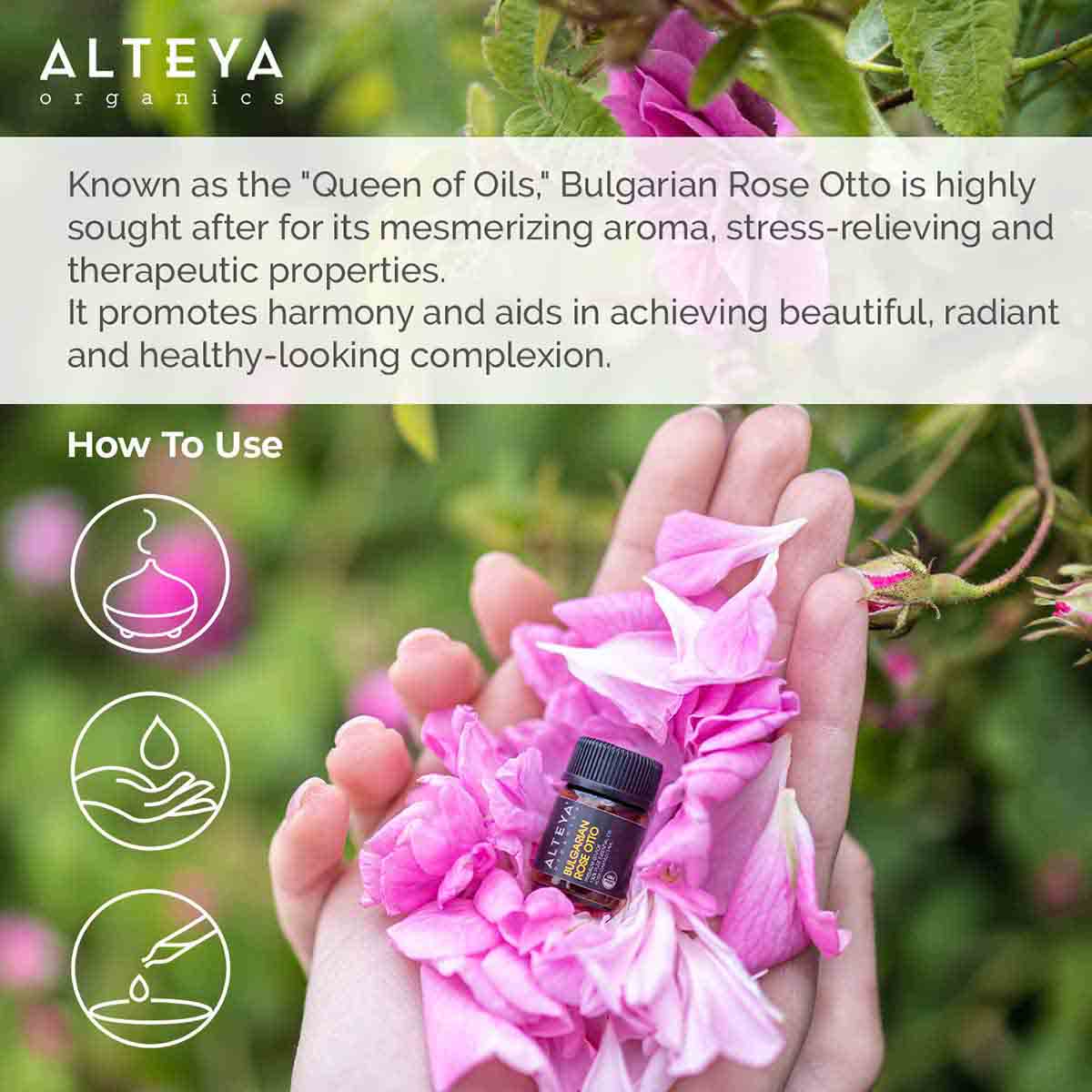
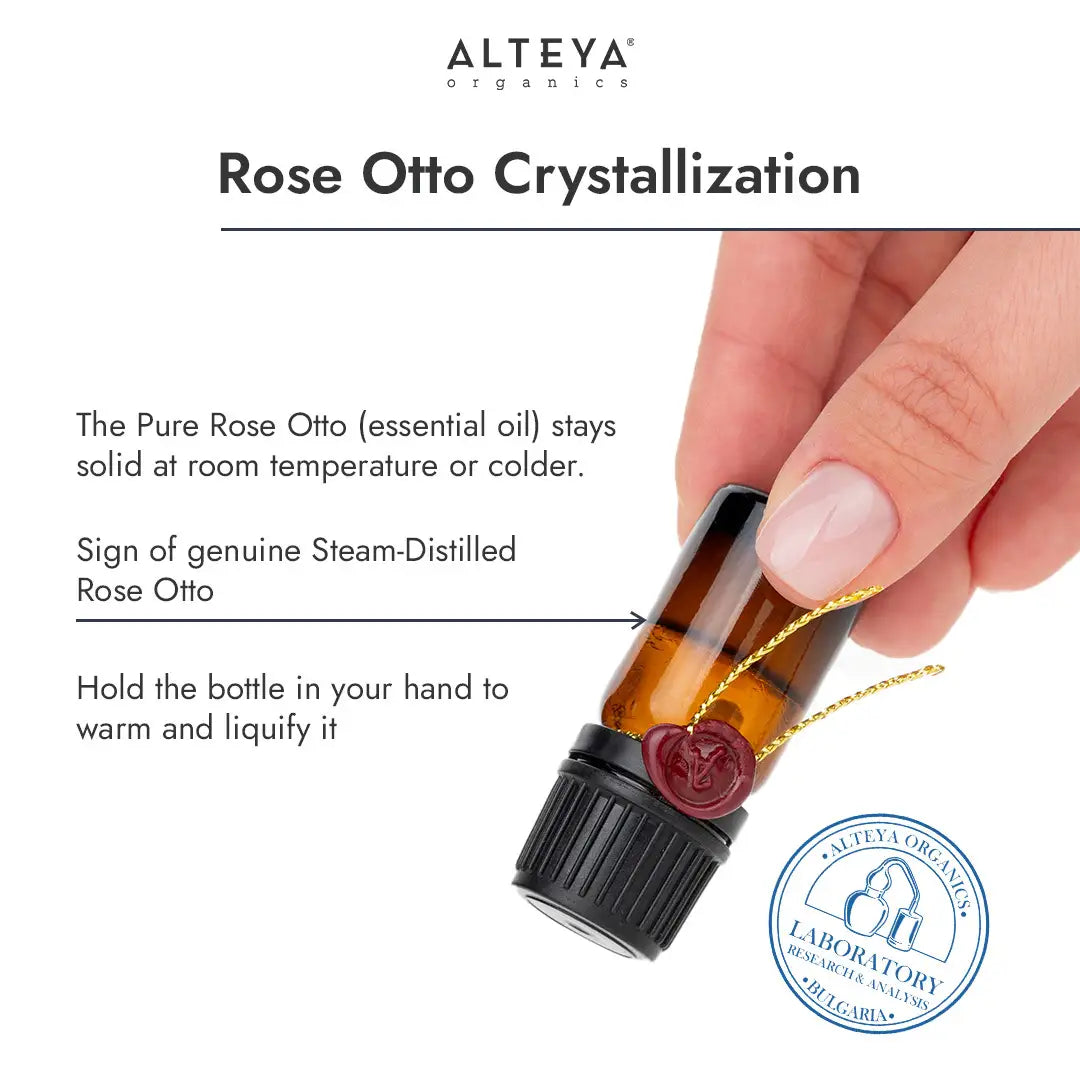
Rose otto is the essential oil obtained from fresh rose blossoms through steam distillation. Bulgarian rose otto is traditionally associated with Rosa Damascena grown in Bulgaria’s Rose Valley. Rose otto is highly concentrated and aromatic. Because of its intensity and cost of production, it is typically used in very small amounts in fragrance, skincare, and cosmetic formulations. The production of rose otto requires a large amount of fresh rose blossoms. Yield can vary depending on the season, the condition of the flowers, the timing of the harvest, and the distillation process.

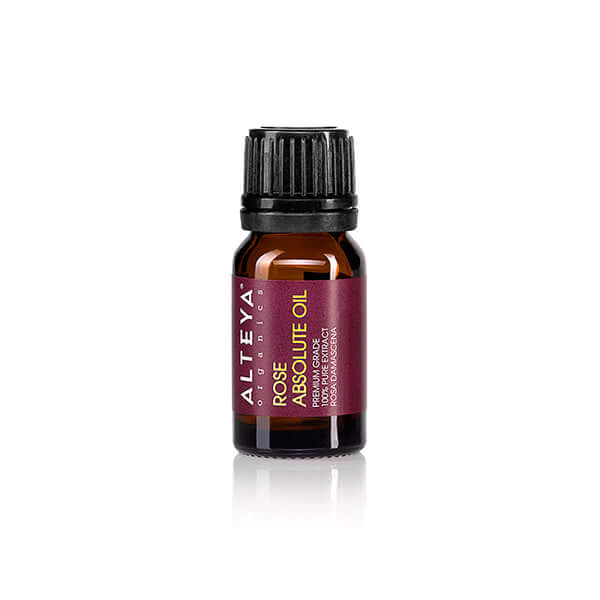
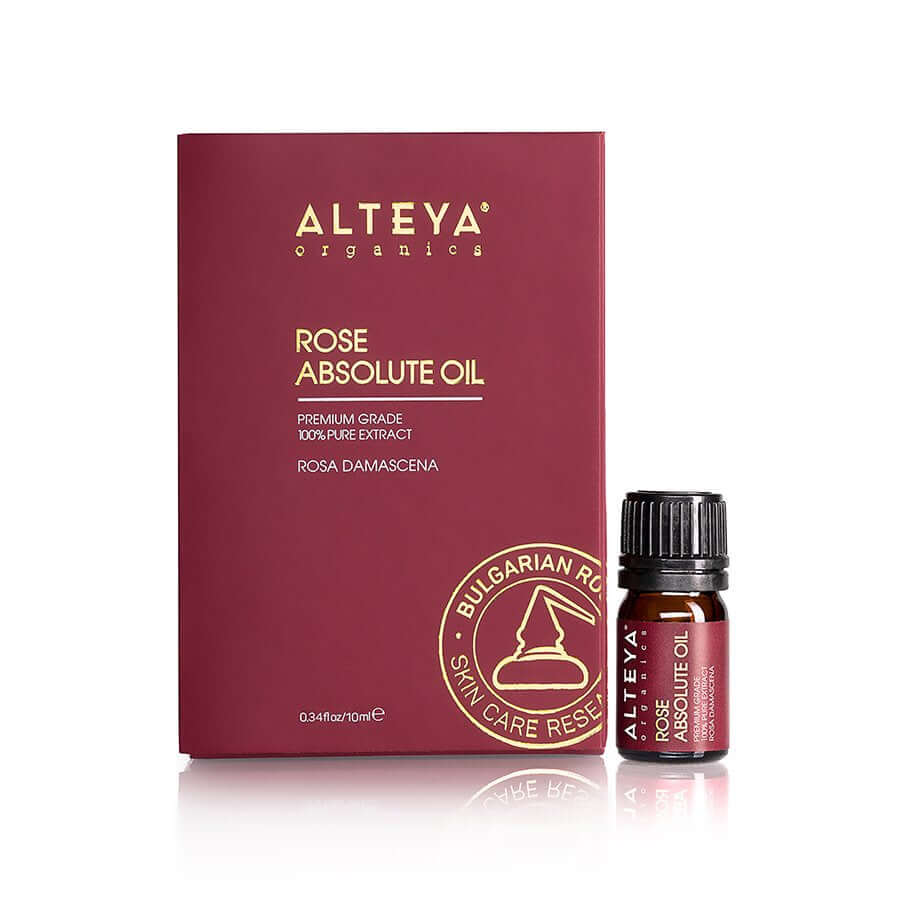
What is rose absolute?

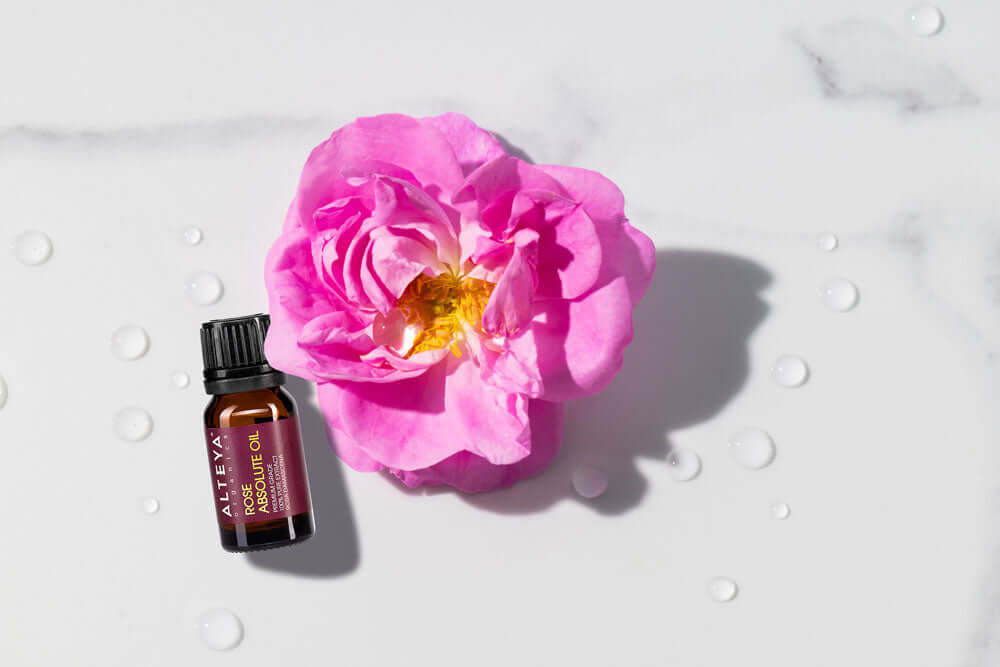
Rose absolute is a concentrated aromatic extract obtained from fresh Rosa Damascena flowers. Its production usually begins with rose concrete, which is further processed with a solvent; the solvent is then removed, leaving a thick, viscous liquid with a reddish-orange color and a powerful rose aroma. Rose absolute is often valued in perfumery for its rich floral profile. It is also used in cosmetic formulations.

What is rose concrete?

Rose concrete is a waxy, semi-solid aromatic material obtained from fresh rose blossoms through extraction. At Alteya Organics, Bulgarian rose concrete is produced by cold extraction of fresh Rosa Damascena blossoms grown in our own rose plantations. It typically has an orange-red color, a waxy consistency, and a deep, warm rose aroma with a fresh floral nuance. Rose concrete is used in perfumery, cosmetic formulations, and sometimes as a solid perfume. It also commonly serves as the base material for obtaining rose absolute.

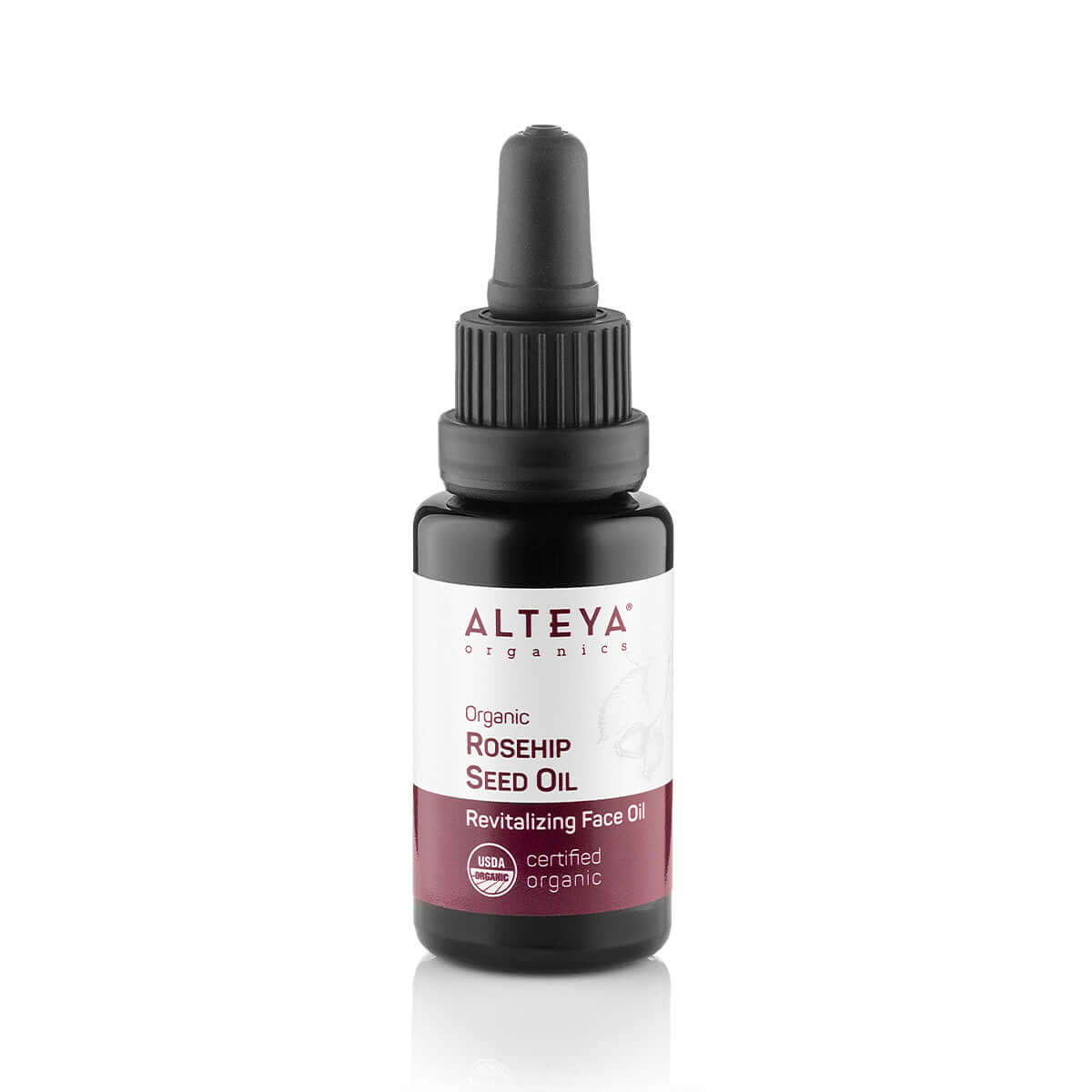
What is rosehip oil?

Rosehip oil is a completely different ingredient from rose otto. It is pressed from the seeds found inside rosehip fruits, most commonly from wild rose species such as Rosa canina or Rosa rubiginosa. It is not made from the petals of Rosa Damascena and it is not an aromatic rose extract. Rosehip oil is lipid-based and has a very different composition from rose otto, rose absolute, and rose water. It should not be used interchangeably with rose essential oil.
In skincare formulation, rosehip oil is generally considered a carrier oil, while rose otto is an essential oil used in very small amounts.

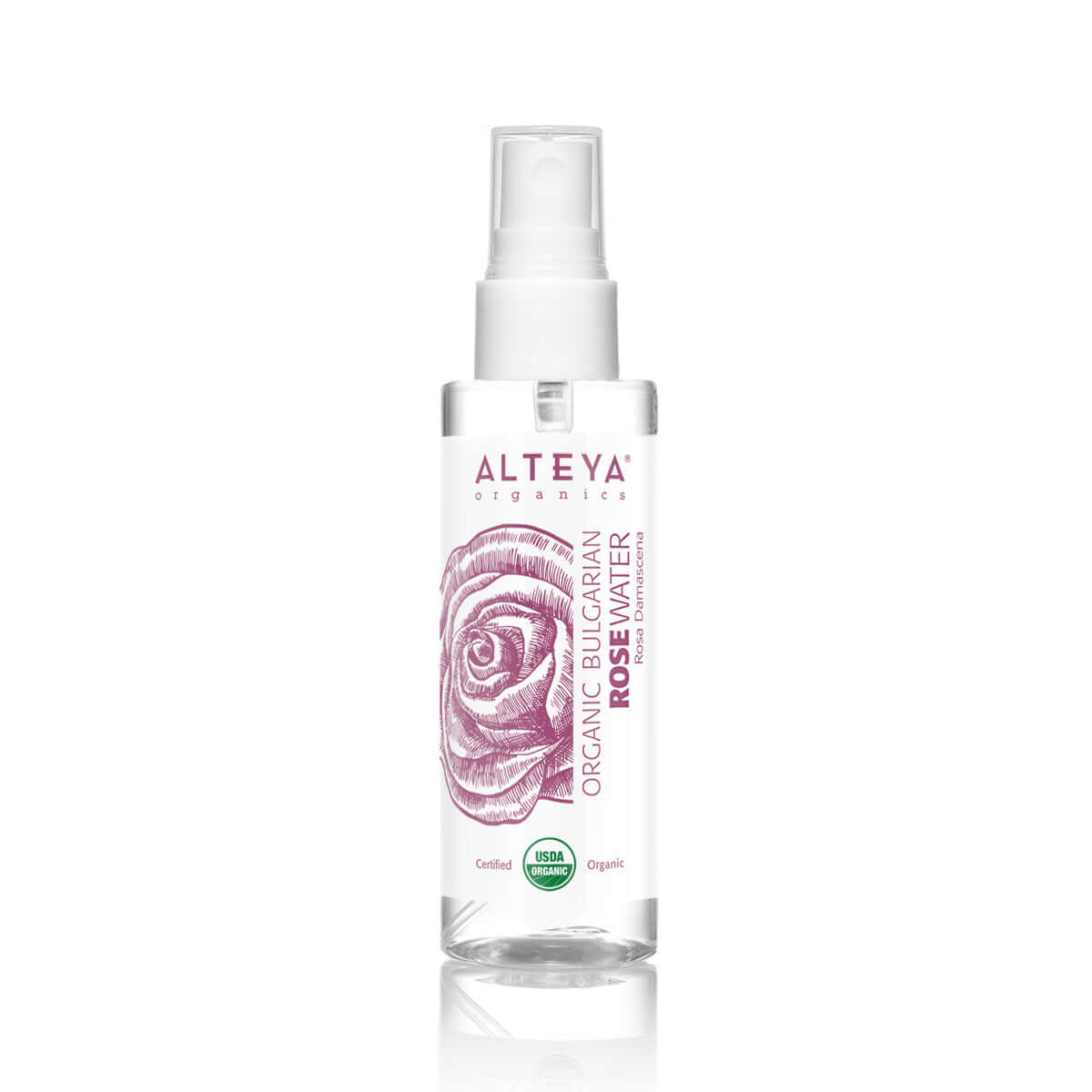
What is rose water?

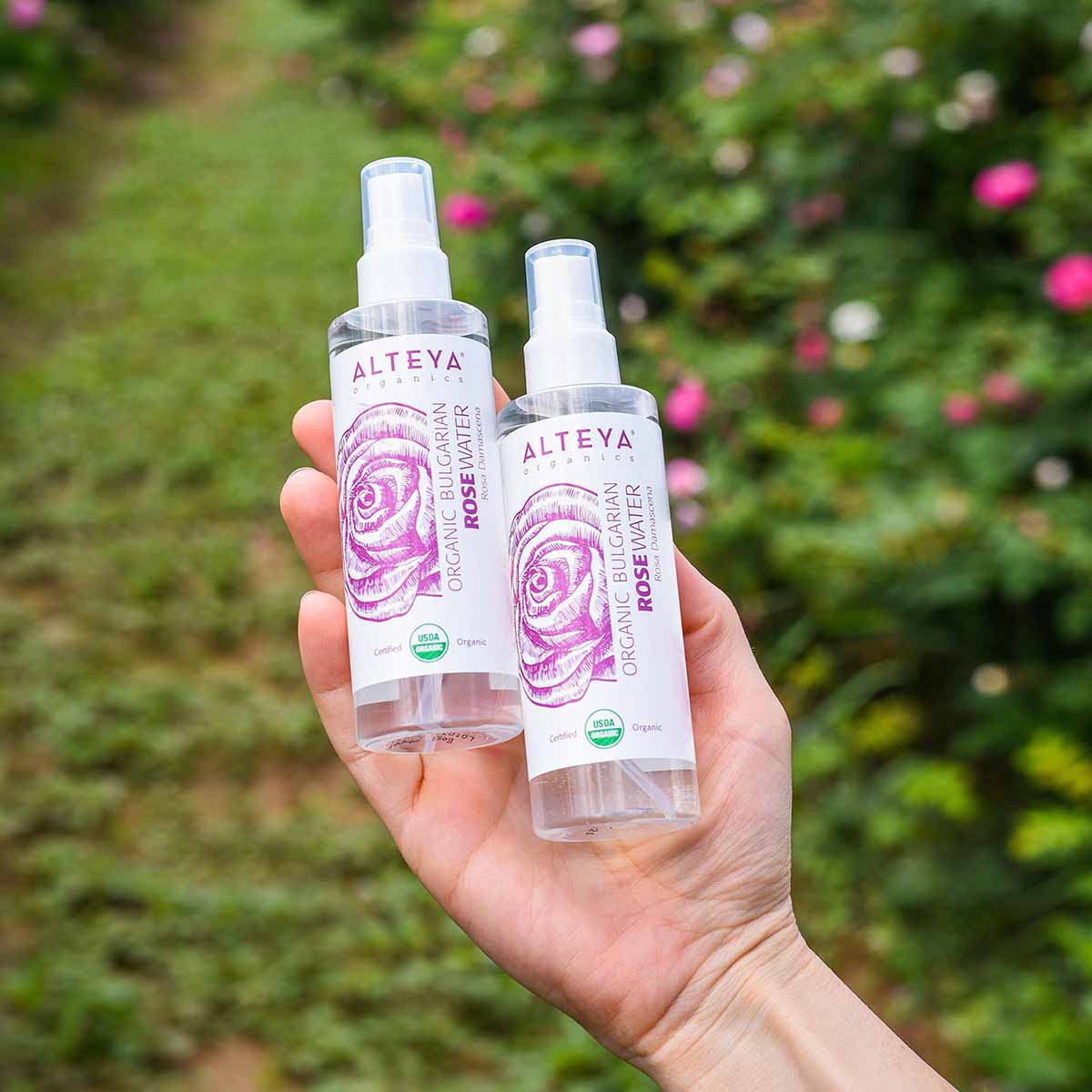
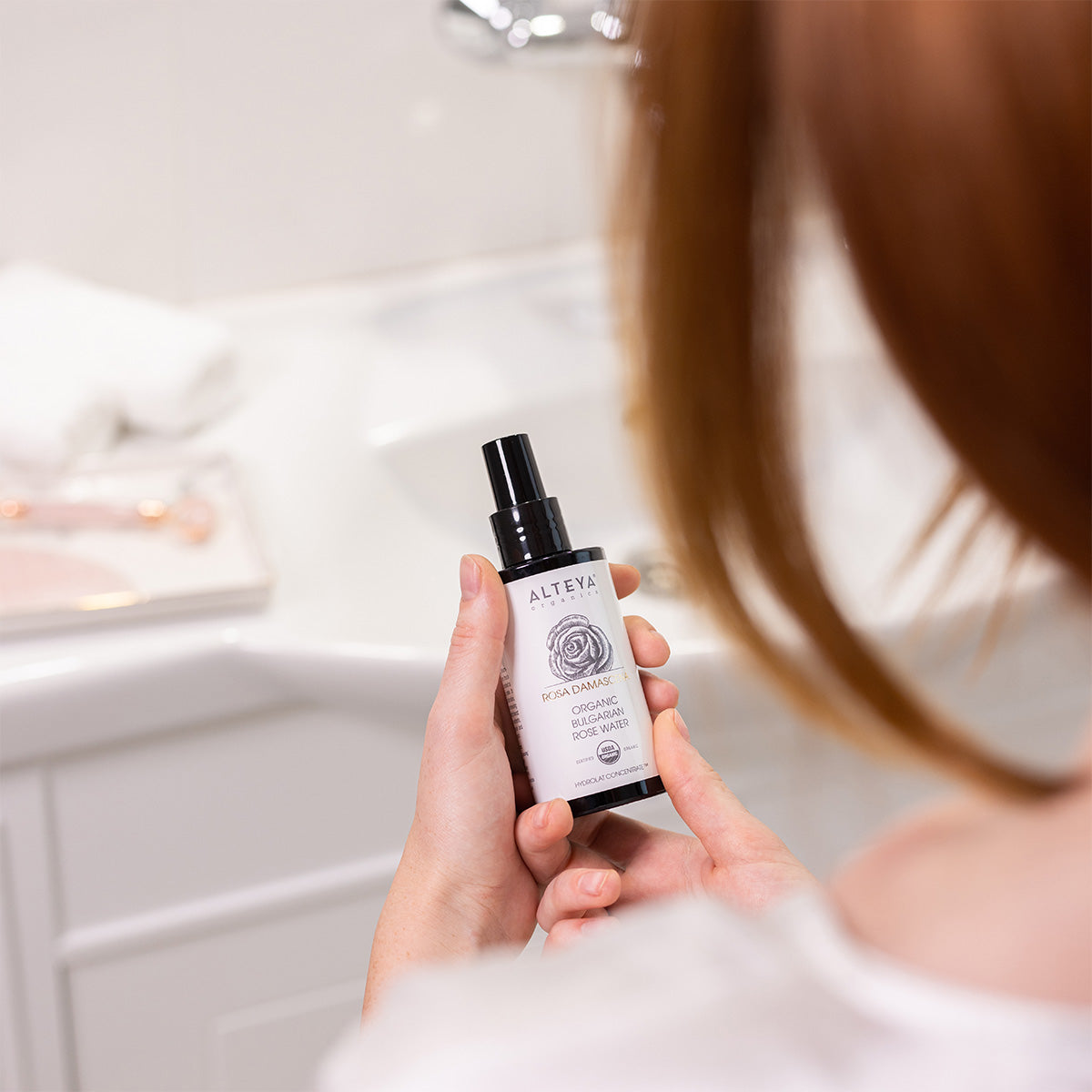
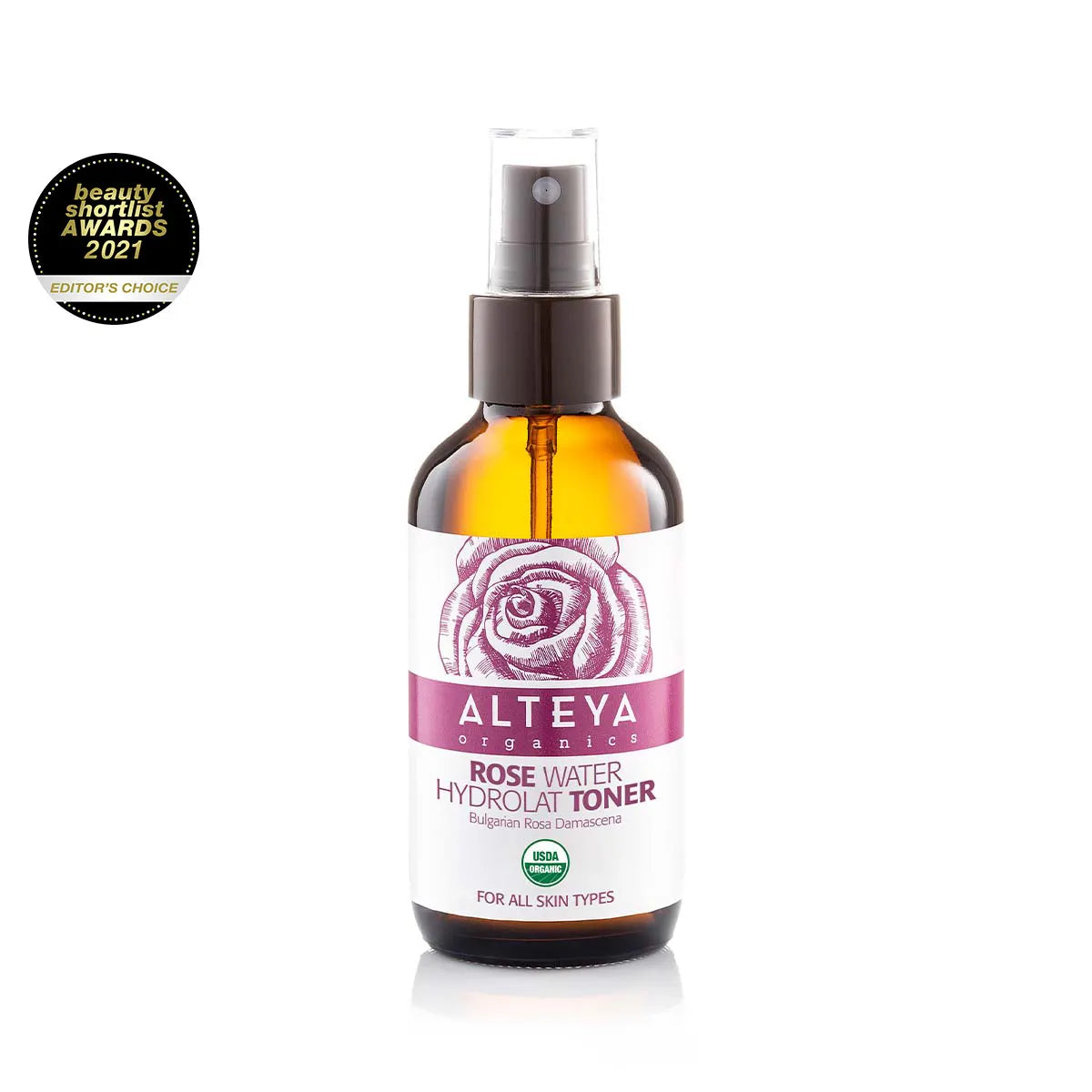
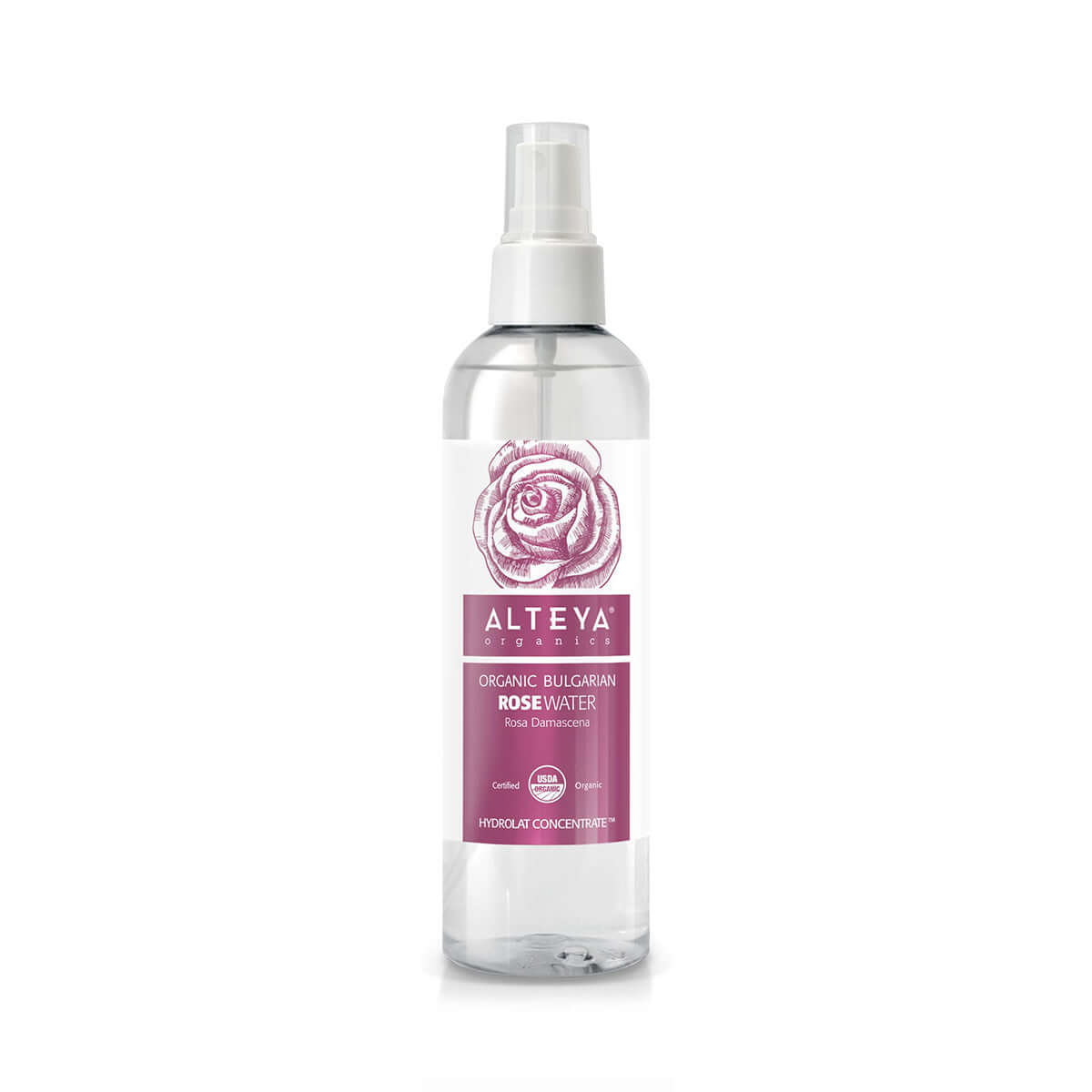
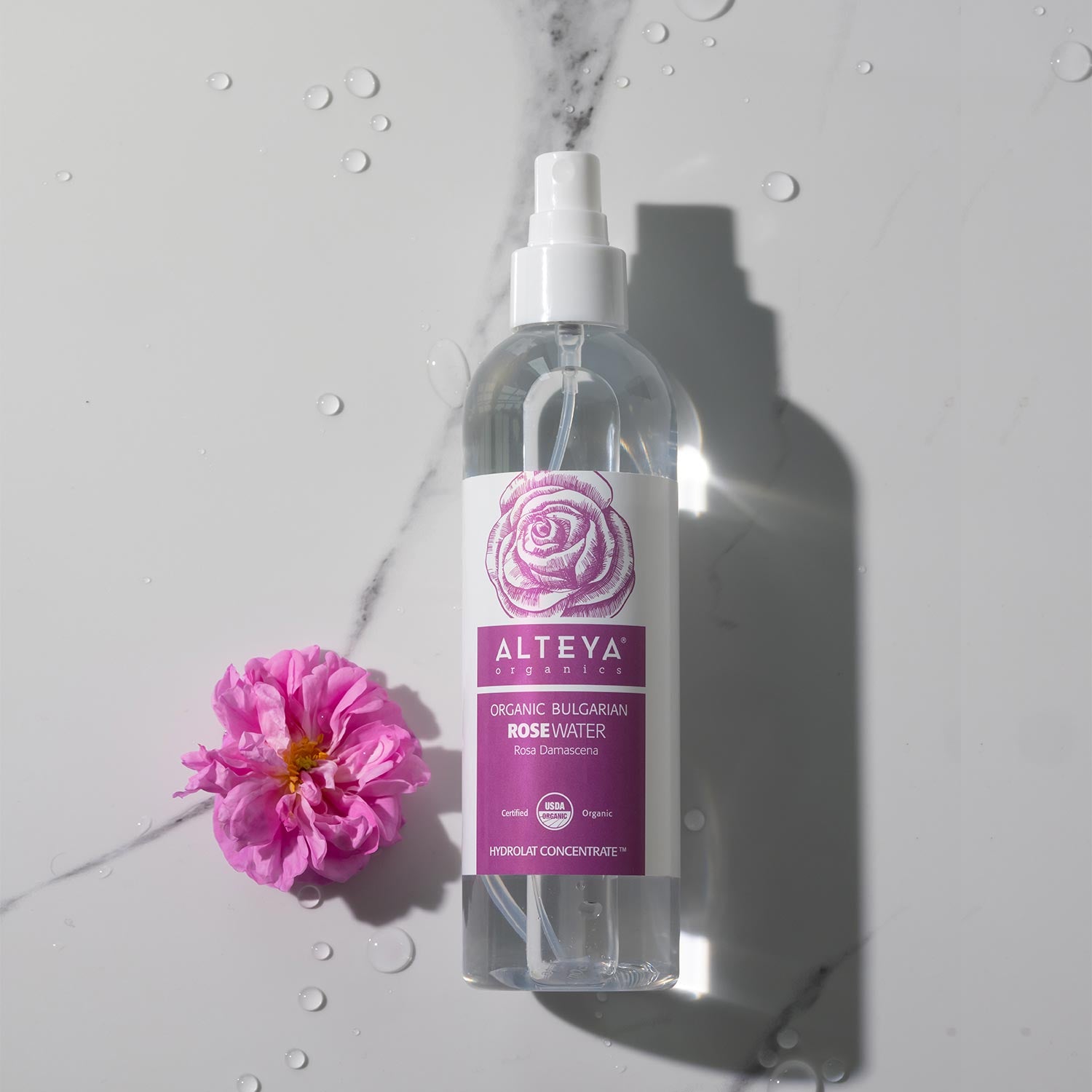
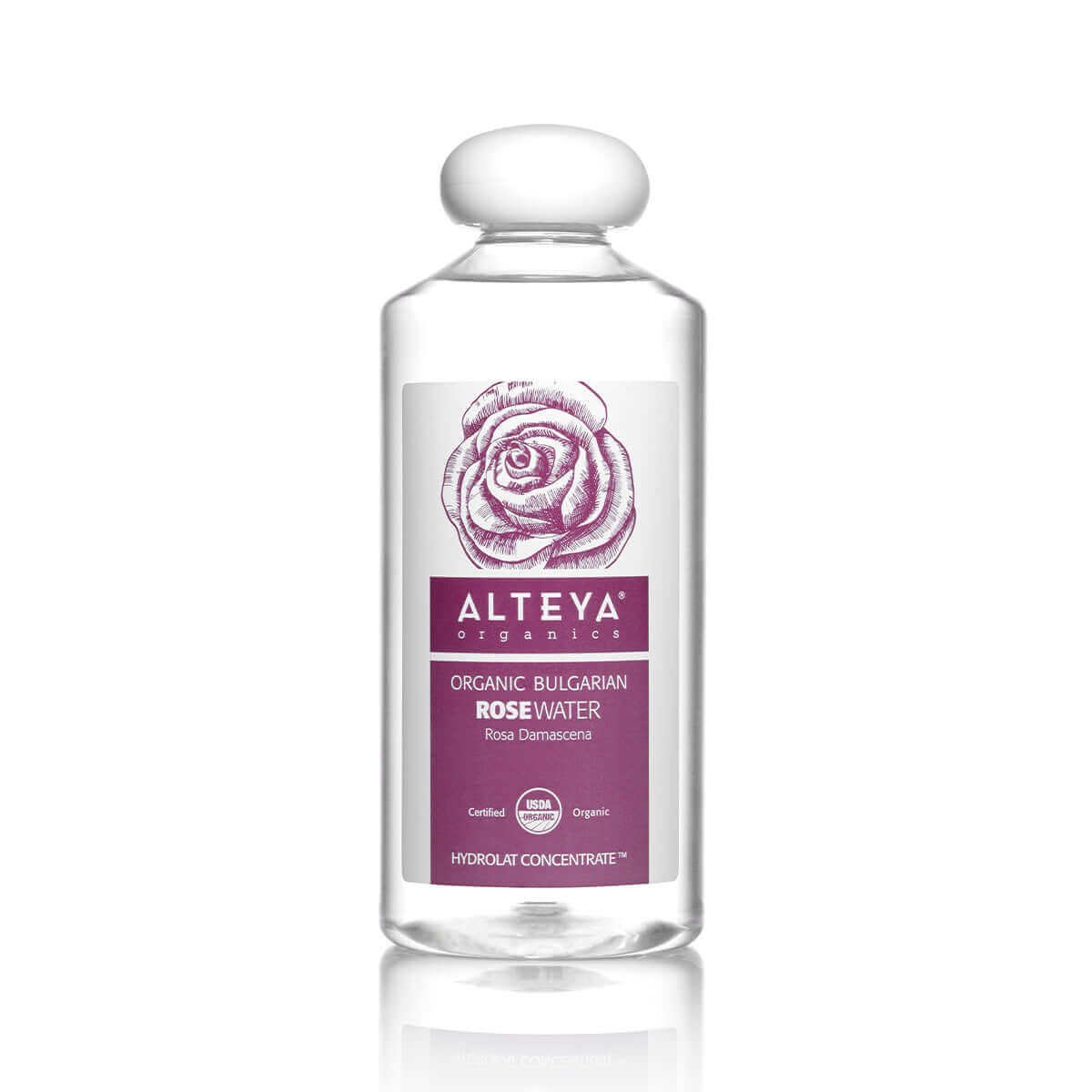
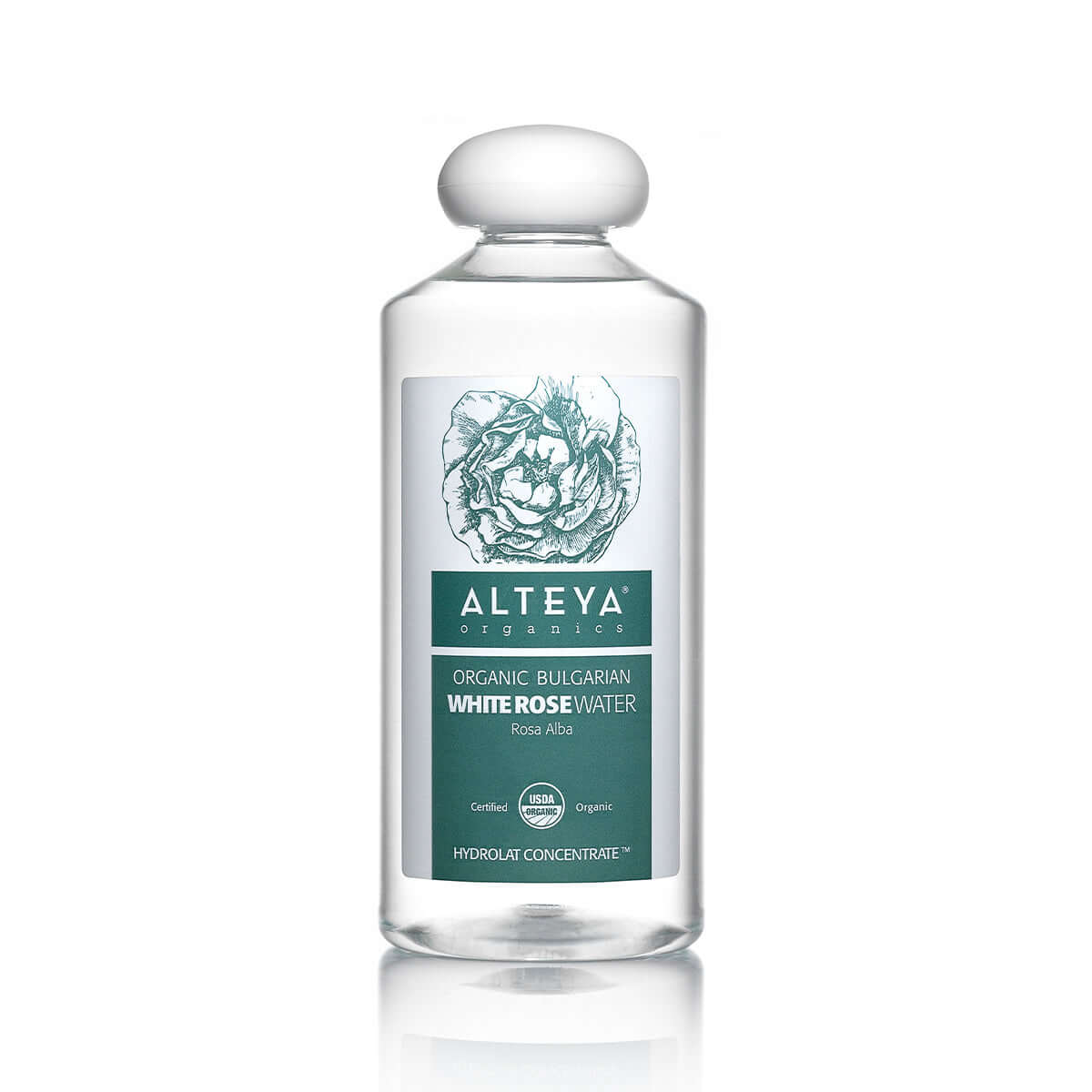
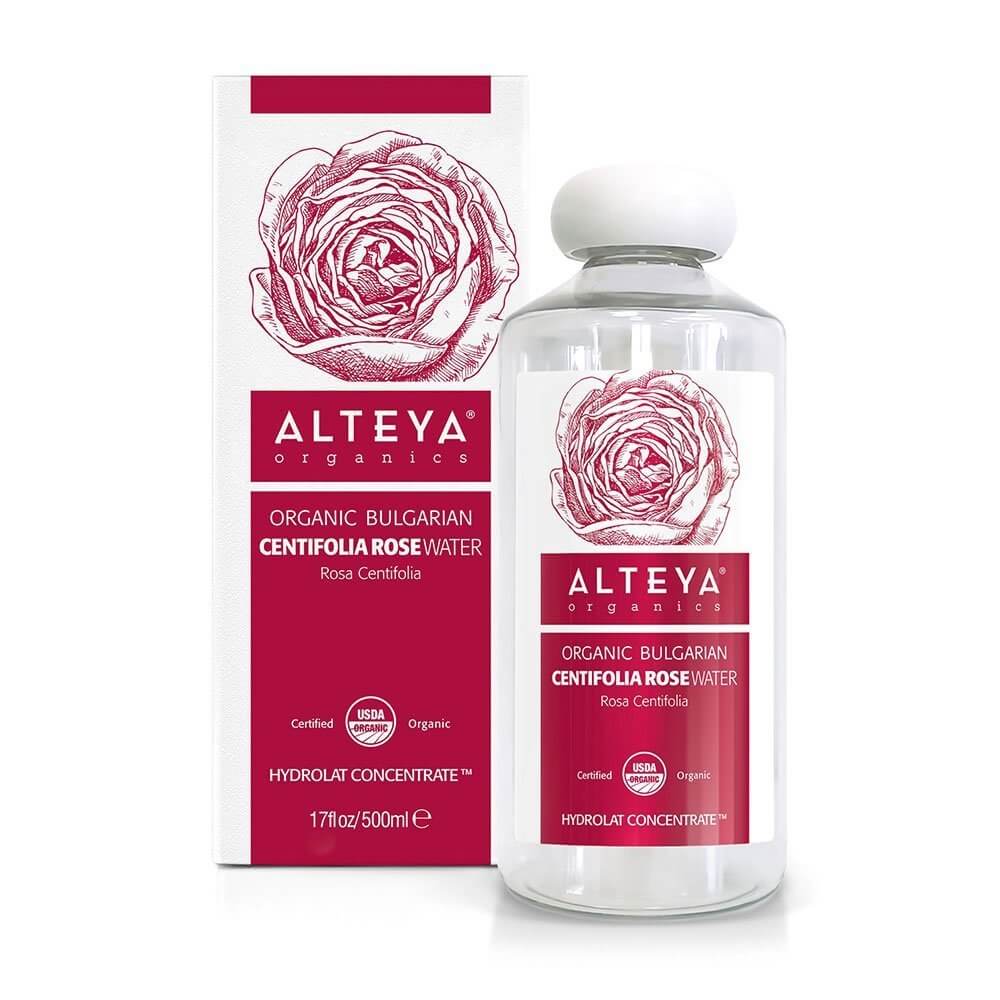
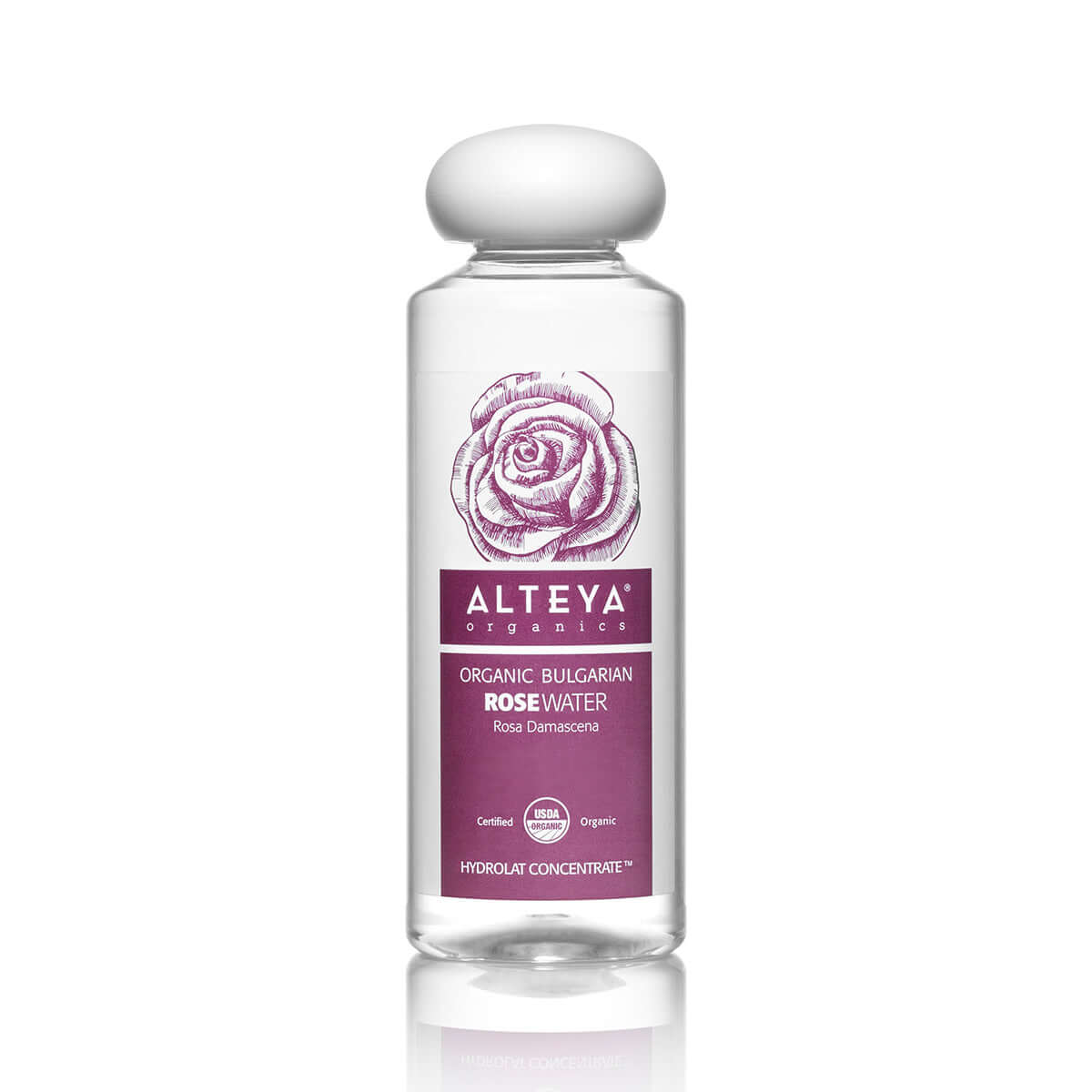
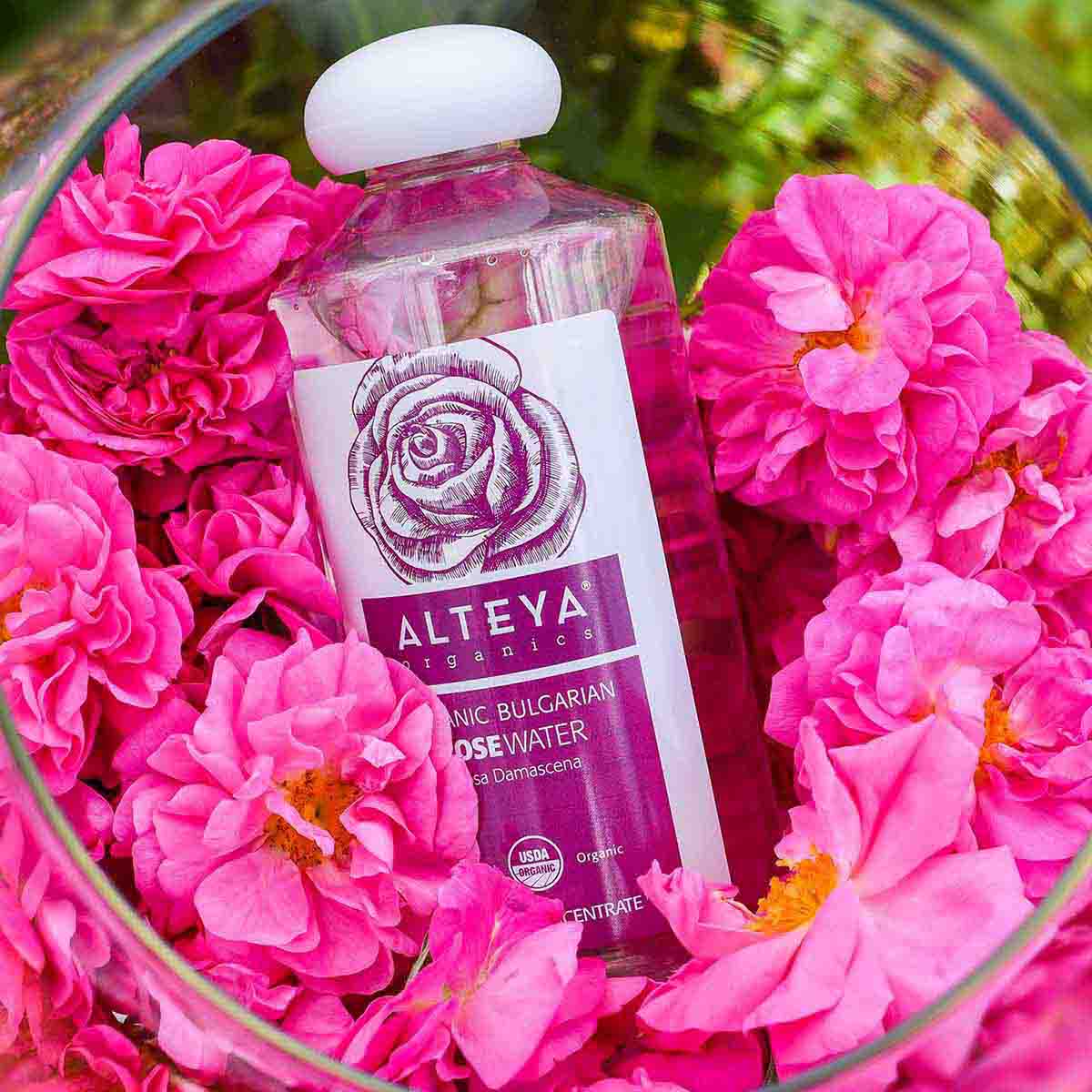
Rose water, also known as rose hydrolate, is a water-based aromatic material obtained through the distillation of rose blossoms. At Alteya Organics, rose water is produced through dedicated distillation of fresh organic Rosa Damascena blossoms. This means that roses are distilled specifically to produce rose water as the primary product, rather than treating it only as a by-product of rose oil production. Rose water differs from rose otto because it is water-based, less concentrated in aromatic oil components, and used differently in cosmetic and personal care formulations.

Why ingredient source and process matter

In rose ingredients, the name alone does not tell the full story. A rose-derived ingredient can differ by the plant part used, the production method, and the final material obtained. Fresh rose blossoms may be steam distilled into rose otto or rose water, or solvent-extracted into rose concrete and rose absolute. Rosehip seeds, on the other hand, are pressed to obtain rosehip oil, a carrier oil that is completely different from aromatic rose blossom materials. These differences affect how the ingredient is evaluated, how it is used, and how it should be described.

For Alteya Organics, working with organic Bulgarian rose oil begins with the crop itself: organic Rosa Damascena grown in Bulgaria’s Rose Valley, harvested during the rose season, and distilled in our own facility. This field-to-distillery connection helps us approach rose ingredients with practical knowledge of their origin and production.

distilating process alteya organics

Quick comparison table: rose-derived ingredients

Rose-Derived Ingredients Comparison
Comparison of rose-derived ingredients by source, production method, ingredient type, and typical role

Ingredient

Source

Production method

Ingredient type

Typical role

Rose otto

Source

Fresh rose blossoms

Production method

Steam distillation

Ingredient type

Essential oil

Typical role

Aromatic ingredient used in small amounts

Rose absolute

Source

Fresh blossoms via rose concrete

Production method

Solvent extraction

Ingredient type

Aromatic extract

Typical role

Perfumery and cosmetic formulation

Rose concrete

Source

Fresh rose blossoms

Production method

Cold extraction

Ingredient type

Semi-solid aromatic extract

Typical role

Perfumery, cosmetics, and base material for rose absolute

Rosehip oil

Source

Seeds inside rosehip fruits

Production method

Pressing

Ingredient type

Carrier oil

Typical role

Lipid-based skincare ingredient

Rose water

Source

Fresh rose blossoms

Production method

Distillation

Ingredient type

Hydrolate / floral water

Typical role

Cosmetic and personal care formulation

The word “rose” can appear on many different beauty ingredients, but it does not always mean the same thing. For anyone choosing rose-based skincare or working with rose-derived ingredients at home, this distinction is useful. It helps you read labels more clearly, understand what each ingredient is, and avoid confusing materials that are not meant to be used in the same way.

FREQUENTLY ASKED QUESTIONS

Yes, rose otto is the common name for rose essential oil obtained through steam distillation of fresh rose blossoms. The term helps distinguish steam-distilled rose oil from other rose-derived materials, such as rose absolute, which is produced through solvent extraction rather than distillation.

Article: Rose Otto, Rose Absolute, Rose Concrete, Rosehip Oil, and Rose Water: Understanding the Difference

Inspired by nature

Rose Otto, Rose Absolute, Rose Concrete, Rosehip Oil, and Rose Water: Understanding the Difference

In skincare, aromatherapy, and fragrance, the word “rose” is often used to describe very different ingredients. Rose otto, rose absolute, rose concrete, rosehip oil, and rose water may sound related, but they differ in source, production method, composition, concentration, and typical use.

Leave a comment

This site is protected by hCaptcha and the hCaptcha Privacy Policy and Terms of Service apply.

Read more

Lavender Essential Oil
Inspired by nature

Lavender Essential Oil: Benefits, Uses, and Why Bulgarian Lavender Is Different

Lavender essential oil (Lavandula Angustifolia) is the world’s most widely used essential oil. The global aromatherapy market reached $3.5 billion in North America in 2024, growing at a compound an...

Read more