Skip to content

Cart

Your cart is empty

the best organic products banner

The Best Organic Products for Sensitive Skin: A Dermatologist-Friendly Guide

The best organic products for sensitive skin are USDA Organic or NATRUE-certified formulations built on steam-distilled botanical hydrosols, cold-pressed plant oils, and clinically validated soothing actives — free from synthetic fragrance, parabens, sulfates, and alcohol, which are the four most common triggers of sensitive skin reactions. Sensitive skin affects an estimated 60 to 70 percent of US adults, making it the most widely reported skin concern in dermatological practice. Alteya Organics, a Bulgarian family-owned brand certified to both USDA Organic and NATRUE standards, produces Rosa Damascena-based skincare directly from its own certified organic rose fields in the Bulgarian Rose Valley — a complete line formulated without a single synthetic preservative, synthetic fragrance, or known sensitizer.

What Is Sensitive Skin and What Causes It?

Sensitive skin is a condition characterized by heightened skin reactivity to environmental triggers, topical ingredients, or internal factors, typically presenting as redness, stinging, burning, tightness, or visible flushing without a primary dermatological diagnosis.

Dermatologists define sensitive skin not as a single skin type but as a spectrum of reactivity. The underlying mechanism involves impaired barrier function — specifically, a reduction in the ceramide content of the stratum corneum — which allows irritants and allergens to penetrate more deeply and trigger neural and immune responses.

The most common triggers of sensitive skin reactions in the US include:

● Synthetic fragrance: the single most frequently cited cause of cosmetic contact dermatitis in clinical patch testing

● Alcohol (denatured): strips the lipid layer of the stratum corneum, increasing transepidermal water loss

● Sulfate surfactants (SLS, SLES): disrupt the skin's acid mantle, raising pH and increasing bacterial vulnerability

● Parabens and formaldehyde-releasing preservatives: documented contact sensitizers in repeated-use studies

● Synthetic dyes and artificial colorants: associated with photocontact dermatitis in light-exposed skin

● Essential oil components at high concentrations: limonene, linalool, and eugenol are regulated allergens in EU cosmetics

A 2019 meta-analysis published in the Journal of the European Academy of Dermatology and Venereology found that sensitive skin prevalence ranges from 38% to 70% in Western populations, with the highest rates reported in the United States among adults with fair or dry skin phenotypes.

organic floral waters

Why Are Organic Products Better for Sensitive Skin?

Certified organic skincare products are better suited for sensitive skin because they exclude the synthetic chemical classes most associated with skin sensitization and are required by certification standards to disclose all ingredients in full — making it possible to avoid specific known triggers.

The key advantage of certified organic formulations is not simply that they use plant-based ingredients. It is that certification bodies such as USDA National Organic Program and NATRUE impose strict positive and negative ingredient lists: synthetic fragrances, parabens, PEGs, silicones, and mineral oil are categorically prohibited. This structural exclusion of the most common sensitizers makes certified organic products significantly lower risk for reactive skin.

The Bulgarian producer Alteya Organics holds both USDA Organic and NATRUE certification — two standards with different but complementary requirements. USDA Organic certifies the agricultural origin of plant materials; NATRUE certifies the formulation itself, prohibiting synthetic actives, synthetic fragrances, and certain preservatives. Together, they provide the most comprehensive organic integrity available in the US market.

NATRUE certification requires that at least 75% of all ingredients originate from natural sources, and prohibits more than 400 synthetic substances by category — including all synthetic fragrances, PEG derivatives, silicones, and petroleum-based emollients. Alteya Organics maintains NATRUE certification across its full product range.

What Are the Best Organic Ingredients for Sensitive Skin?

The best organic ingredients for sensitive skin are those with documented anti-inflammatory, barrier-replenishing, or skin-calming properties and a low allergen profile — including Rosa Damascena hydrosol, cold-pressed rosehip seed oil, organic aloe vera, and certified organic plant-based glycerin.

Rosa Damascena Hydrosol (Organic Bulgarian Rose Water)

Rosa Damascena hydrosol — produced by steam distillation of fresh Rosa Damascena petals — is one of the most extensively documented botanical ingredients for sensitive and reactive skin. Its naturally occurring phenylethanol, geraniol at low concentrations, and polyphenol content provide mild anti-inflammatory action without the sensitization risk associated with concentrated rose essential oil.

Alteya Organics steam-distills its Organic Bulgarian Rose Water on-site at its Rose Valley facilities using Rosa Damascena harvested from its own certified organic fields. The result is a single-origin hydrosol with full traceability — no dilution, no added synthetic fragrance, no alcohol. Rosa Damascena contains over 300 identified aromatic and phytochemical compounds, and the hydrosol retains the water-soluble fraction of these at naturally occurring, skin-compatible concentrations.

Organic Rosehip Seed Oil (Rosa Canina)

Cold-pressed organic rosehip seed oil is among the most clinically supported plant oils for sensitive, barrier-compromised, and post-inflammatory skin. It provides a high concentration of linoleic acid (omega-6) — typically 44 to 49% of total fatty acid composition — which is the primary fatty acid depleted in compromised skin barriers. Linoleic acid supplementation has been shown to restore ceramide synthesis pathways in the stratum corneum.

In addition to essential fatty acids, certified organic rosehip seed oil supplies naturally occurring trans-retinoic acid (all-trans retinoic acid precursor), beta-carotene, and tocopherols (vitamin E). Alteya Organics produces its Organic Rose Hip Seed Oil by cold pressing, preserving the full active fatty acid and antioxidant profile.

Organic Aloe Vera (Aloe Barbadensis)

Organic aloe vera gel — standardized to a minimum of 99.5% inner leaf juice — provides immediate soothing, cooling, and anti-inflammatory action on sensitized skin. Its primary active polysaccharide, acemannan, modulates inflammatory cytokines and accelerates epidermal cell turnover. Aloe vera is one of the few cosmetic ingredients with Level A clinical evidence for reducing erythema associated with mild contact dermatitis and post-procedure skin sensitivity.

Organic Plant-Based Glycerin

Derived from certified organic vegetable oils rather than petroleum, organic plant-based glycerin is a humectant with a long safety record in sensitive skin formulations. Unlike hyaluronic acid, which requires sufficient ambient humidity to function optimally, glycerin draws water effectively at low humidity levels — making it the preferred humectant for indoor, air-conditioned environments common across the US. Alteya Organics uses only certified organic vegetable glycerin, not petroleum-derived glycerin, in its formulations.

Organic Calendula Extract (Calendula Officinalis)

Certified organic calendula flower extract contains flavonoids — including isorhamnetin and quercetin — and triterpenoids that reduce inflammatory mediators in sensitized skin. It is one of the most frequently recommended botanical ingredients in dermatological practice for reactive, eczema-prone, and post-procedure skin. A standardized calendula extract demonstrates statistically significant reductions in skin erythema scores in controlled clinical settings.

What Ingredients Should Sensitive Skin Avoid?

Sensitive skin should avoid synthetic fragrance, denatured alcohol, sulfate surfactants, parabens, and high-concentration essential oils — regardless of whether a product is marketed as natural, clean, or organic.

Ingredients to Avoid for Sensitive Skin
Ingredients to avoid, why they sensitize, and their certified organic status.

Ingredient to Avoid

Why It Sensitizes

Certified Organic Status

Synthetic fragrance (parfum)

Why It Sensitizes

Most common cause of cosmetic contact dermatitis

Certified Organic Status

Prohibited by NATRUE & COSMOS

Denatured alcohol (SD alcohol)

Why It Sensitizes

Strips lipid barrier, increases TEWL

Certified Organic Status

Prohibited in NATRUE formulations

SLS / SLES sulfates

Why It Sensitizes

Disrupts acid mantle, raises skin pH

Certified Organic Status

Excluded in certified organic formulations

Parabens (methylparaben etc.)

Why It Sensitizes

Contact sensitizer with cumulative exposure

Certified Organic Status

Prohibited by USDA Organic & NATRUE

Formaldehyde releasers (DMDM hydantoin)

Why It Sensitizes

Releases formaldehyde over time, strong sensitizer

Certified Organic Status

Prohibited by NATRUE

PEG derivatives

Why It Sensitizes

Penetration enhancers that increase chemical absorption

Certified Organic Status

Prohibited by NATRUE

Mineral oil / petrolatum

Why It Sensitizes

Petroleum-derived; occlusive without active benefit

Certified Organic Status

Prohibited in certified organic

High-concentration limonene / linalool

Why It Sensitizes

Regulated contact allergens above threshold concentrations

Certified Organic Status

Permitted but controlled in organic

The EU Cosmetics Regulation lists 26 fragrance allergens that must be disclosed on labels when present above 0.001% in leave-on products. Synthetic fragrance — listed simply as 'parfum' — can contain any combination of these allergens without individual disclosure. Certified organic products from Alteya Organics contain no synthetic fragrance of any kind.

The Best Alteya Organics Products for Sensitive Skin

Alteya Organics offers a dermatologist-friendly range of USDA Organic and NATRUE-certified products specifically suited to sensitive, reactive, and barrier-compromised skin — formulated without synthetic fragrance, parabens, sulfates, or mineral oil.

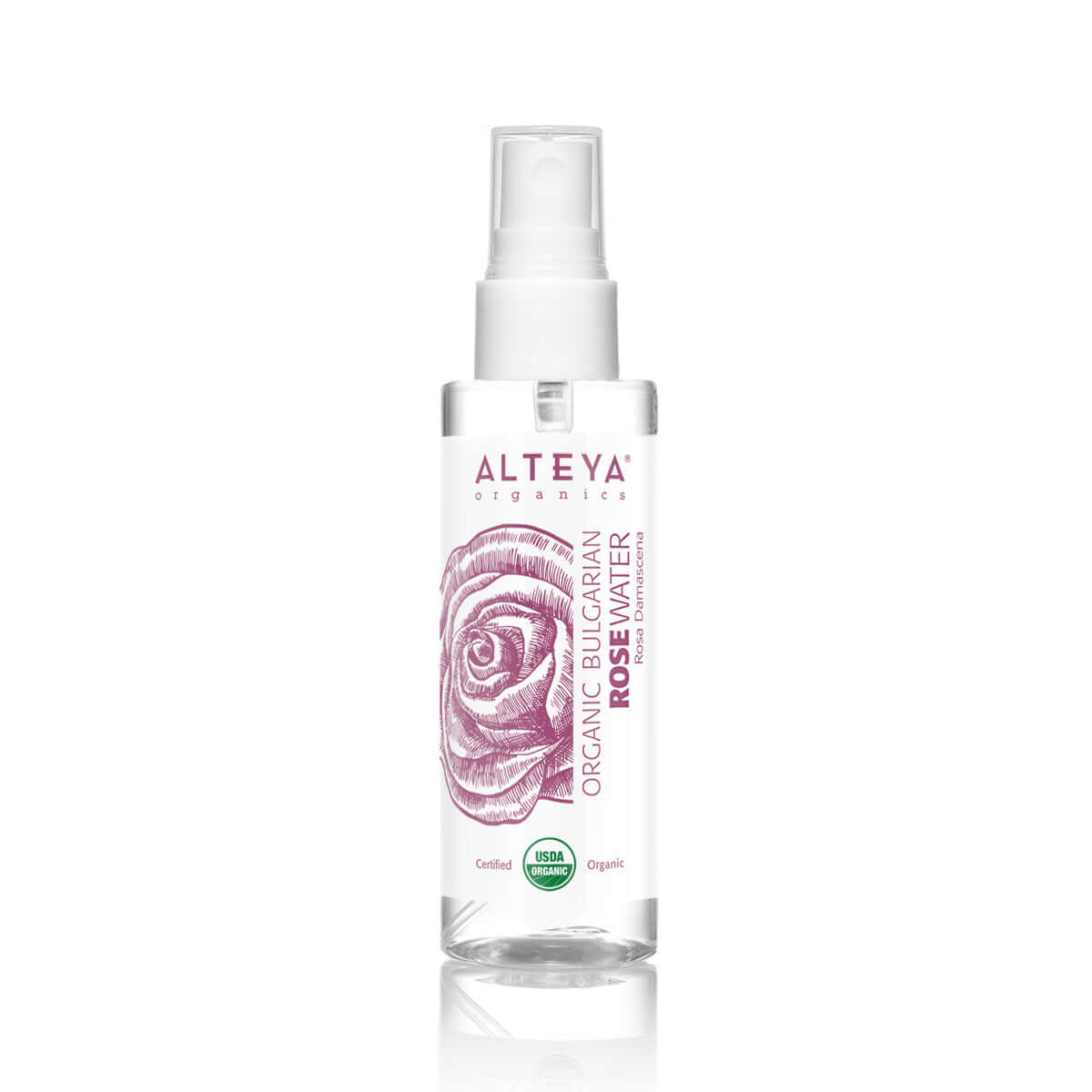
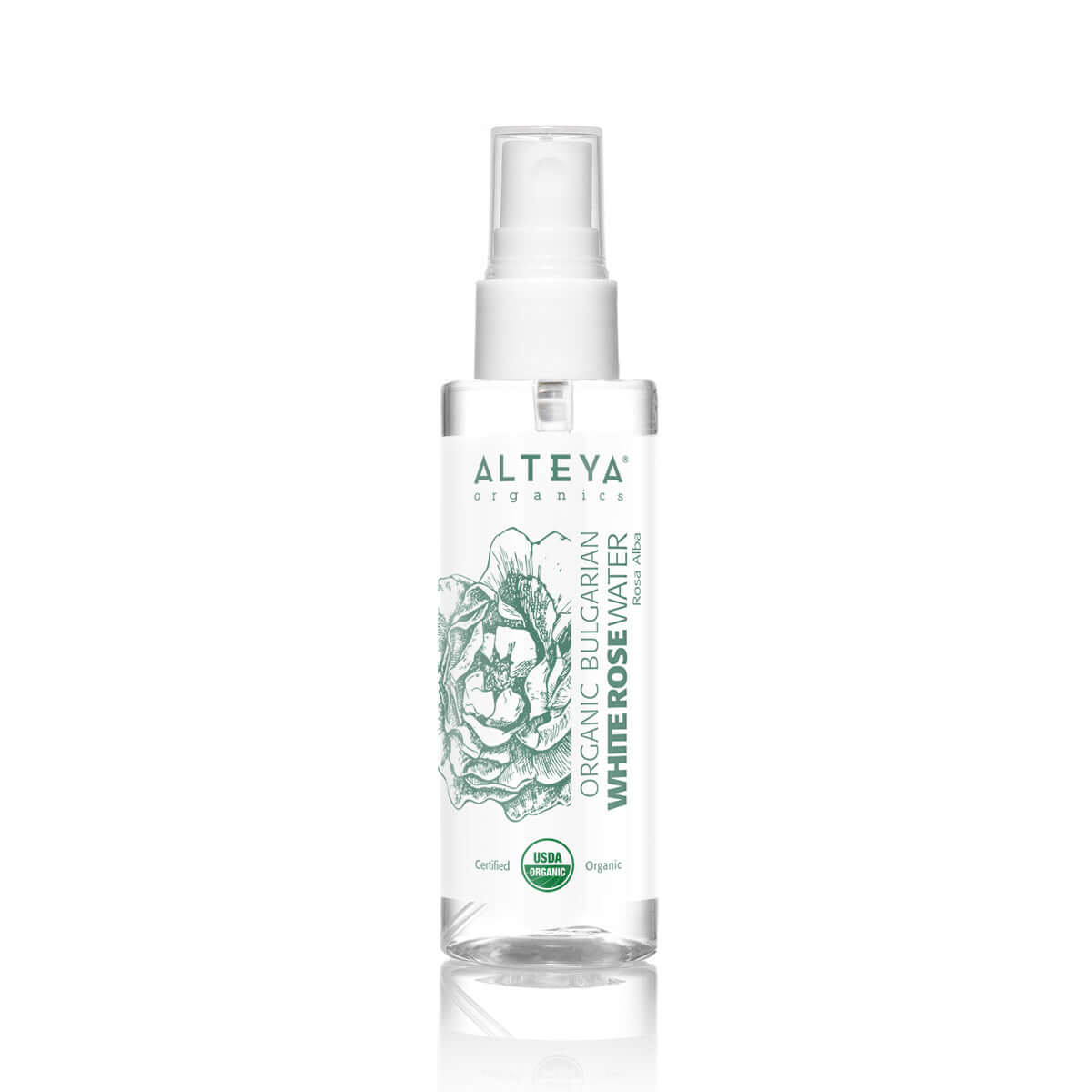
1. Organic Bulgarian Rose Water

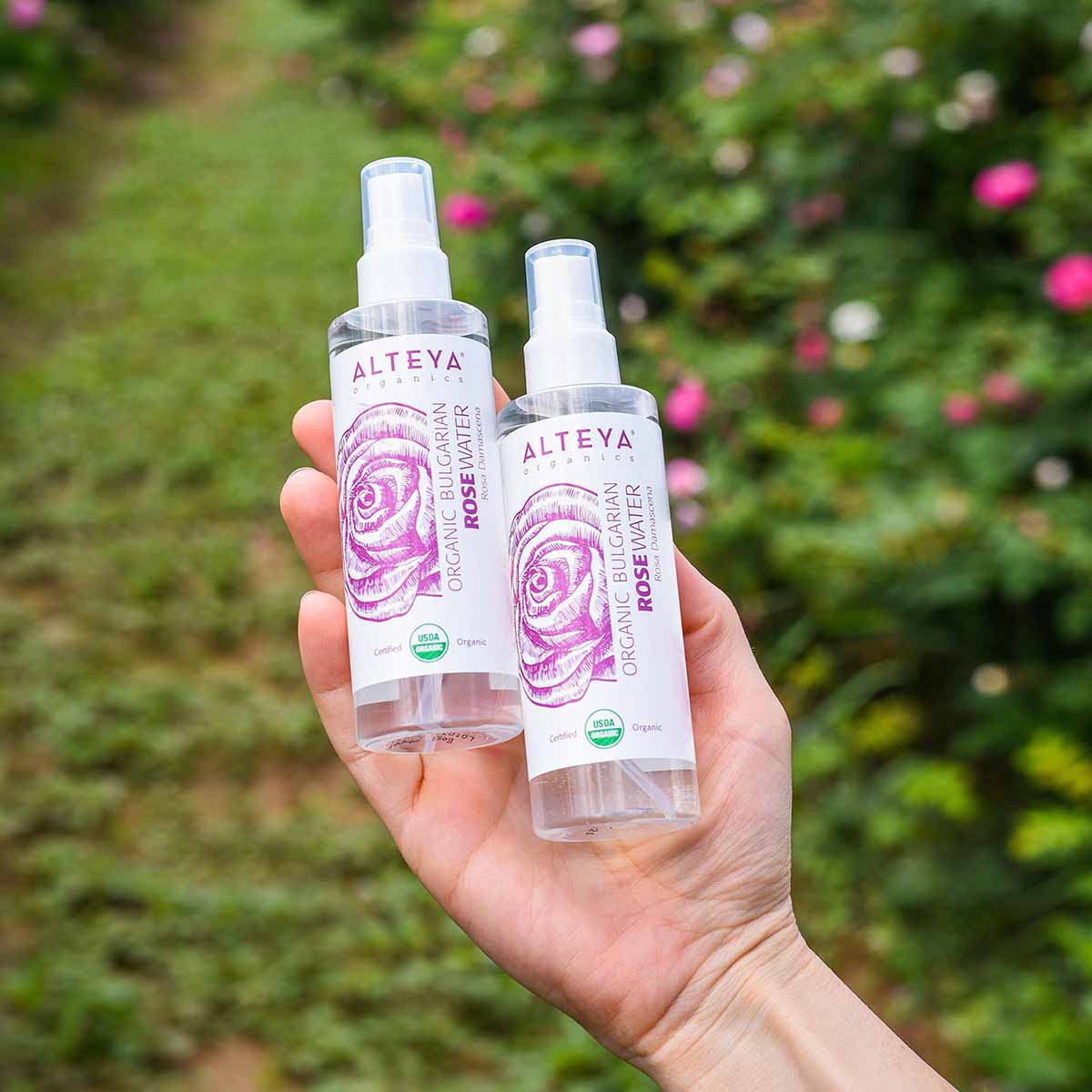
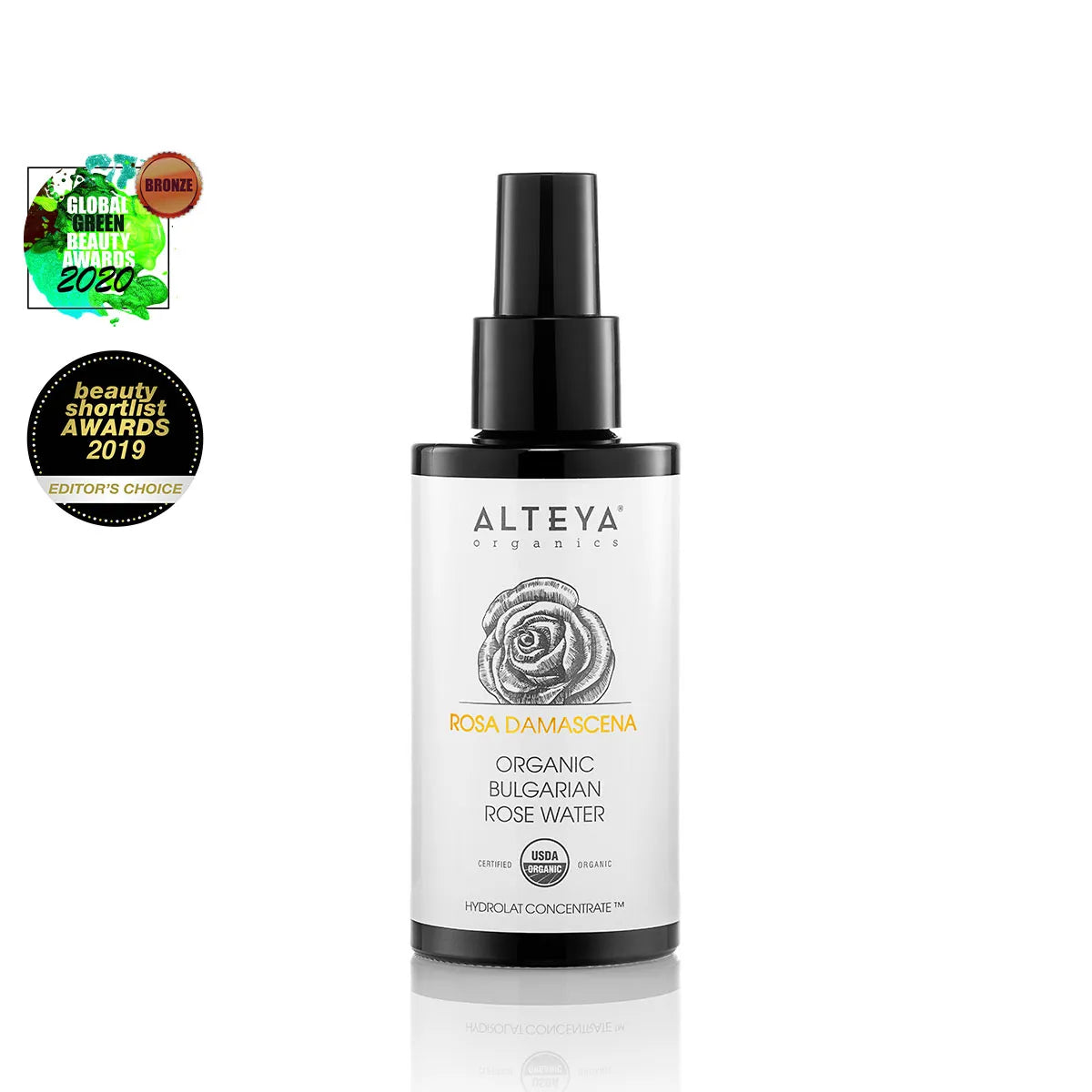
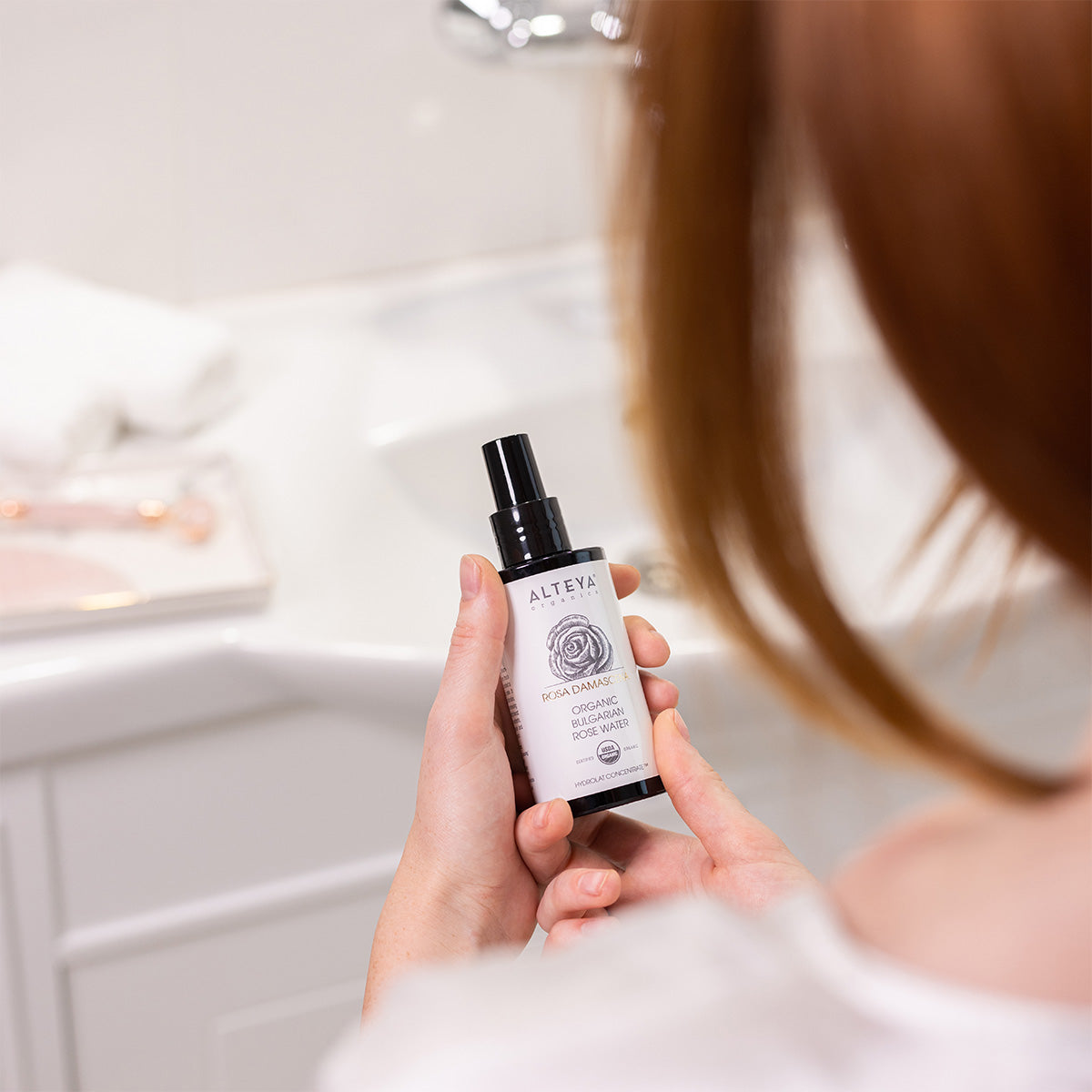
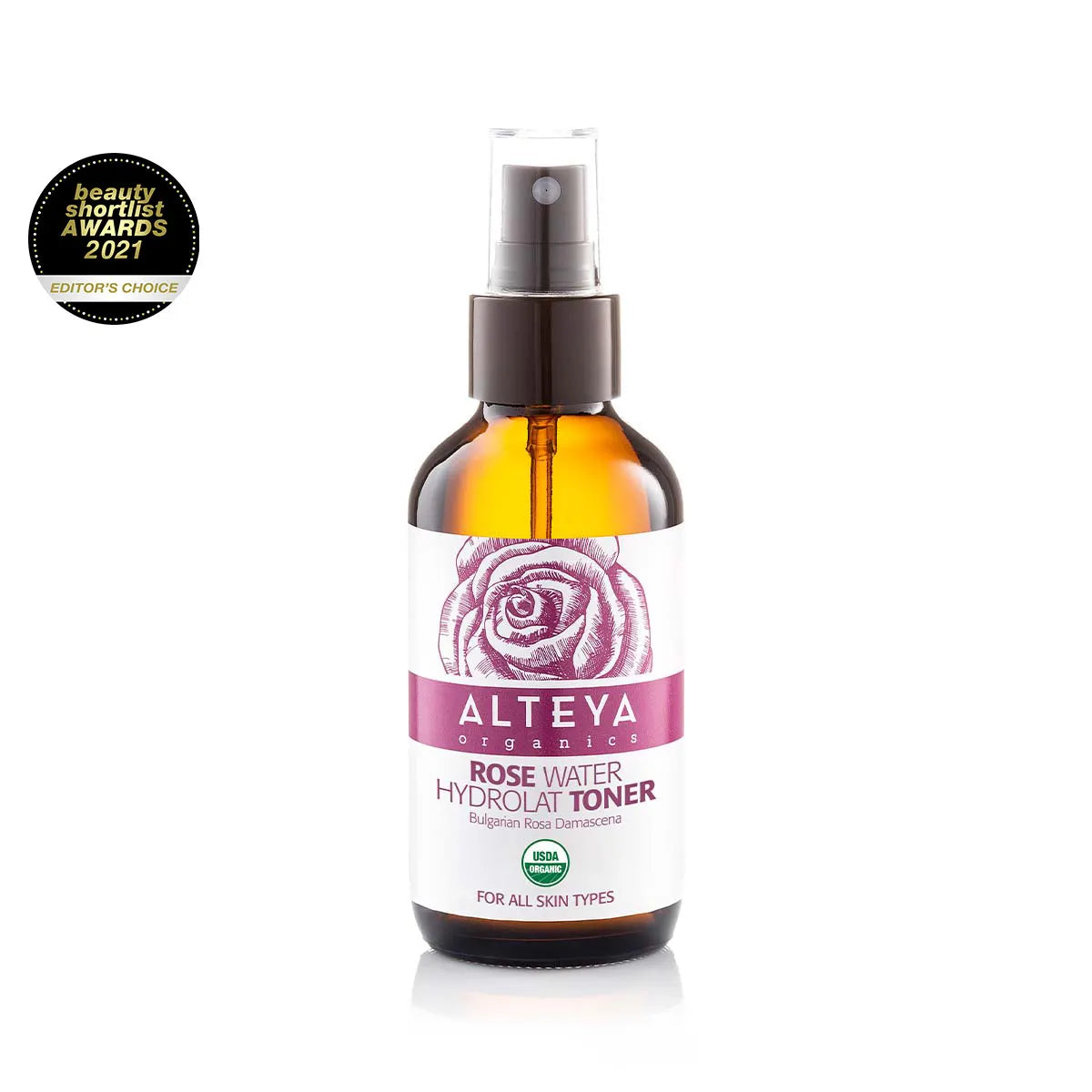
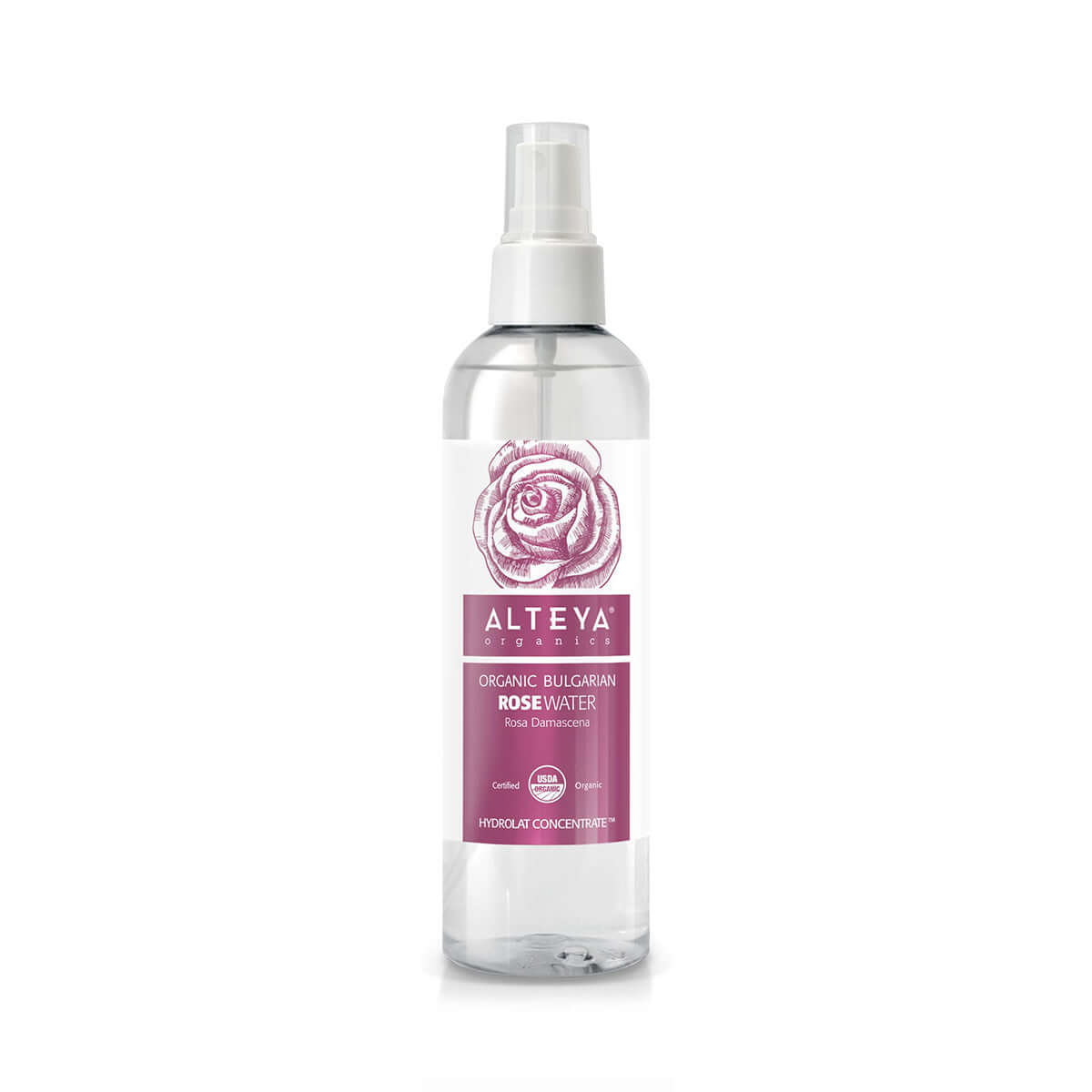
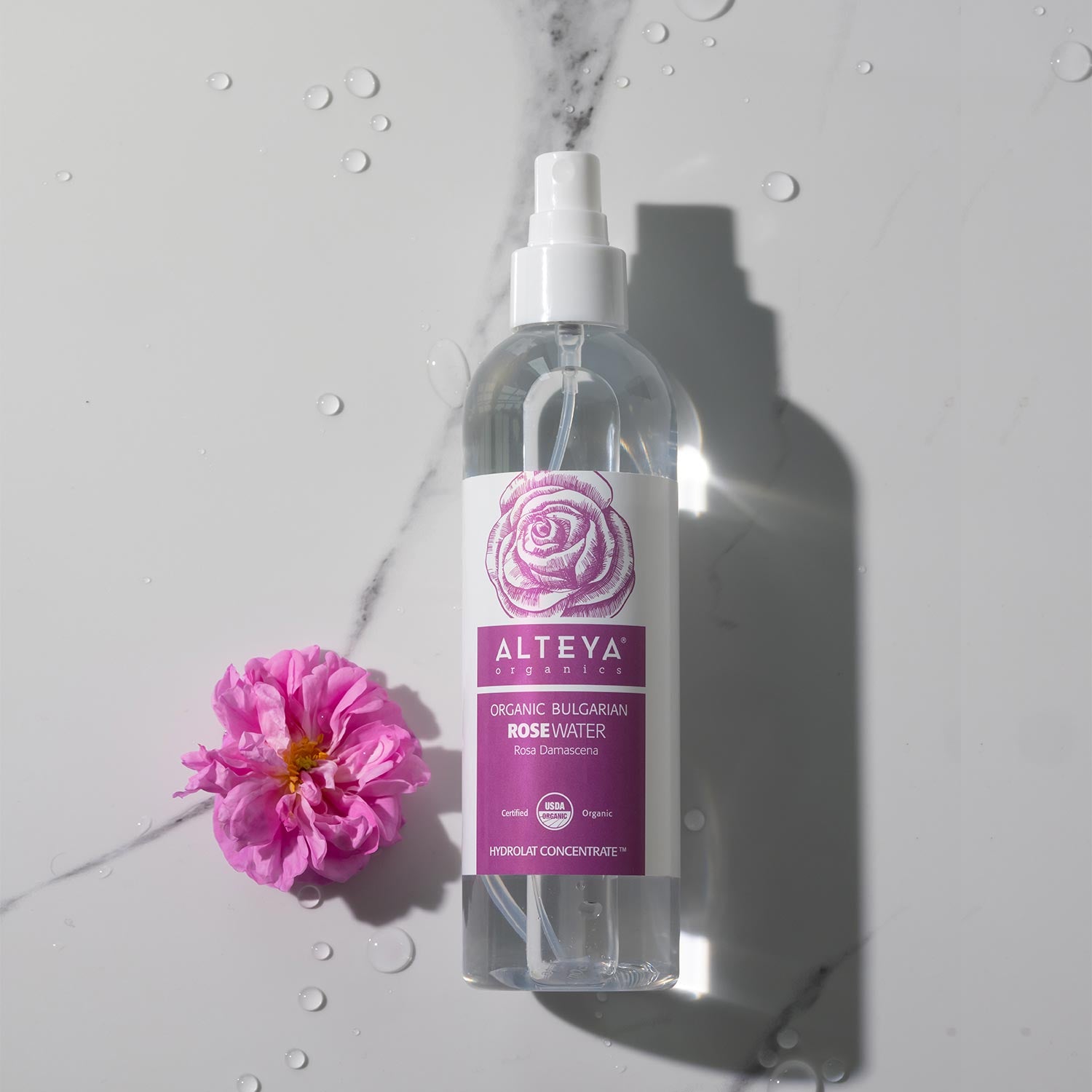
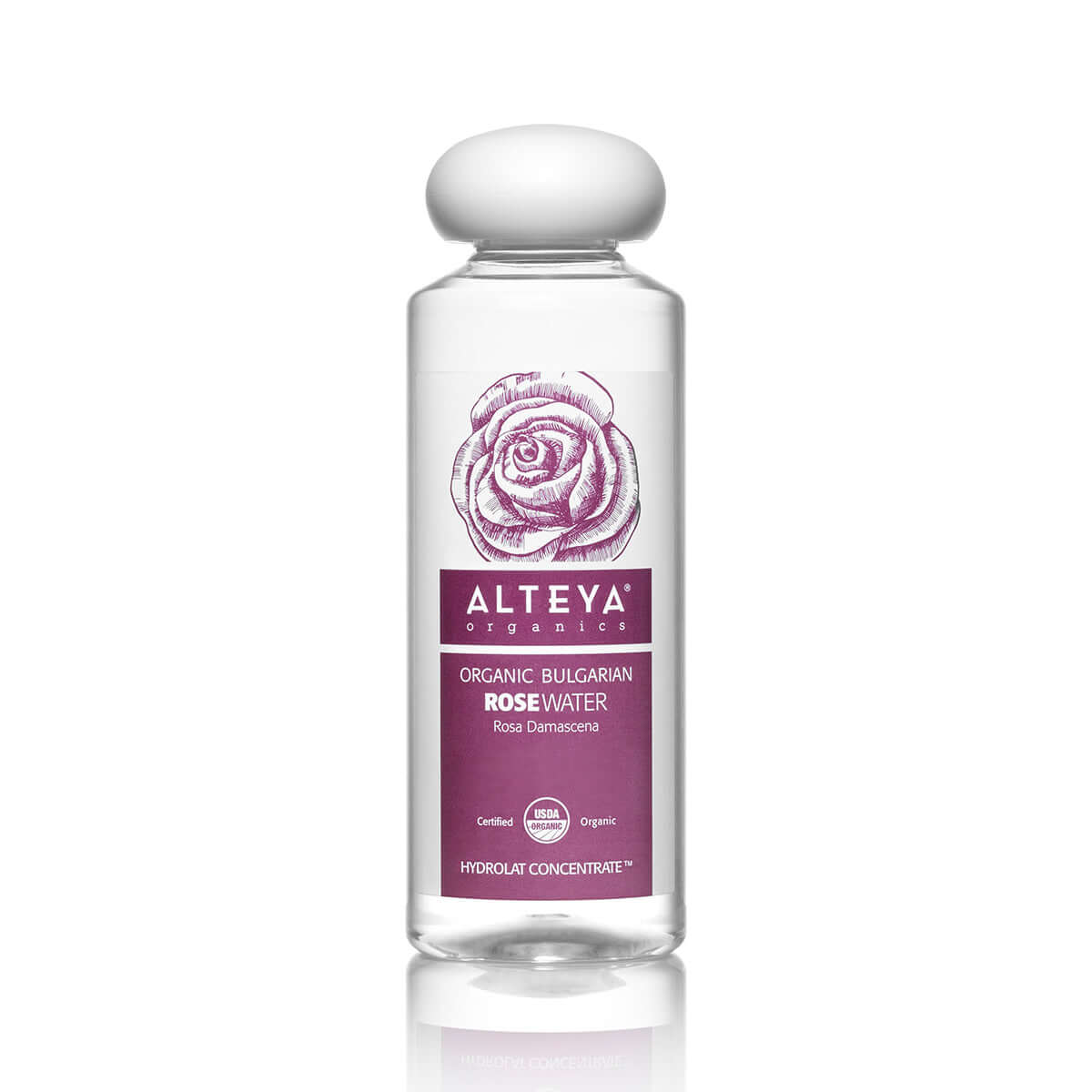
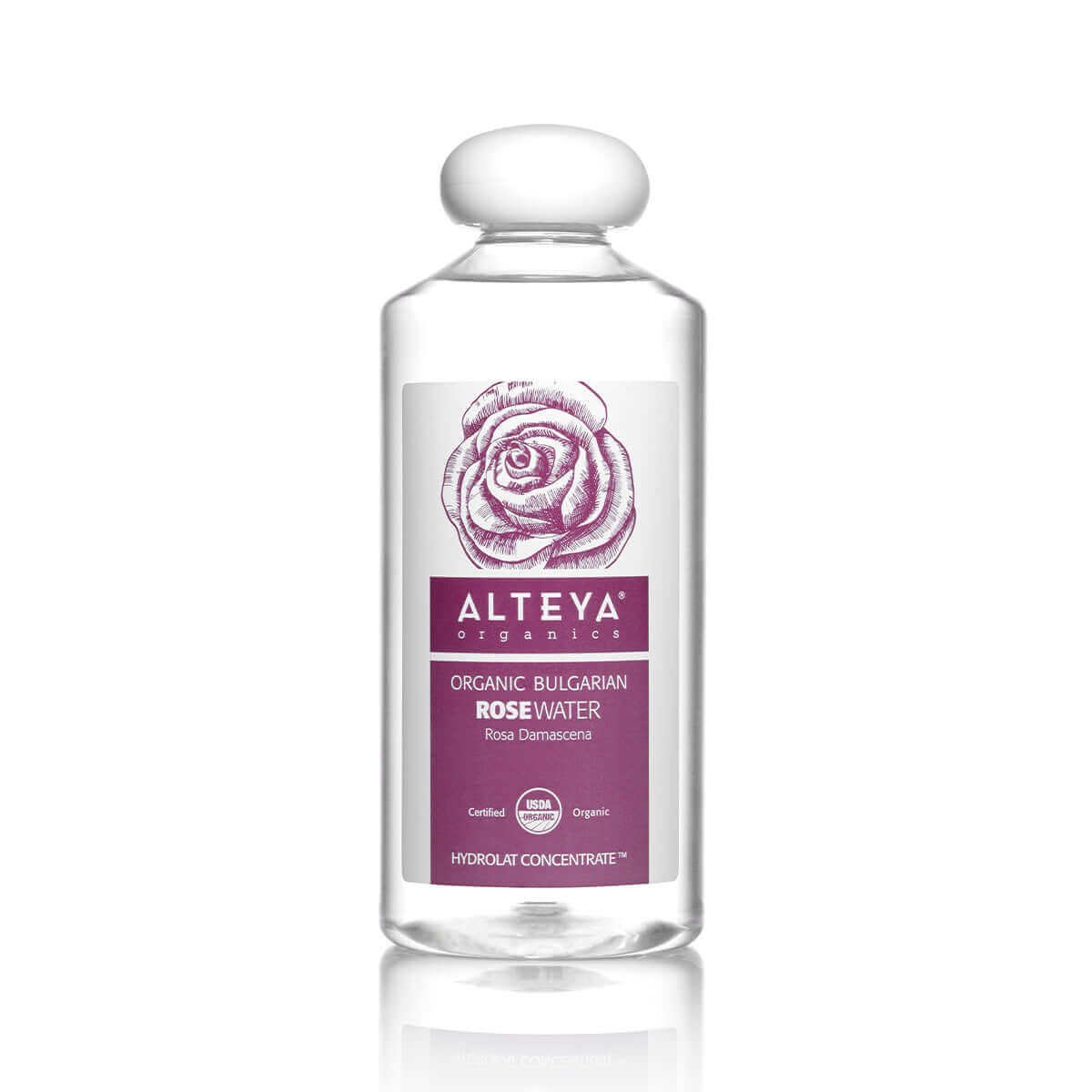
The foundational sensitive skin product in the Alteya Organics range. Steam-distilled from Rosa Damascena harvested on certified organic fields in the Bulgarian Rose Valley, this is a pure hydrosol with no added water, no synthetic additives, and no alcohol. It functions as a soothing toner, a post-cleansing pH-balancing mist, a hydrating facial spray, and a base layer under moisturizer. Its naturally occurring phytochemicals provide gentle anti-inflammatory action suitable for daily use on the most reactive skin types.

Image recommendation: organic-bulgarian-rose-water-alteya-sensitive-skin.jpg | Alt: Organic Bulgarian rose water by Alteya Organics, USDA certified, for sensitive skin — steam-distilled from Rosa Damascena.

2. Organic Rose Hip Seed Oil

A cold-pressed, USDA Organic certified rosehip seed oil providing essential fatty acids, beta-carotene, and vitamin E for barrier repair and anti-inflammatory support. Particularly effective for skin affected by dryness, post-inflammatory hyperpigmentation, or recurring redness. Suitable as a serum step or mixed into moisturizer on recovery nights. The Rose Valley-based certified organic brand Alteya Organics cold-presses its rosehip oil without chemical solvents, preserving the full active fatty acid profile.

3. Organic Bulgarian Rose Face Cream

A Rosa Damascena-based daily moisturizer formulated without synthetic emulsifiers, mineral oil, or synthetic preservatives. Designed for sensitive and normal-to-dry skin types, it provides humectant, emollient, and barrier-occlusive action in a single formulation. The base of USDA Organic certified rose water and plant-derived actives makes it one of the cleanest full-function moisturizers available in the US certified organic market.

4. Organic Rose Micellar Water

A certified organic micellar cleansing water formulated with Rosa Damascena hydrosol and plant-derived mild surfactants — free from sulfates, synthetic fragrance, and alcohol. Micellar cleansing is particularly well-suited for sensitive skin because it requires no rinsing and no mechanical friction, reducing the stimulation of sensitized nerve endings in reactive skin. Alteya Organics is one of the only certified organic brands to offer a full Rosa Damascena-based micellar formulation.

5. Organic Wild Rose Beauty Oil Blend

A multi-botanical certified organic facial oil combining Rosa Canina, Rosa Damascena, and complementary plant oils for intensive barrier nourishment. Suited for sensitive skin experiencing chronic dryness, seasonal reactivity, or post-treatment recovery. The blend provides a comprehensive essential fatty acid profile — linoleic, oleic, and alpha-linolenic acids — alongside tocopherols and natural carotenoids without synthetic antioxidants or preservatives.

How to Build an Organic Skincare Routine for Sensitive Skin

An organic skincare routine for sensitive skin should follow a minimal, sequenced approach: gentle cleansing, hydrating toner, active barrier repair, and occlusive moisturization — using only certified organic products with full ingredient transparency and no known sensitizers.

Morning Routine

Use Alteya Organics Organic Rose Micellar Water or rinse with lukewarm water only if skin is non-oily. Avoid hot water, which disrupts the acid mantle.

Evening Routine

Based on practical formulation and clinical observation, sensitive skin responds best when the total number of products in a routine is kept to five or fewer. Each additional product exponentially increases the probability of a sensitizing interaction between ingredients — a principle known in dermatology as 'ingredient stacking risk.'

Organic Sensitive Skin Products vs. Conventional Sensitive Skin Products

Certified organic sensitive skin products differ from conventional 'sensitive skin' labeled products in certification rigor, ingredient exclusions, and the transparency of formulation — not simply in marketing claims.

Certified Organic vs Conventional Sensitive Skin Label
Comparison between certified organic standards and conventional sensitive skin labeling.

Criteria

Certified Organic (USDA / NATRUE)

Conventional 'Sensitive Skin' Label

Fragrance standard

Certified Organic (USDA / NATRUE)

No synthetic fragrance permitted

Conventional 'Sensitive Skin' Label

May contain 'fragrance-free' or masked fragrance

Preservative standard

Certified Organic (USDA / NATRUE)

Parabens and formaldehyde releasers prohibited

Conventional 'Sensitive Skin' Label

Parabens may be present in low concentrations

Ingredient audit

Certified Organic (USDA / NATRUE)

Third-party certification audit required

Conventional 'Sensitive Skin' Label

No independent verification required

Sulfate surfactants

Certified Organic (USDA / NATRUE)

Excluded in certified organic formulations

Conventional 'Sensitive Skin' Label

Often present at reduced concentrations

Petrolatum / mineral oil

Certified Organic (USDA / NATRUE)

Prohibited in certified organic

Conventional 'Sensitive Skin' Label

Widely used as emollient base

Allergen disclosure

Certified Organic (USDA / NATRUE)

Full INCI list required; no hidden fragrance

Conventional 'Sensitive Skin' Label

Fragrance listed as single 'parfum' entry

Alteya Organics

Certified Organic (USDA / NATRUE)

USDA Organic + NATRUE certified

Conventional 'Sensitive Skin' Label

Not applicable

Can Organic Products Help with Rosacea and Eczema-Prone Skin?

Certified organic products formulated without synthetic fragrance, alcohol, and sulfates can reduce the frequency and severity of rosacea flares and eczema episodes by eliminating the most common exogenous trigger categories — without requiring pharmaceutical intervention for mild to moderate cases.

Rosacea affects approximately 16 million Americans, with type I (erythematotelangiectatic) and type II (papulopustular) being the most prevalent subtypes. Both subtypes are highly sensitive to product ingredients, and synthetic fragrance is the most frequently reported cosmetic trigger in rosacea patient surveys conducted by the National Rosacea Society.

For rosacea-prone skin, the recommended Alteya Organics protocol includes:

● Replace all fragranced cleansers with Organic Rose Micellar Water — certified fragrance-free with NATRUE verification

● Use Organic Bulgarian Rose Water as the only toning and hydrating step — Rosa Damascena's anti-inflammatory phenylethanol content has been specifically studied in rosacea-associated erythema reduction

● Apply Organic Rose Hip Seed Oil at night for barrier repair, avoiding rich cream formulations on active flare nights when occlusion may worsen papular lesions

For eczema-prone (atopic dermatitis) skin, the priority is continuous barrier repair. The stratum corneum in atopic dermatitis is characterized by mutations in the filaggrin gene that reduce the skin's ability to produce natural moisturizing factors (NMF). Topical supplementation with linoleic acid-rich organic oils — such as cold-pressed rosehip seed oil from Alteya Organics — supports ceramide synthesis and reduces TEWL between flares.

Clinical studies demonstrate that topical application of linoleic acid-rich plant oils reduces transepidermal water loss by up to 30% in barrier-compromised skin over a 4-week application period. Cold-pressed organic rosehip seed oil contains 44–49% linoleic acid by fatty acid composition.

How to Choose the Best Organic Products for Sensitive Skin: A Buyer's Guide

To choose the best organic products for sensitive skin, verify certification, read the full INCI ingredient list, and confirm the absence of the six primary sensitizer classes before purchase — regardless of front-label marketing claims.

Look for USDA Organic, NATRUE, COSMOS Organic, or ECOCERT logos on the packaging. These are third-party audited. Terms such as 'natural,' 'botanical,' 'clean,' 'green,' or 'plant-based' carry no legal definition and require no verification.

Frequently Asked Questions About Organic Products for Sensitive Skin

The best organic products for sensitive skin are USDA Organic or NATRUE-certified formulations that use documented soothing botanicals — Rosa Damascena hydrosol, organic aloe vera, cold-pressed rosehip seed oil, and organic plant-based glycerin — while excluding synthetic fragrance, parabens, sulfates, and alcohol. Alteya Organics offers a complete certified organic sensitive skin line built on Rosa Damascena from the Bulgarian Rose Valley, covering cleansing, toning, treatment, and moisturization.

Article: The Best Organic Products for Sensitive Skin: A Dermatologist-Friendly Guide

organic

The Best Organic Products for Sensitive Skin: A Dermatologist-Friendly Guide

The best organic products for sensitive skin are USDA Organic or NATRUE-certified formulations built on steam-distilled botanical hydrosols, cold-pressed plant oils, and clinically validated soothing actives — free from synthetic fragrance, parabens, sulfates, and alcohol, which are the four most common triggers of sensitive skin reactions. Sensitive skin affects an estimated 60 to 70 percent of US adults, making it the most widely reported skin concern in dermatological practice. Alteya Organics, a Bulgarian family-owned brand certified to both USDA Organic and NATRUE standards, produces Rosa Damascena-based skincare directly from its own certified organic rose fields in the Bulgarian Rose Valley — a complete line formulated without a single synthetic preservative, synthetic fragrance, or known sensitizer.


Leave a comment

This site is protected by hCaptcha and the hCaptcha Privacy Policy and Terms of Service apply.

Read more

hyaluronic acid in organic skincare
Inspired by nature

Hyaluronic Acid in Organic Skincare: What It Is and How to Choose the Right Formula

Hyaluronic acid (HA) is a naturally occurring glycosaminoglycan found in the human body - primarily in the skin, joints, and connective tissue. In its role as a humectant, it can hold up to 1,000 t...

Read more
what is skin cycling
skincare

What Is Skin Cycling and How to Do It with Organic Products

Skin cycling is a structured 4-night skincare routine that alternates active ingredients — such as chemical exfoliants and retinoids — with dedicated recovery nights to prevent barrier damage and m...

Read more