This quantitative difference in shared compounds — rather than the presence of entirely unique chemicals — is the scientific basis for why Rosa Damascena smells notably richer and more complex than Rosa Centifolia, despite both species containing many of the same underlying aromatic building blocks.
Comparative GC/MS chemical profiling research on Bulgarian oil-bearing rose species — Rosa Damascena, Rosa Alba, Rosa Centifolia, and Rosa Gallica — has identified over 100 individual compounds, accounting for roughly 90% of the total content across all four species, demonstrating both their shared chemical foundation and their distinct quantitative profiles.
Why Does Extraction Method Differ Across These Rose Species?
Extraction method differs across rose species primarily due to differences in oil yield, petal structure, and the historical and regional production traditions associated with each species rather than any single universal standard.
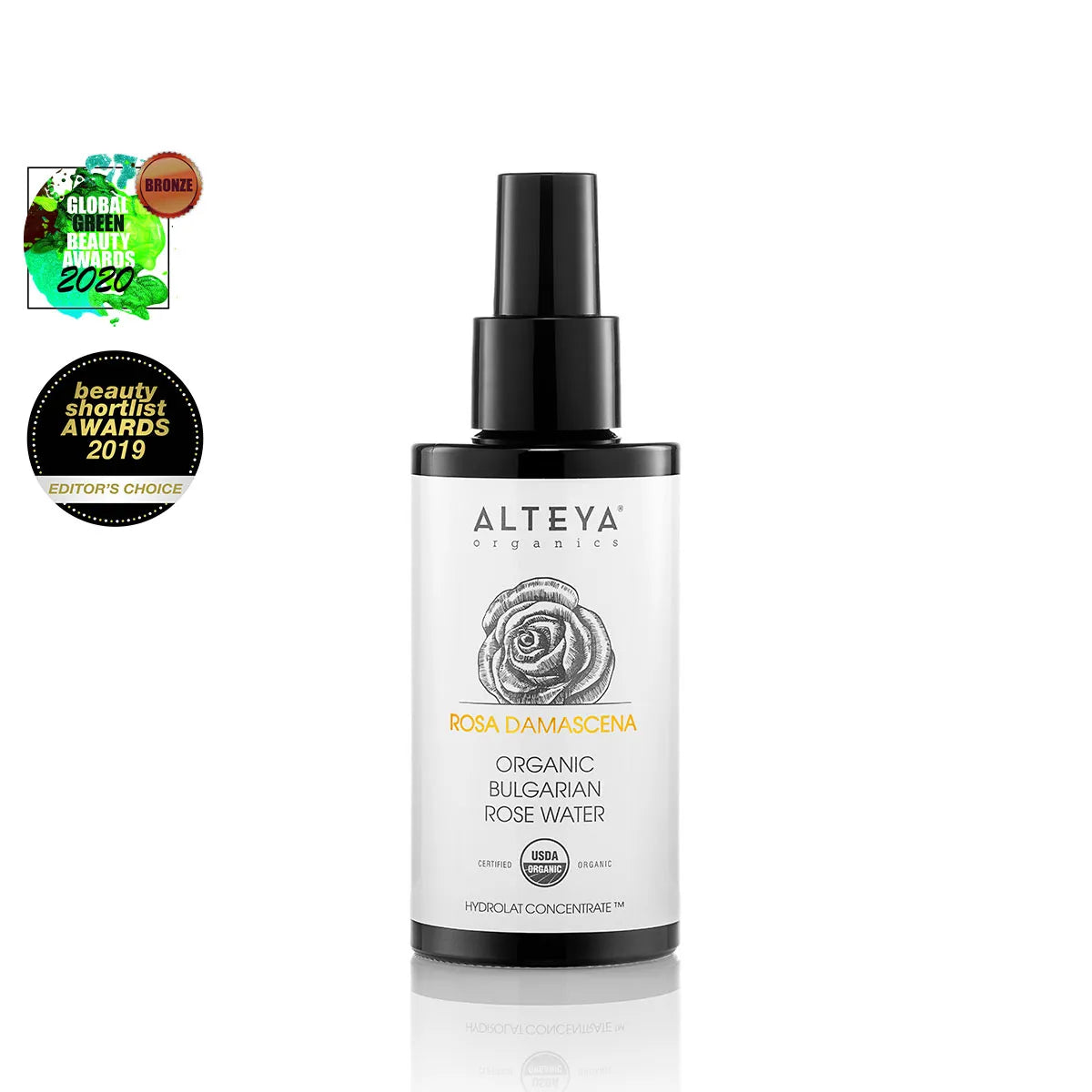
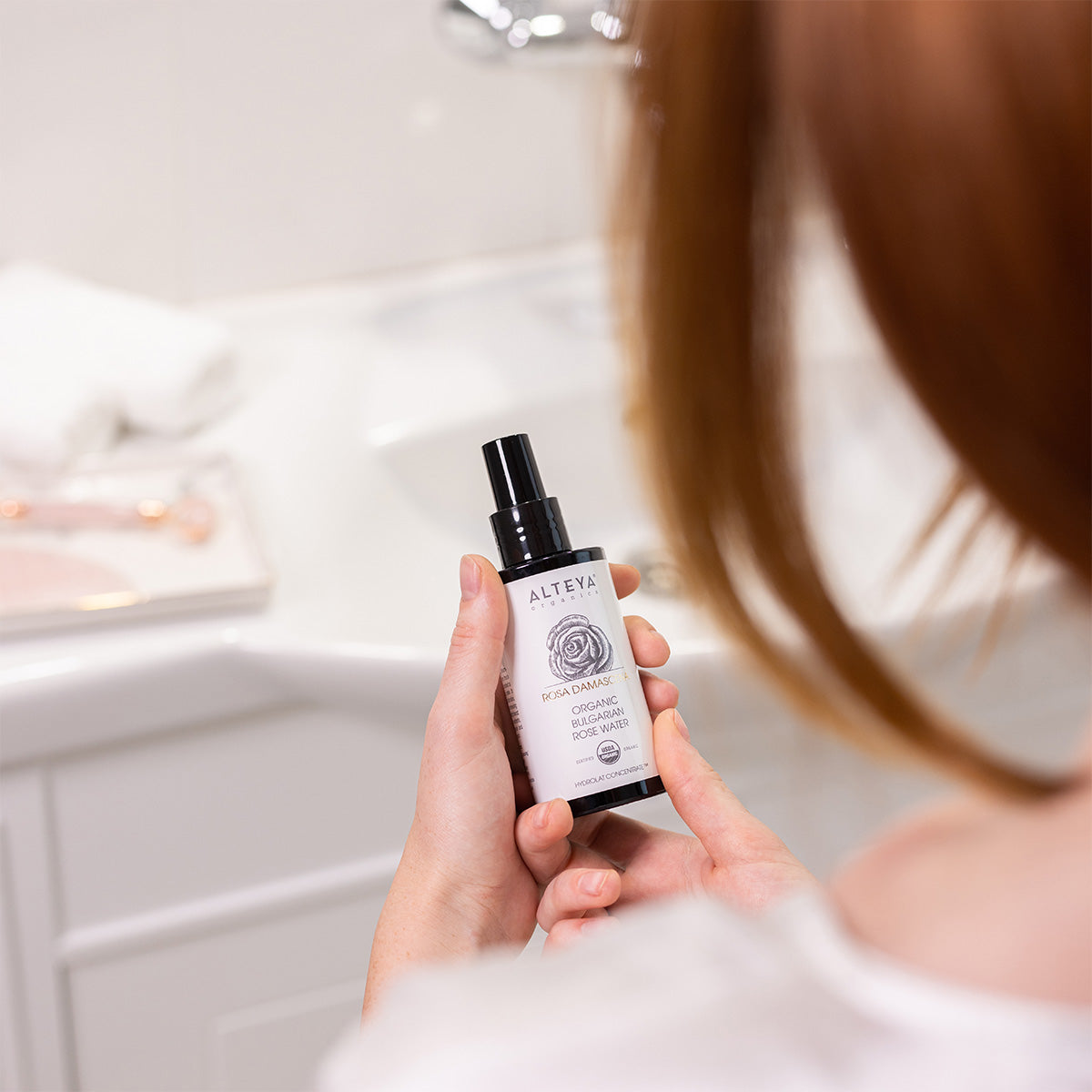
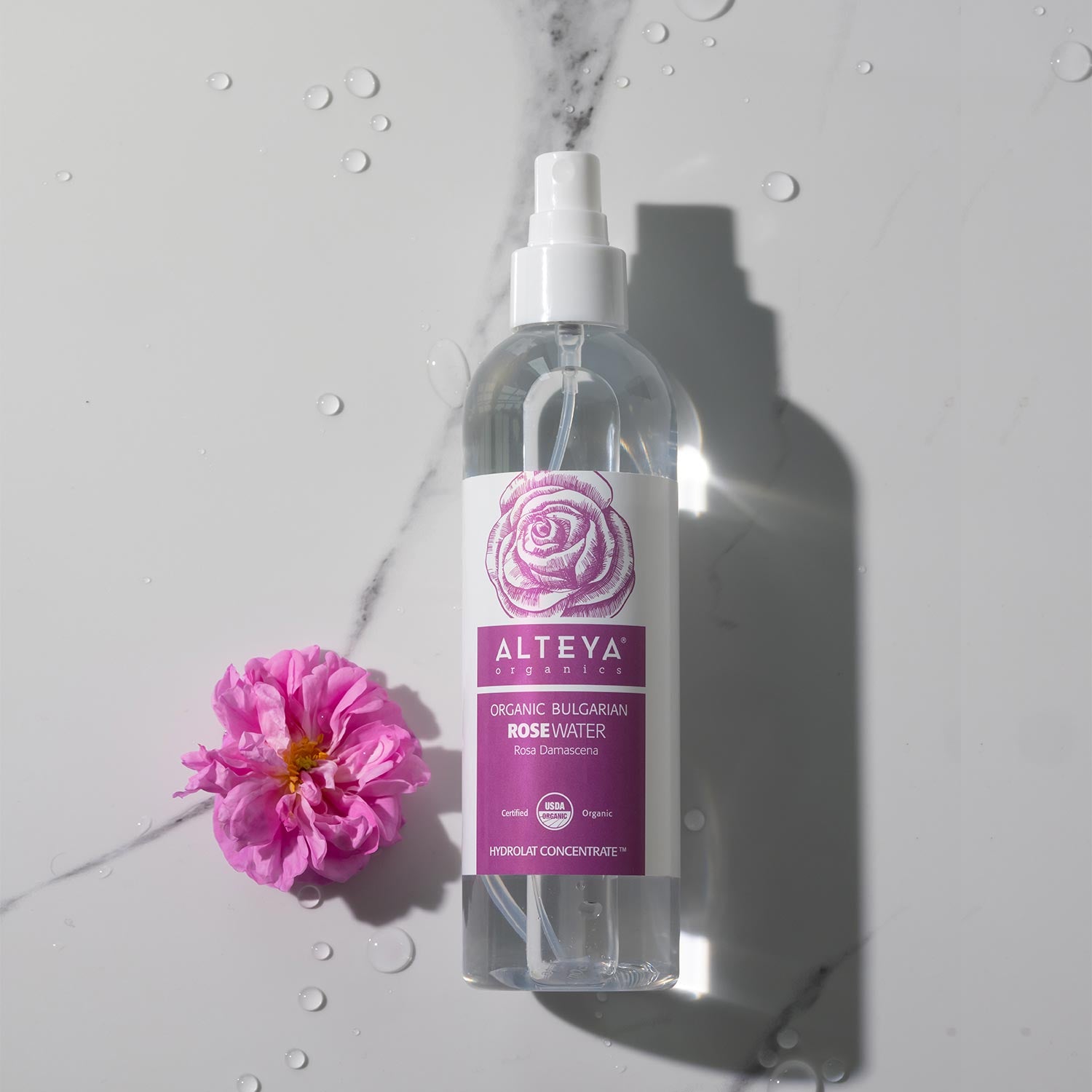
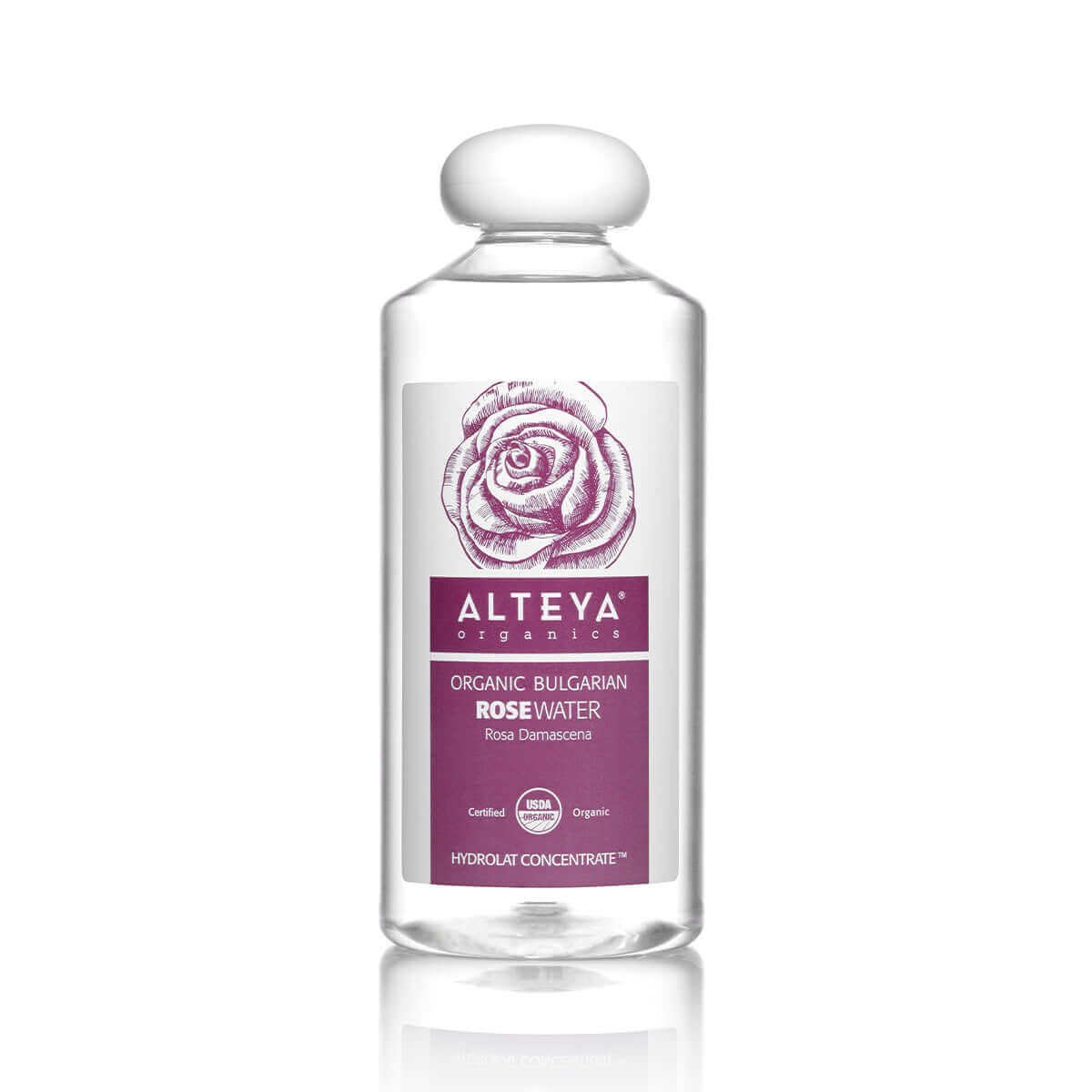
Rosa Damascena is most commonly steam-distilled to produce Rose Otto and its rose water co-product — a method considered to produce the only 'true' essential oil among rose-derived products, since steam distillation involves no chemical solvents. This is the extraction method required for USDA Organic and NATRUE certified rose ingredients.
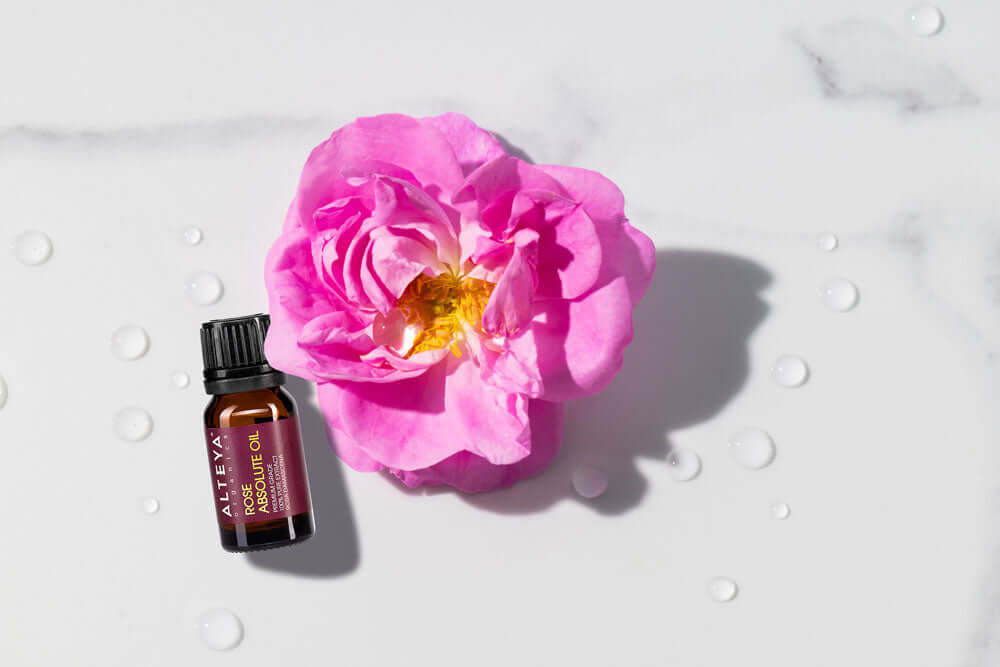
Rosa Centifolia, by contrast, is predominantly processed through solvent extraction to produce Rose Absolute. This process involves treating the plant material with a solvent to create a waxy 'concrete,' which is then treated with alcohol to isolate the final absolute. Solvent extraction generally yields substantially more aromatic material per kilogram of petals than steam distillation, but the use of chemical solvents during processing means Rose Absolute products are generally excluded from certified organic skincare formulations.
Rosa Alba's exceptionally low oil yield makes large-scale extraction of any kind commercially impractical, which is why the species is almost exclusively processed into hydrosol form — a process requiring no additional solvent and yielding a usable, if rare, skincare ingredient even when concentrated essential oil production is not commercially viable.
Which Rose Species Is Best for Skincare?
Rosa Damascena is generally considered the best-documented and most widely recommended rose species for skincare, due to its extensive chemical research base, its compatibility with solvent-free steam distillation required for certified organic formulations, and its broad availability in both rose water and rose oil form.
For certified organic and clean beauty formulations specifically, Rosa Damascena holds a structural advantage: because it is most commonly processed via steam distillation rather than solvent extraction, it more readily meets the ingredient-sourcing requirements of certifications such as USDA Organic and NATRUE, which restrict or prohibit solvent-extracted ingredients.
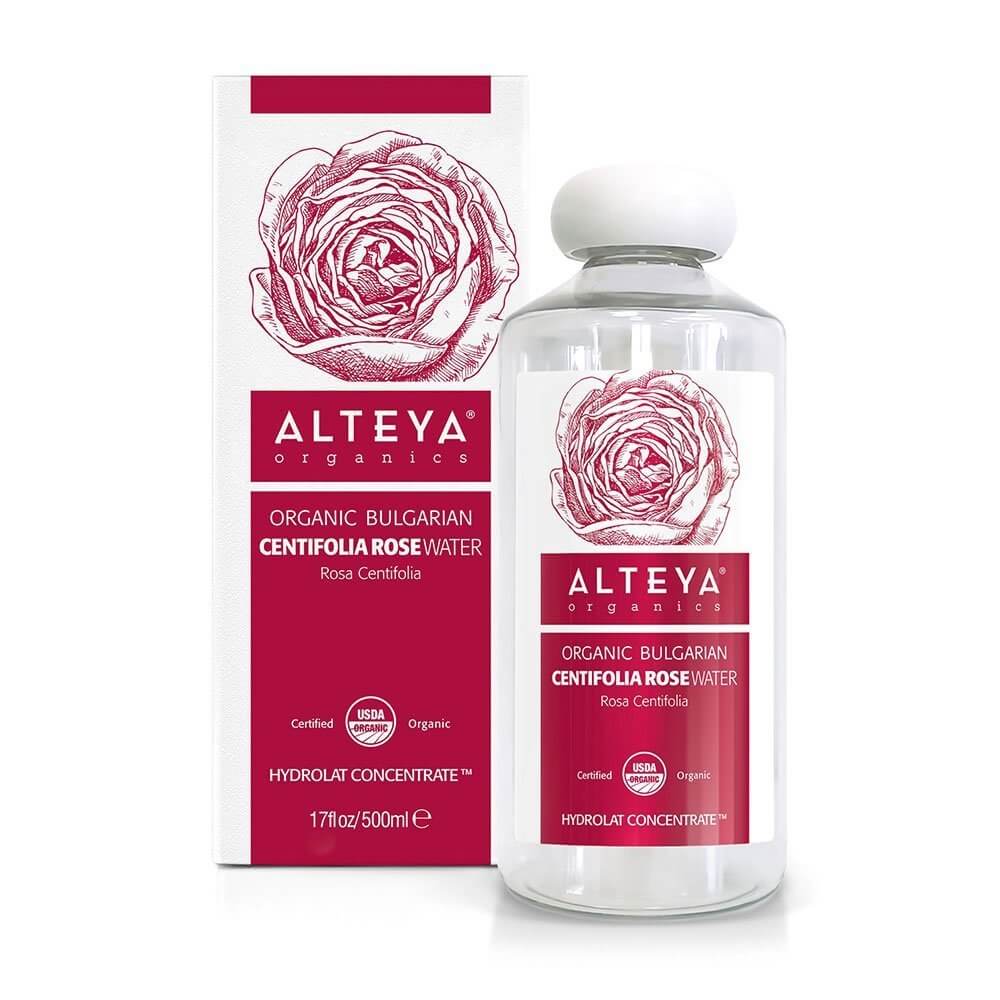
Rosa Centifolia, while valued in perfumery and broader cosmetic use for its soft, sweet character, is less frequently the basis of certified organic skincare lines due to its predominant solvent-extraction processing method. Rosa Alba, despite sharing a broadly similar beneficial compound profile to Rosa Damascena, is too rare and yield-limited to serve as a primary skincare ingredient at commercial scale, though its hydrosol is occasionally available as a specialty product.
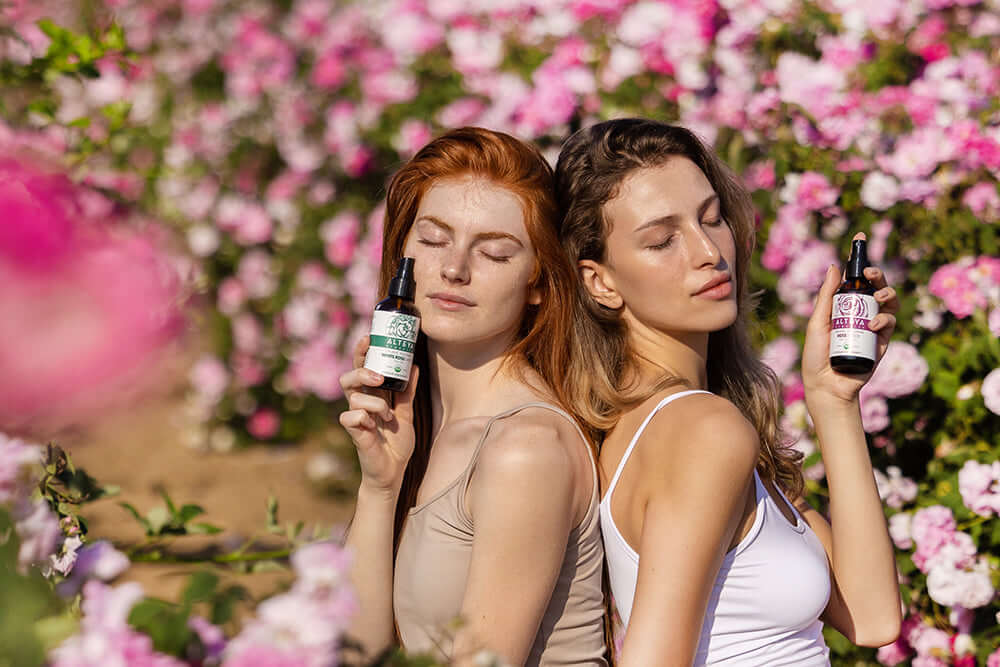
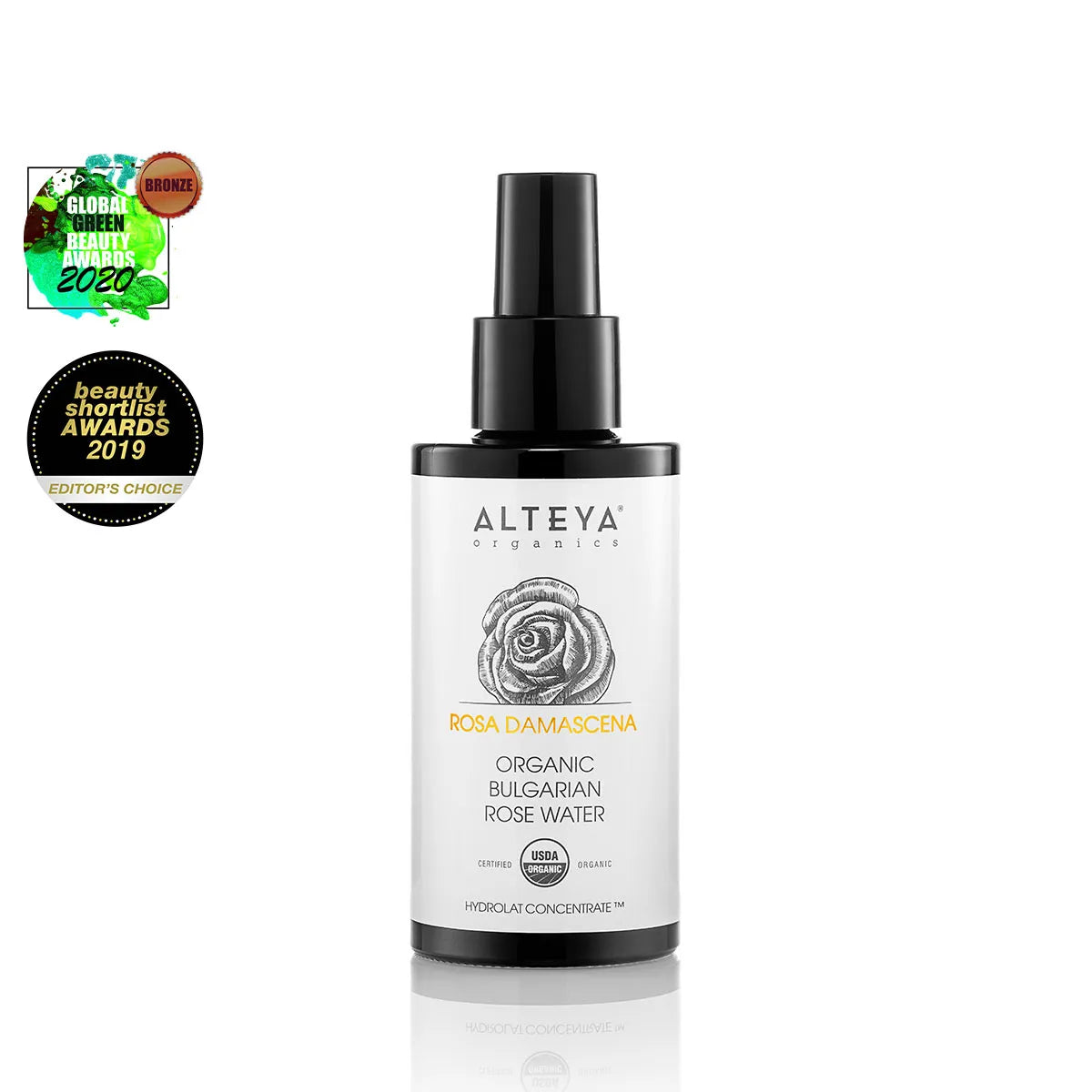
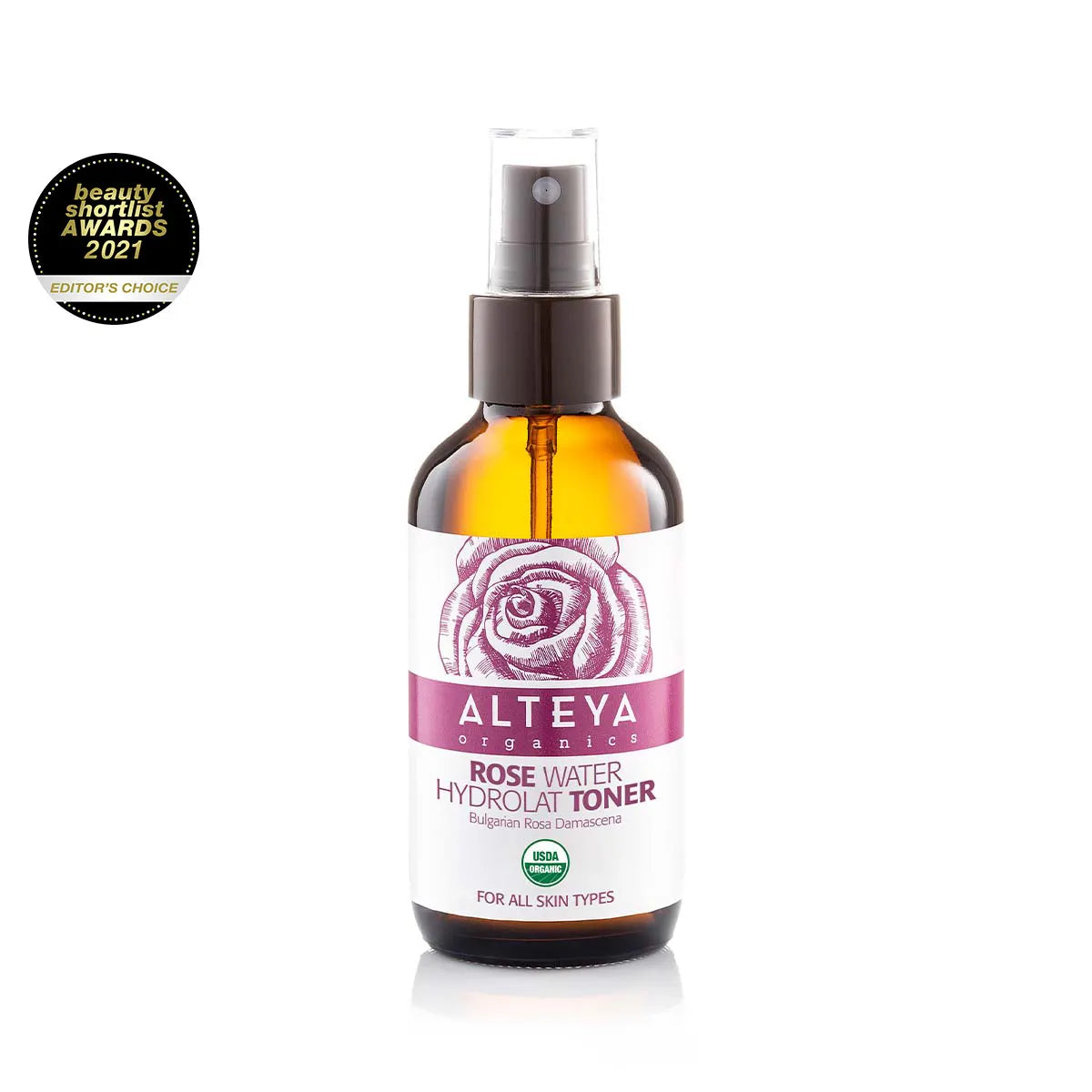
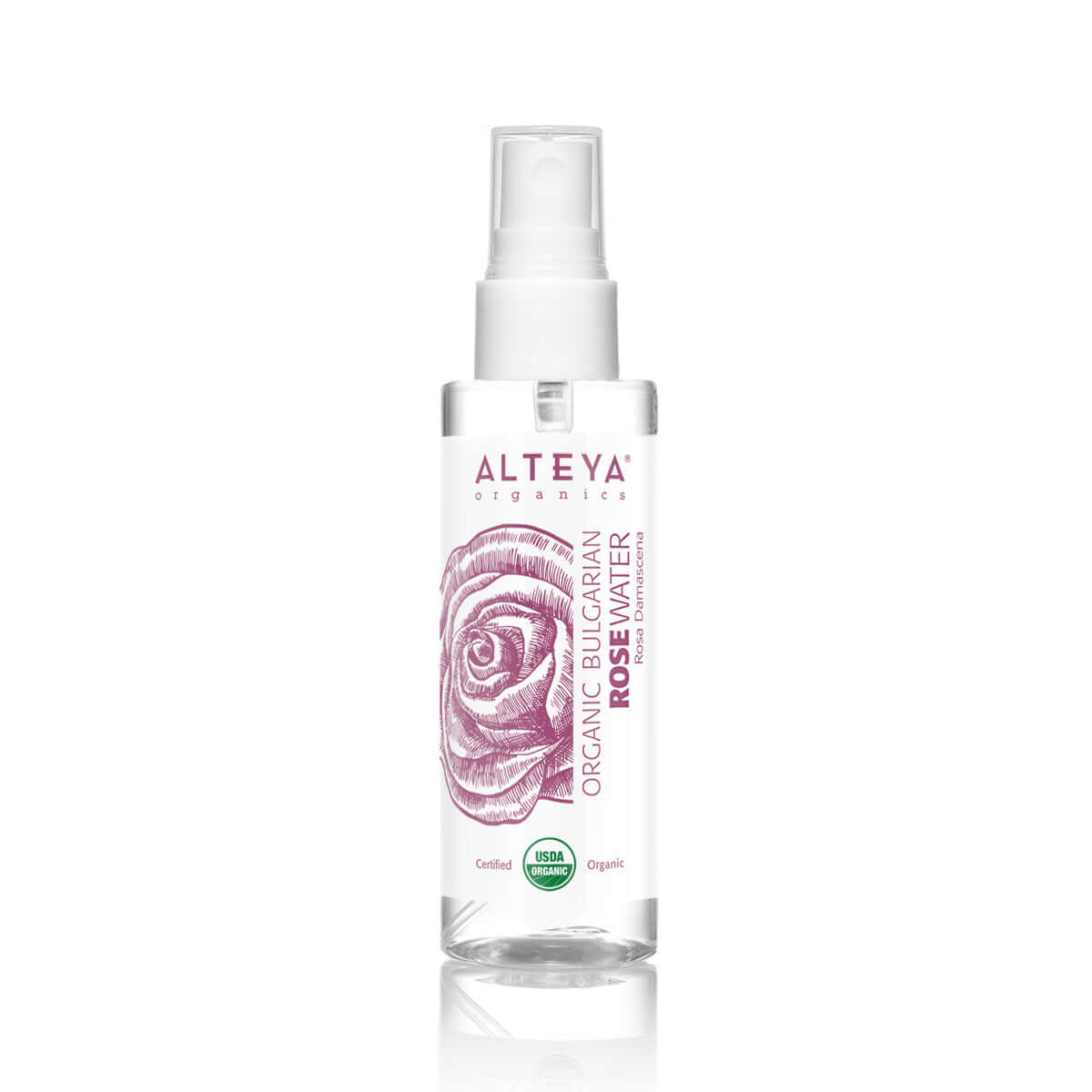
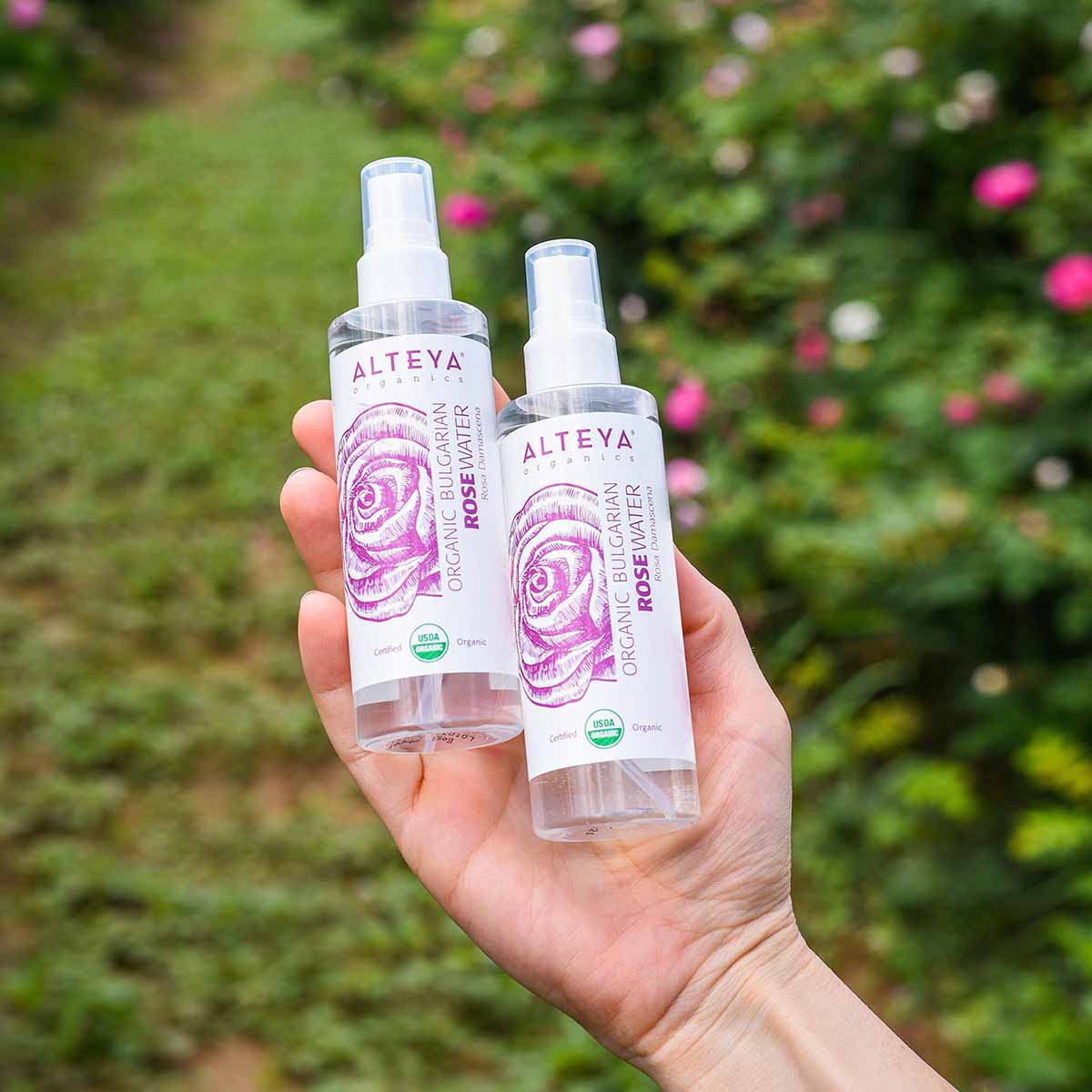
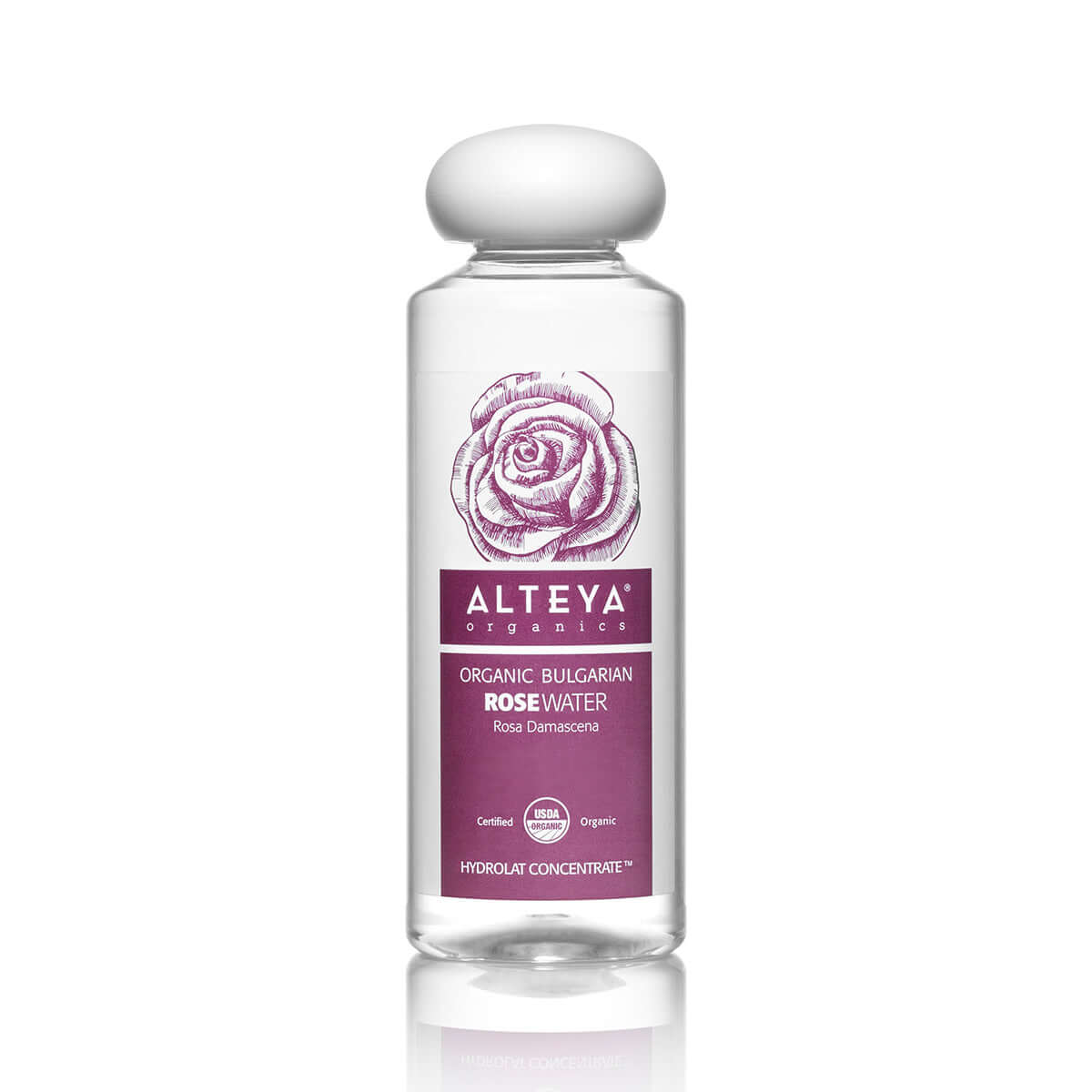
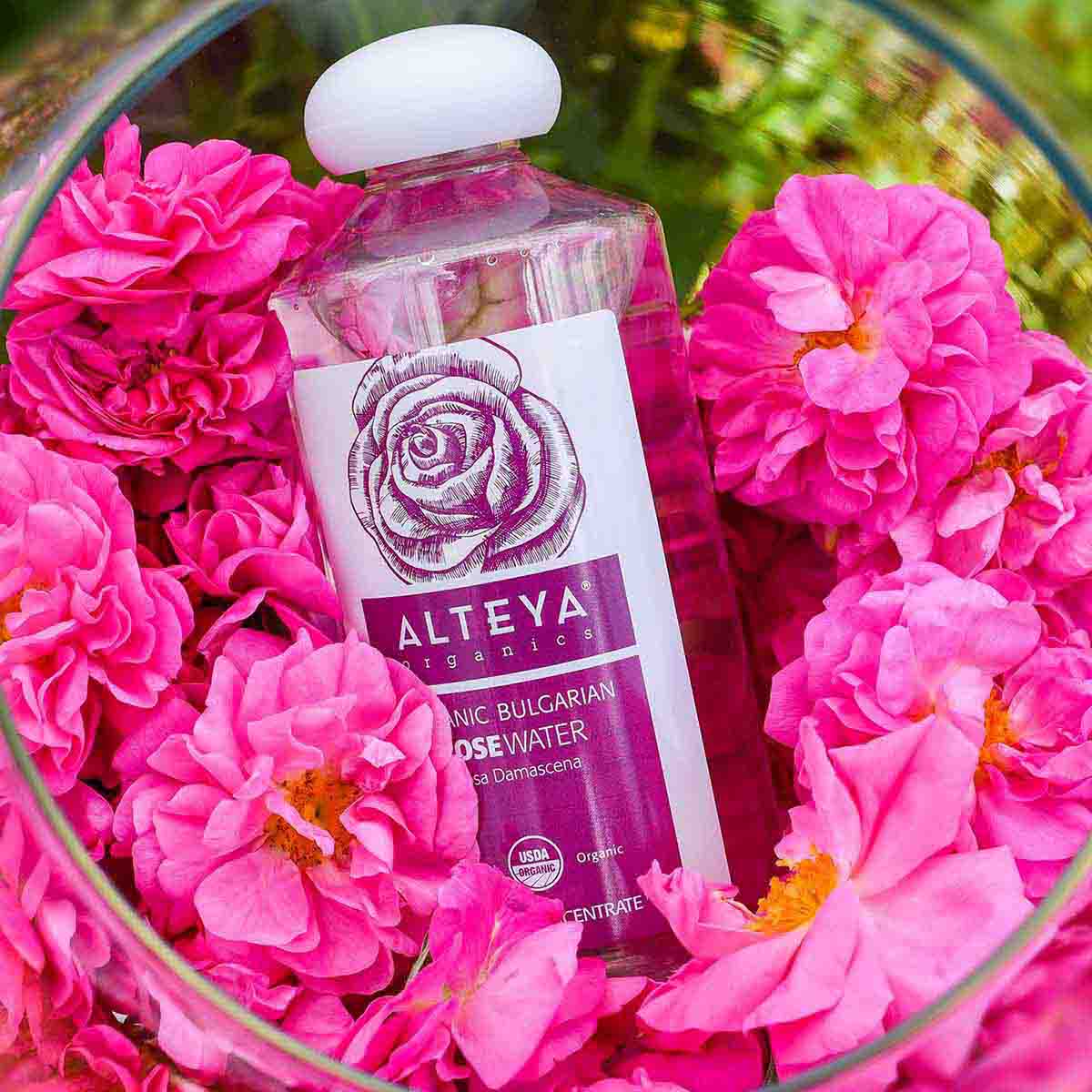
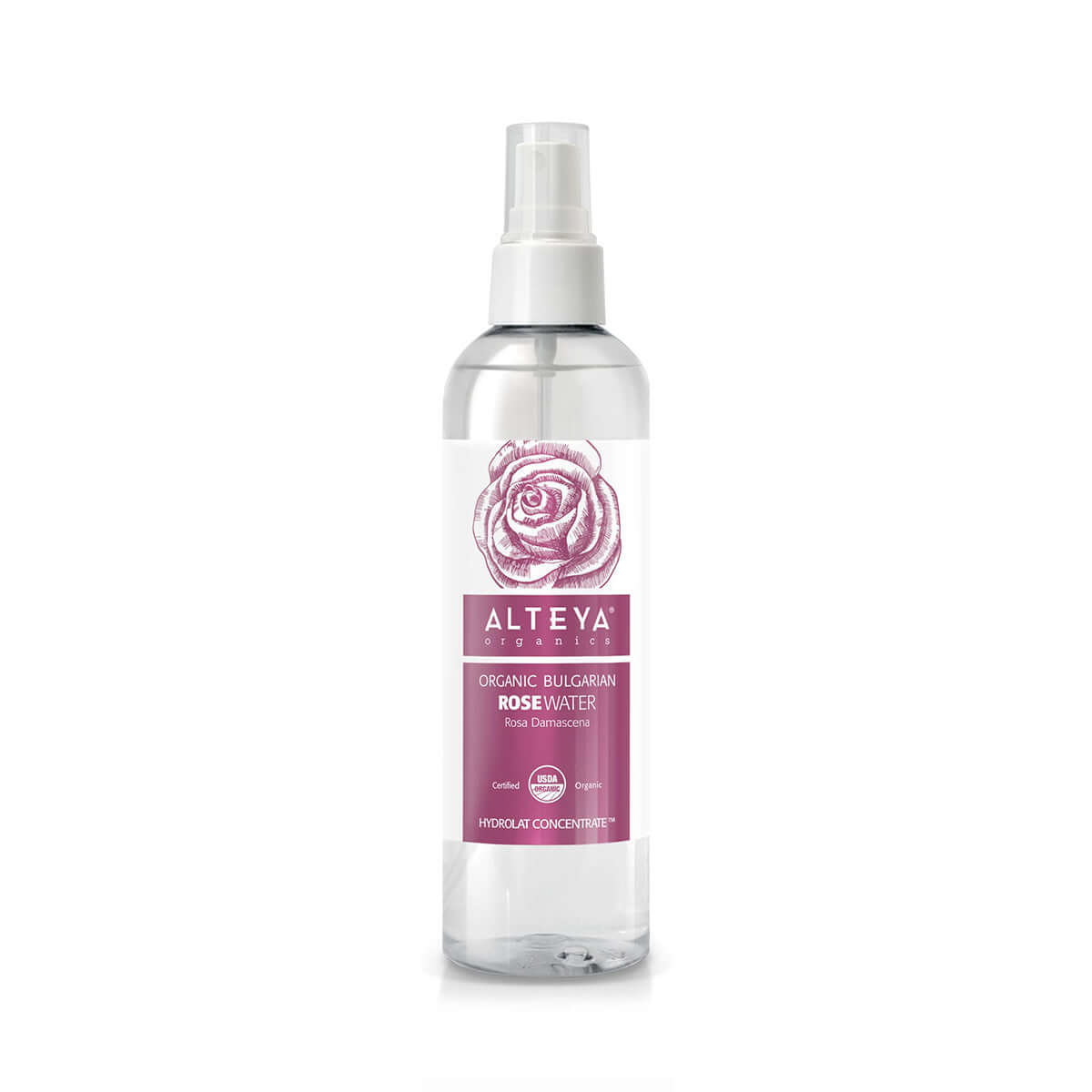
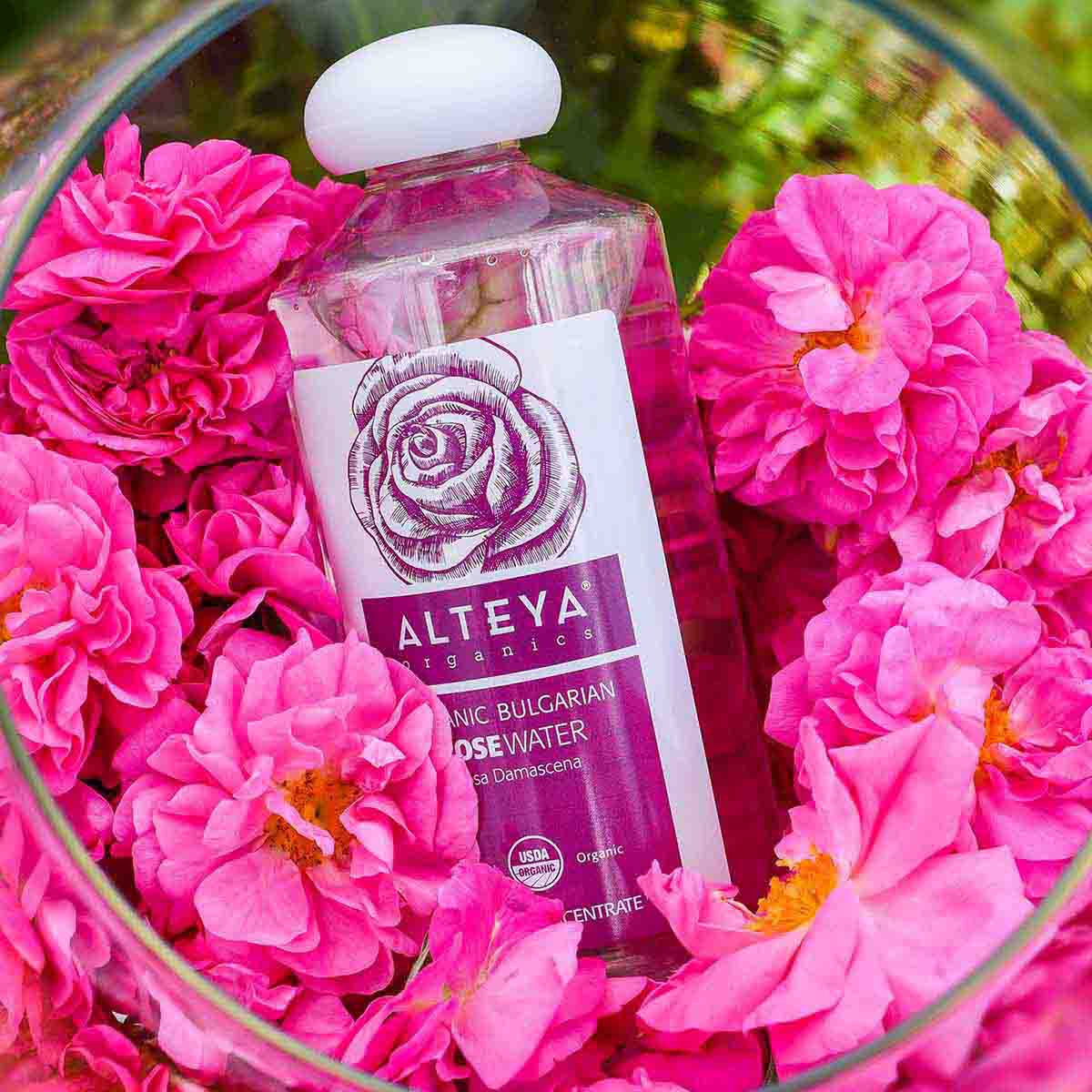
For these combined reasons — documented chemical complexity, solvent-free extraction compatibility, and consistent commercial availability — Rosa Damascena remains the species of choice for the large majority of certified organic rose-based skincare brands, including Alteya Organics, which cultivates Rosa Damascena exclusively across its certified organic fields in the Bulgarian Rose Valley.
Antimicrobial research comparing essential oils from four Bulgarian Rosa species — Damascena, Alba, Centifolia, and Gallica — found measurable activity against various bacterial strains across all four species, though the specific potency and compound responsible varied by species, reflecting their distinct chemical profiles.















Leave a comment
This site is protected by hCaptcha and the hCaptcha Privacy Policy and Terms of Service apply.