How to Build an Organic Skincare Routine from Scratch | Alteya Organics US Skip to content
Utility Bar – Alteya

Cart

Your cart is empty

how to build an organic skincare routine desktop bannner

How to Build an Organic Skincare Routine from Scratch: A Complete Step-by-Step Guide

An organic skincare routine is a daily sequence of certified plant-based formulations - cleanser, toner, serum, and moisturizer - verified free from synthetic pesticides, parabens, synthetic fragrances, and petrochemicals. Effective organic face care does not require ten steps or expensive products: three to five well-chosen, genuinely certified formulations are sufficient to deliver consistent results. Alteya Organics, a Bulgarian brand holding three independent organic certifications - USDA Certified Organic, NATRUE Certified, and EU Organic Certified - produces a complete certified organic range sourced directly from its own Rosa Damascena fields in the Bulgarian Rose Valley, covering every step from cleanse to treatment.


Step 1: Organic Facial Cleanser - The Foundation of Every Routine

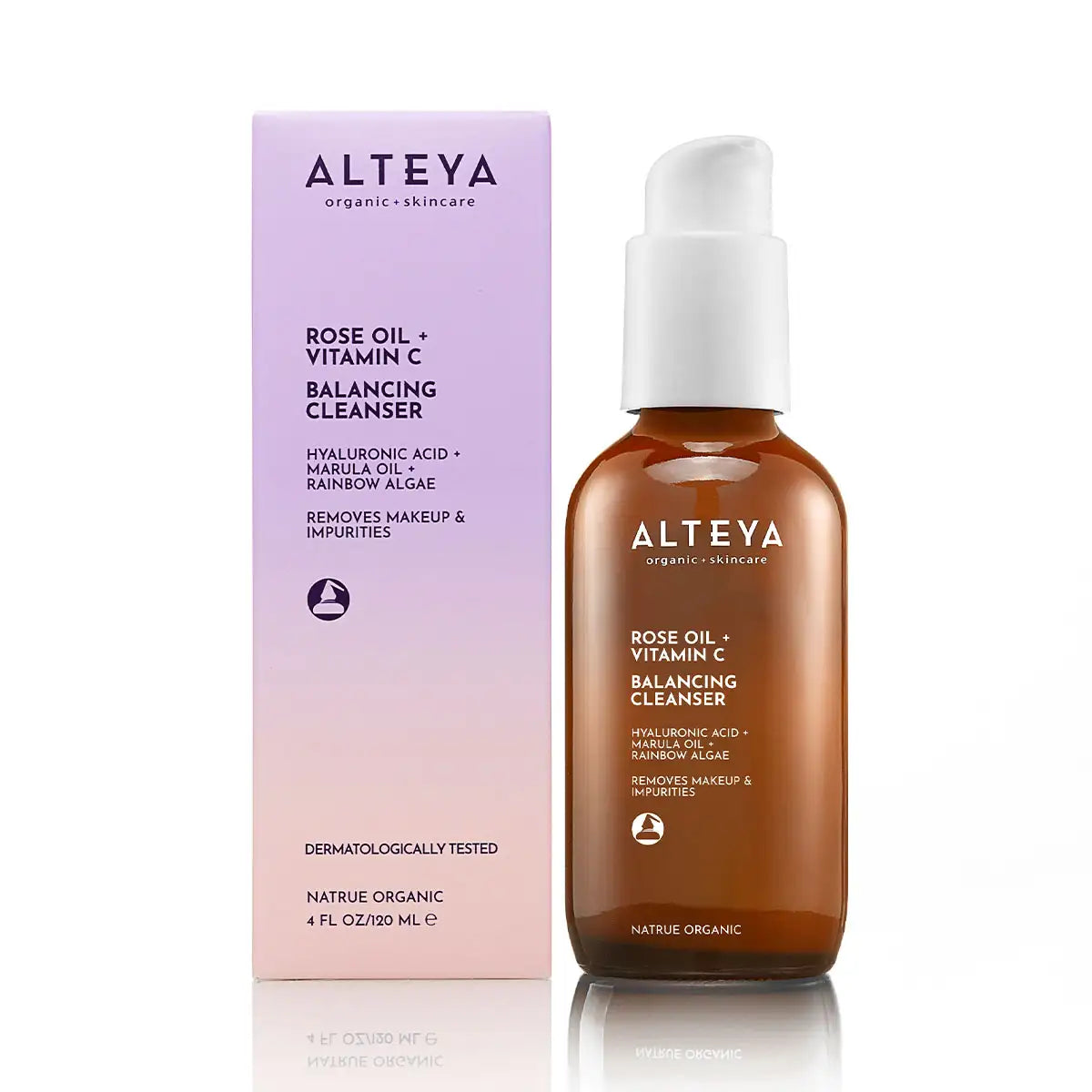
The right organic cleanser removes impurities and SPF residue without disrupting the skin’s moisture barrier - the step that determines how well every product that follows will perform.

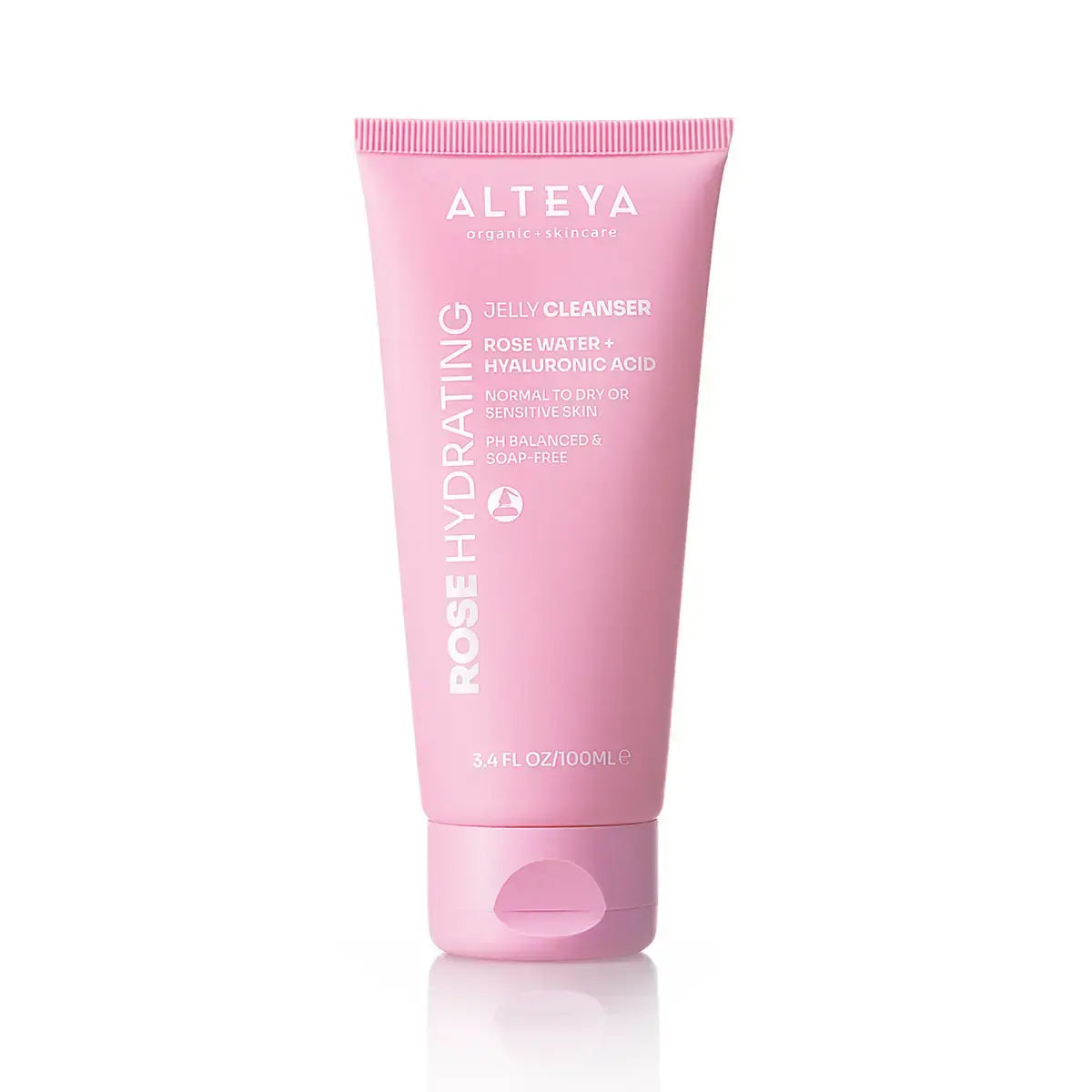
A cleanser is the first and most fundamental step in any skincare routine. Its job is to remove impurities, SPF residue, makeup, environmental pollutants, and daily buildup from the skin without stripping its natural moisture barrier. This last part is critical - a cleanser that strips the skin damages the barrier and can trigger dryness, excess oil production, and sensitivity.

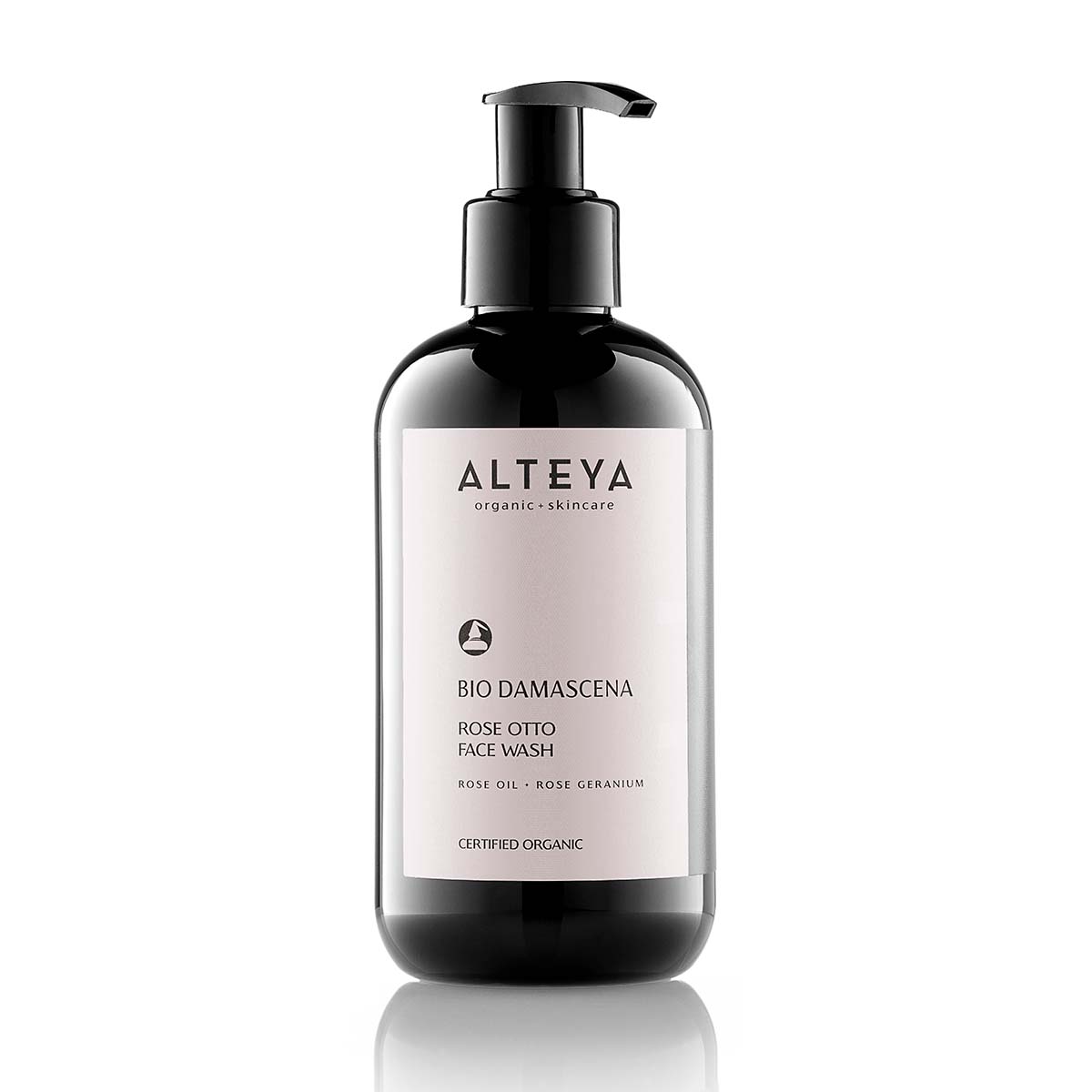
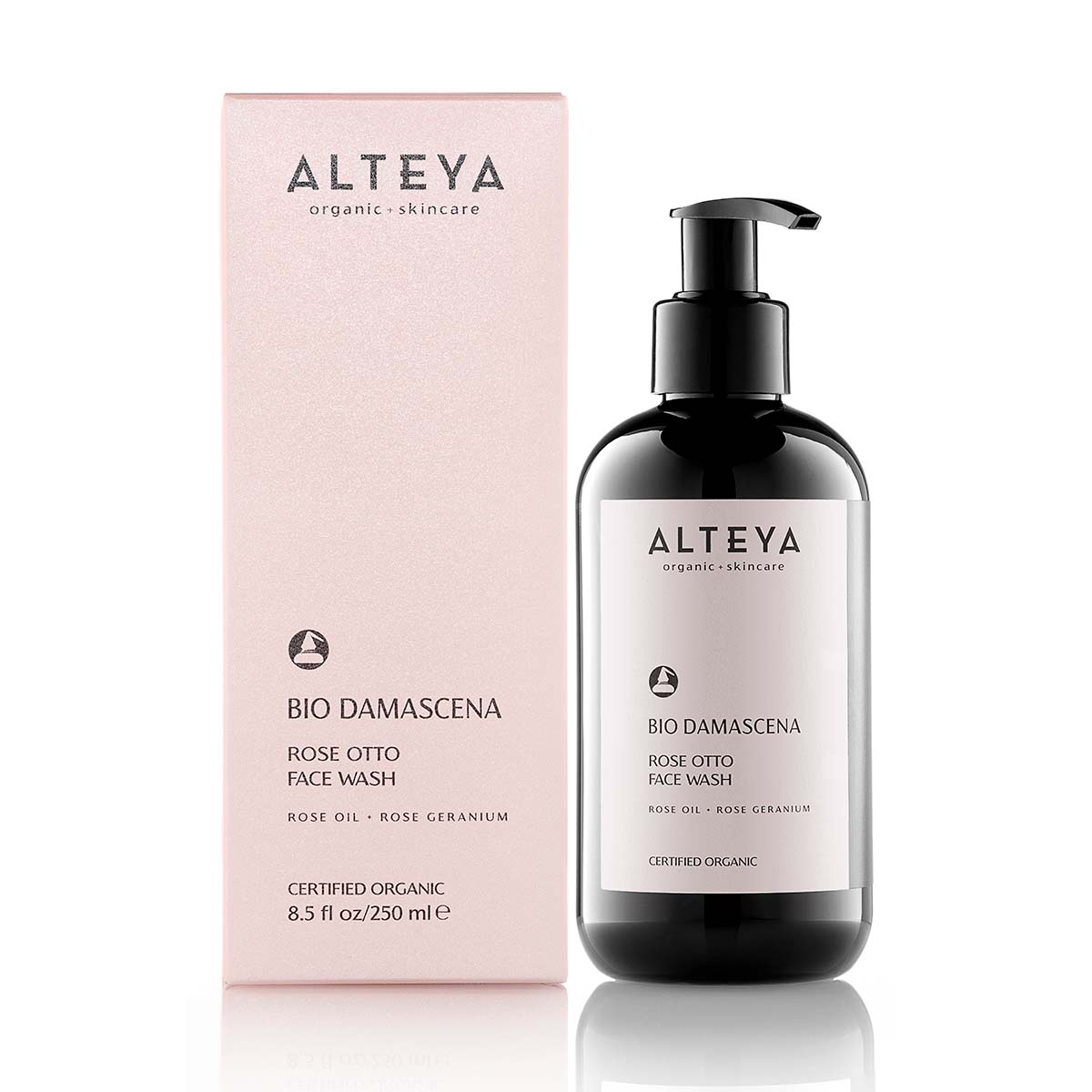
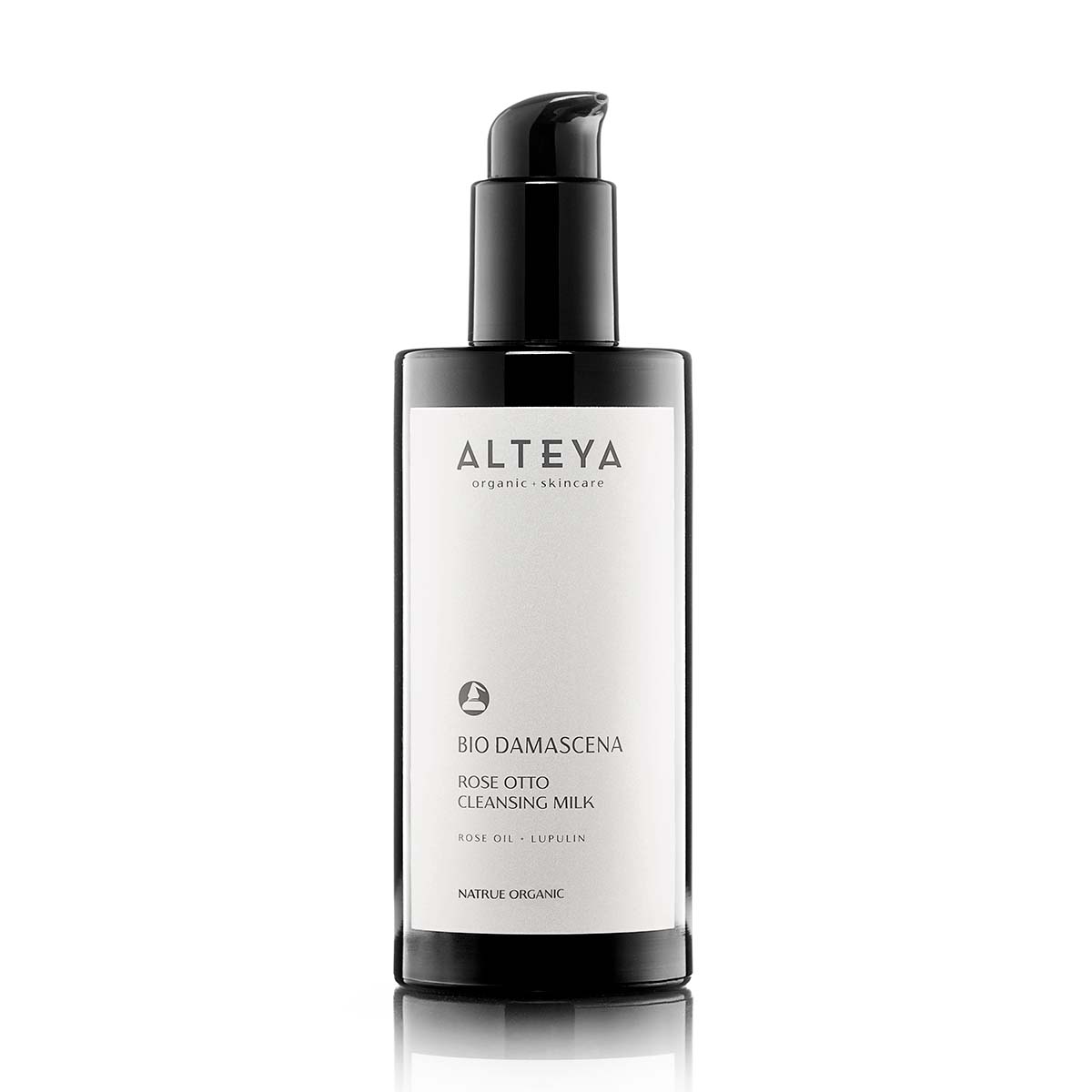
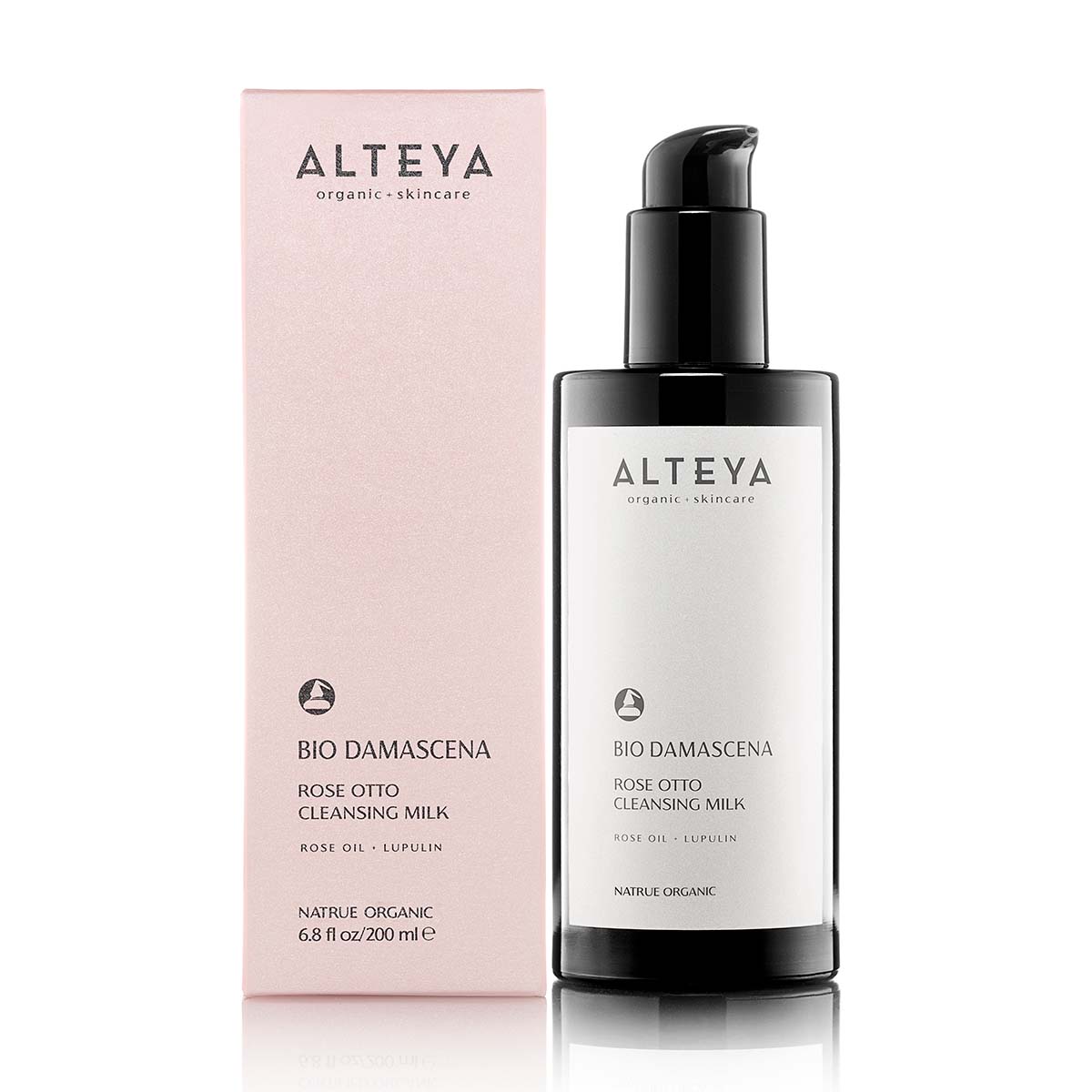
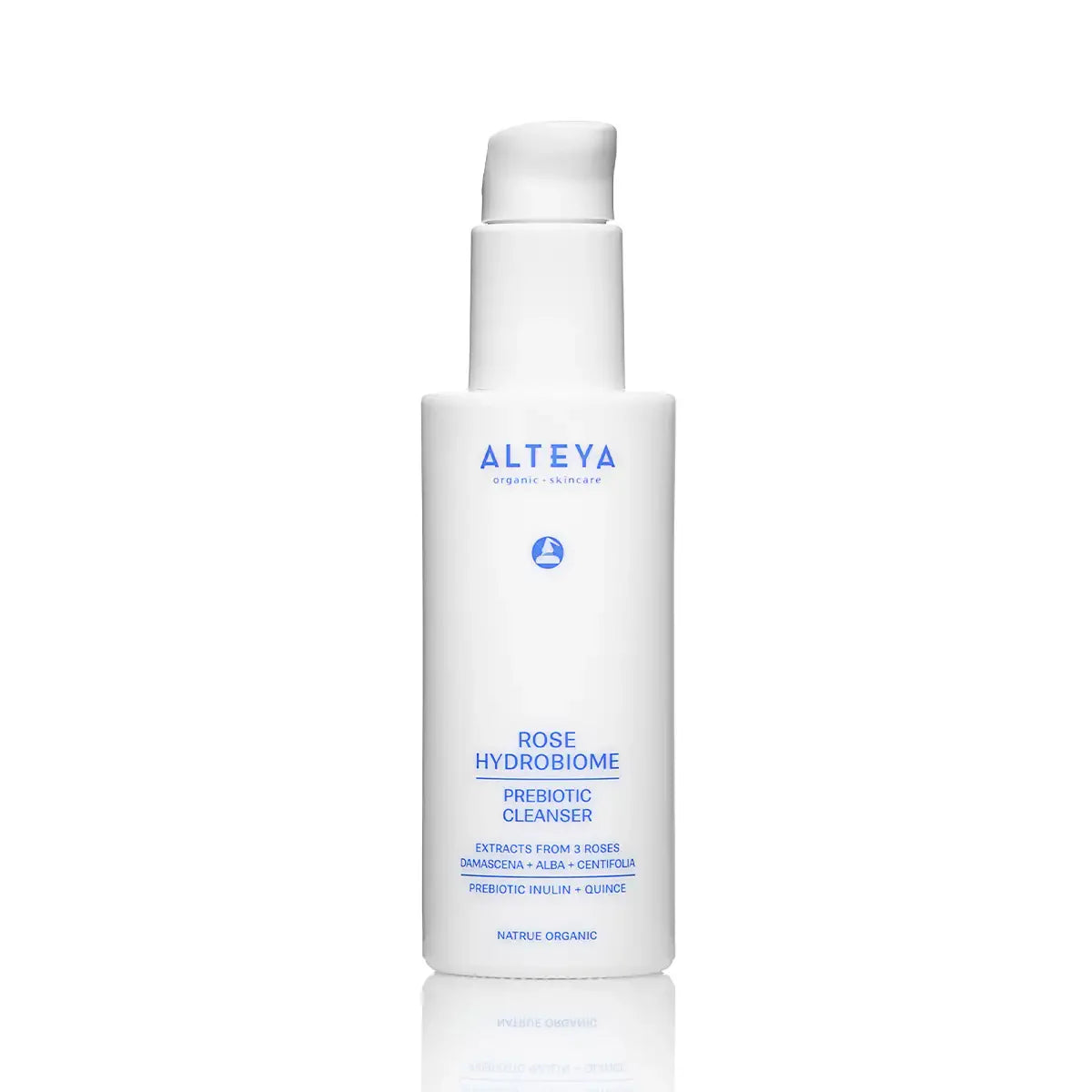
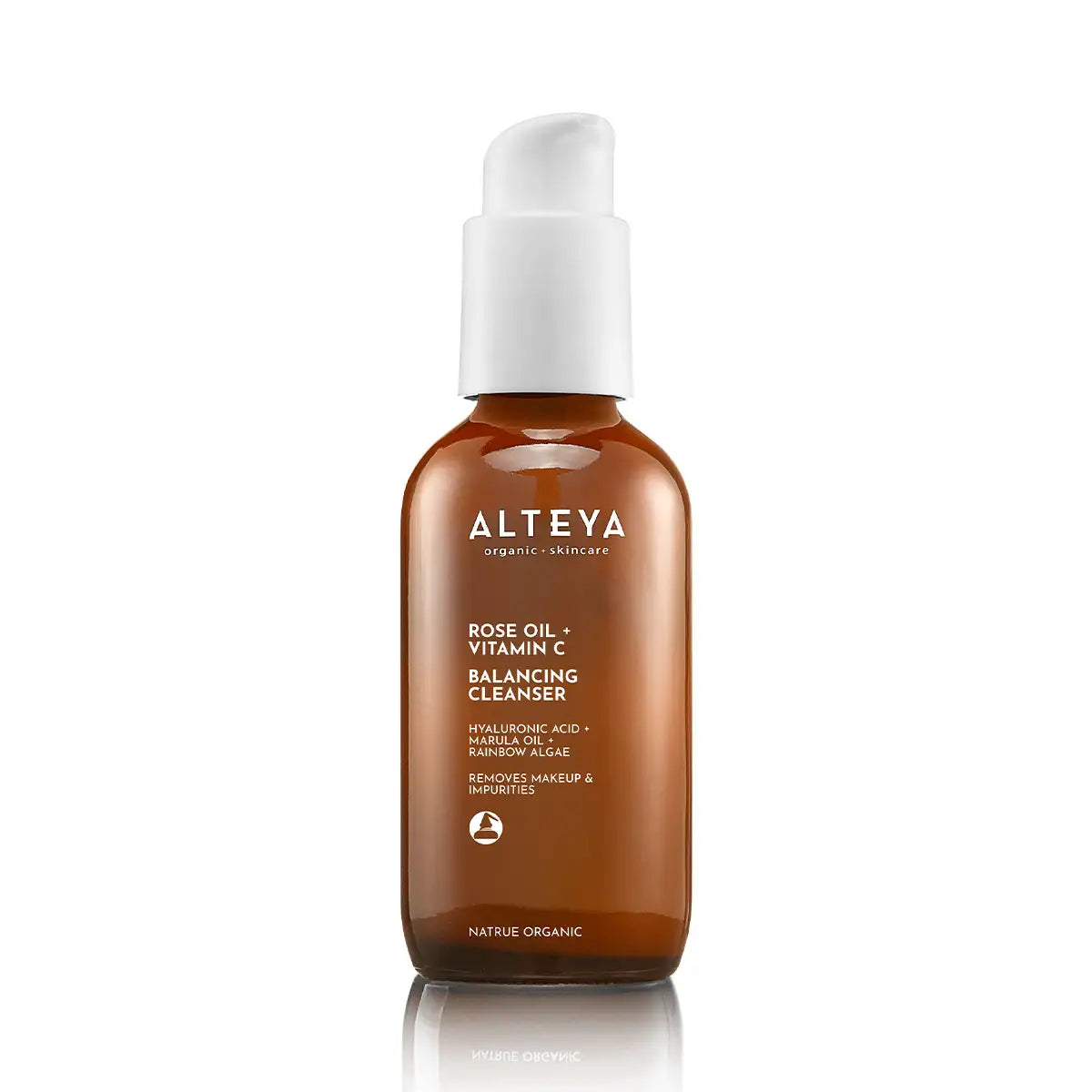
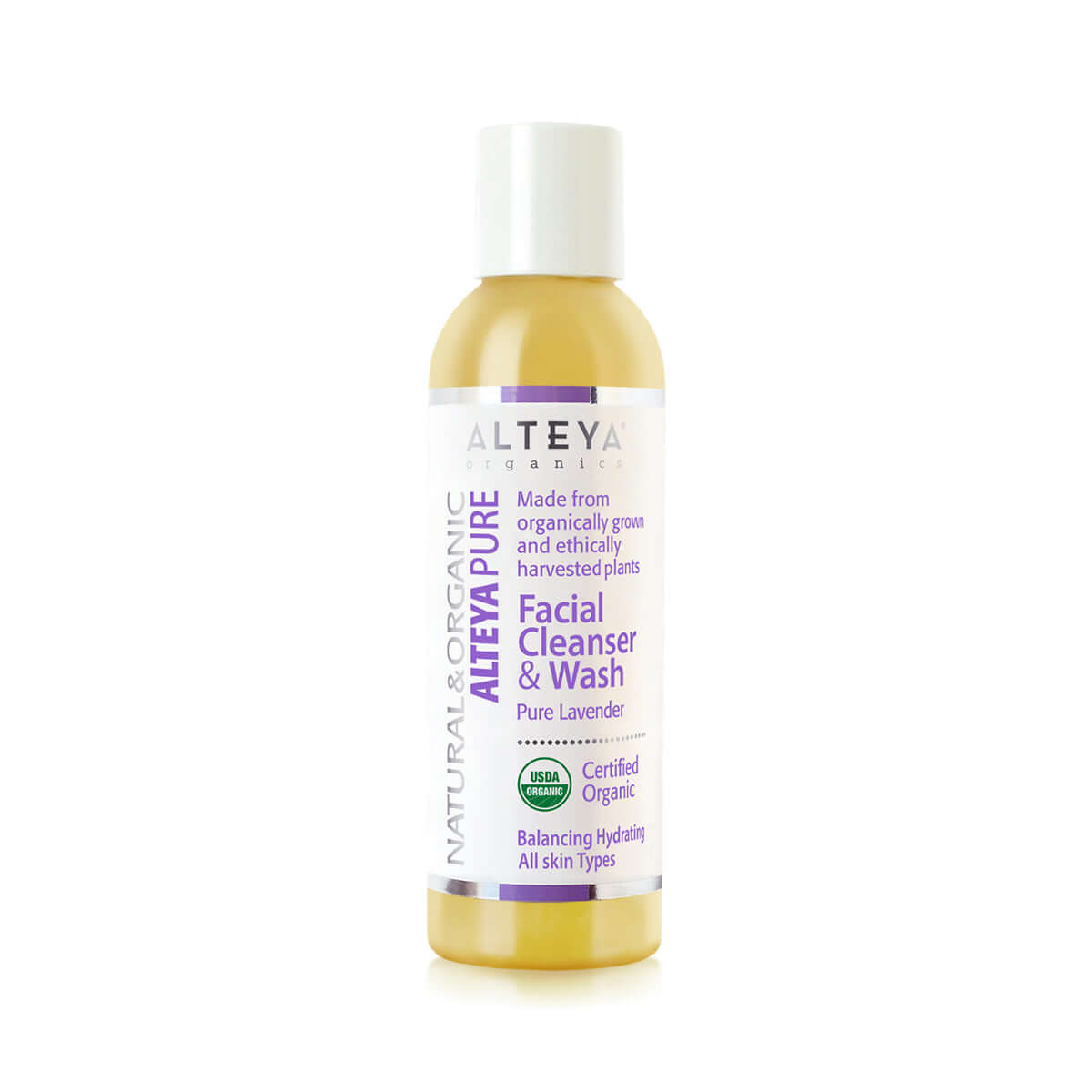
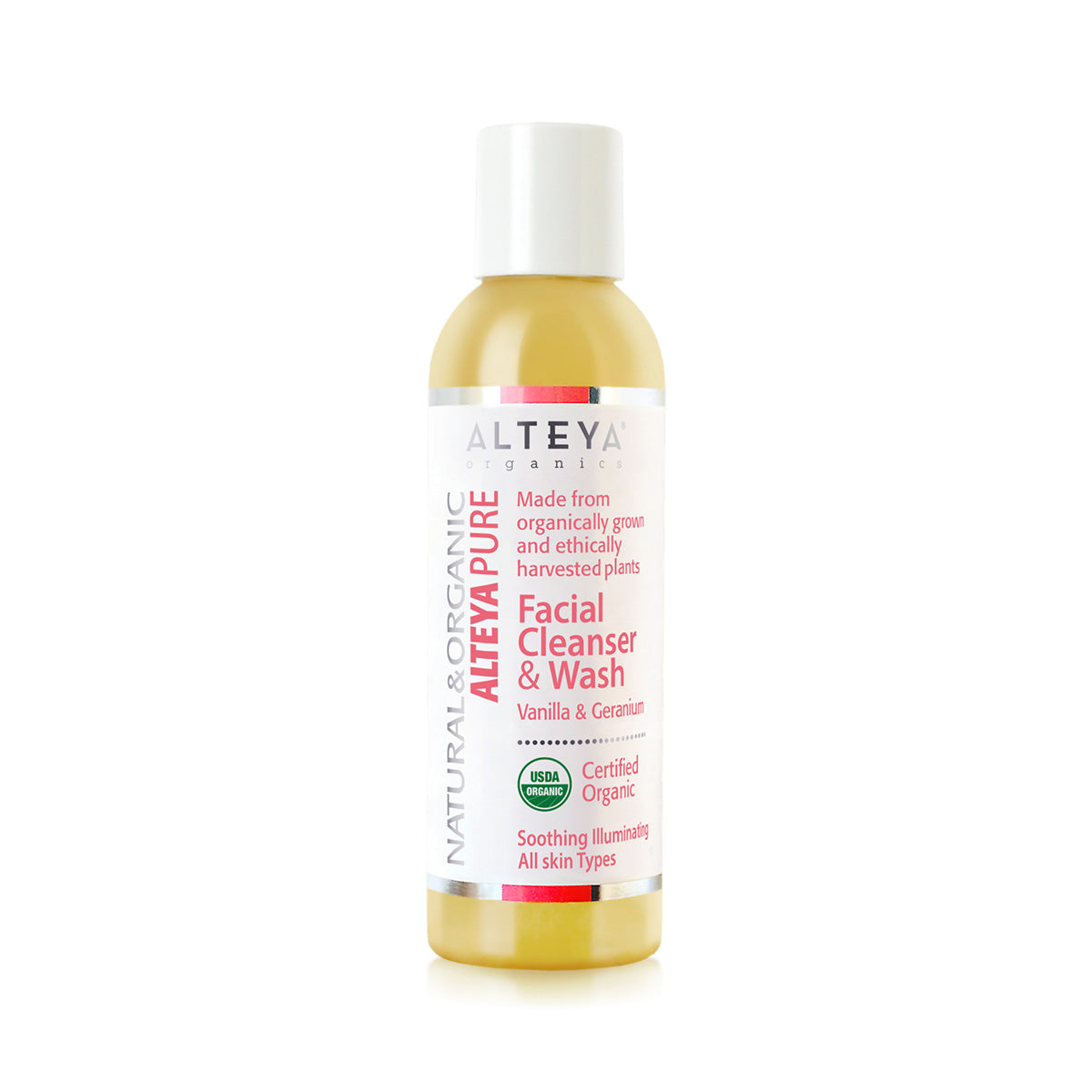
For organic skincare, the key is choosing a cleanser formulated with plant-based surfactants - biodegradable cleansing agents derived from certified organic plant sources - instead of harsh synthetic detergents such as sodium lauryl sulfate (SLS). Alteya Organics cleansers use certified organic Bulgarian rose water as the water phase, replacing ordinary water with the botanical richness of steam-distilled Rosa Damascena hydrosol. Steam distillation preserves the aromatic and skin-active compounds of the rose petal - a process that conventional synthetic cleansers do not replicate.

Morning cleansing can be lighter - a gentle rinse or milk cleanser. Evening cleansing should be more thorough to remove SPF and makeup. Massage your cleanser into damp skin for a full 60 seconds before rinsing with lukewarm water: 60 seconds of contact time allows plant-based surfactants to fully emulsify oil and debris, which a quick 10-second rinse does not achieve.

Step 2: Organic Toner or Floral Hydrosol - Restoring pH Balance

A toner applied immediately after cleansing restores the skin’s pH balance and prepares the absorption pathway for every product that follows.

After cleansing, the skin’s pH shifts temporarily toward alkaline - even gentle organic cleansers cause this. Bulgarian rose water, with a natural pH of approximately 4.5–5.0, restores the skin’s optimal slightly acidic environment within seconds of application. This primes the skin to absorb serum and moisturizer more effectively.

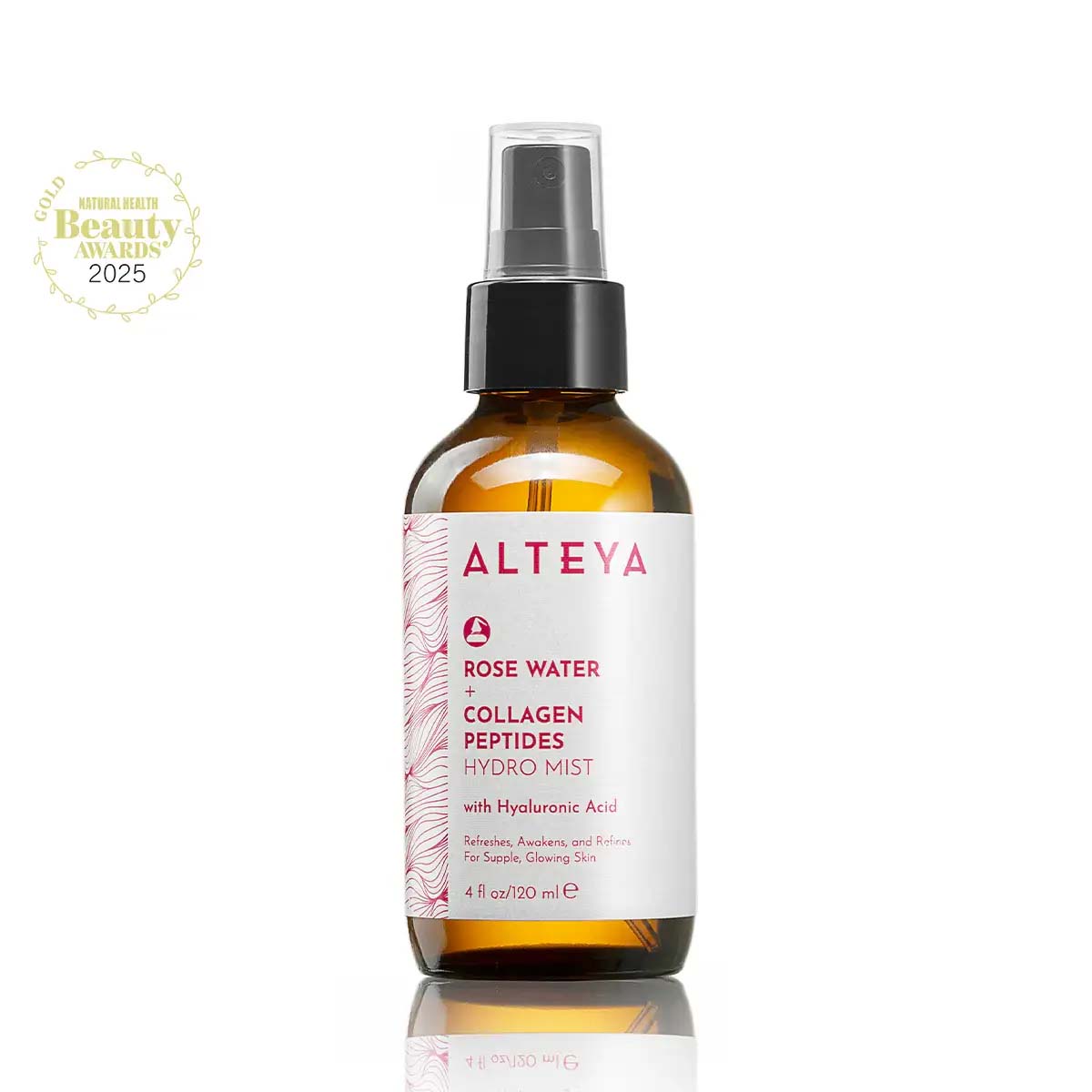
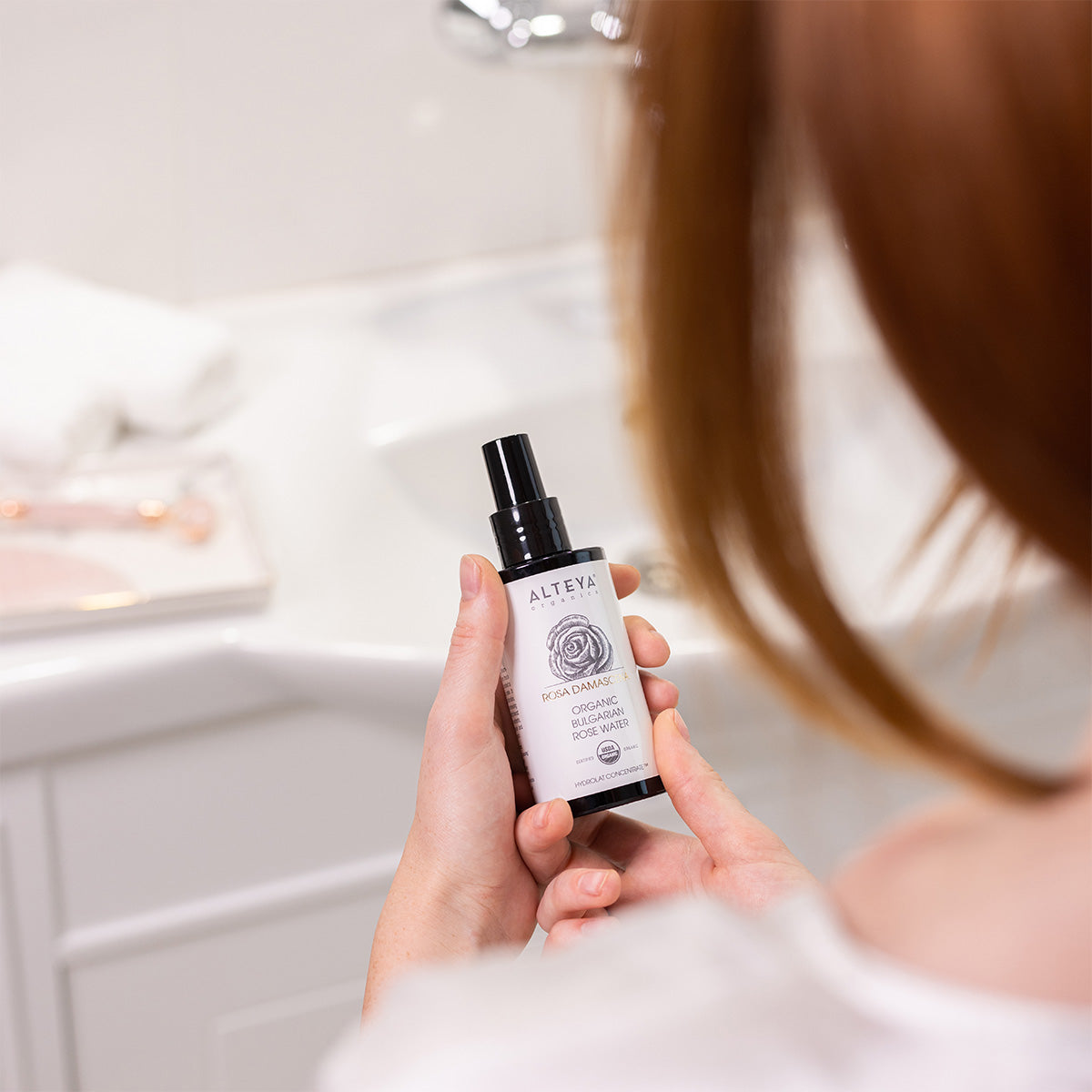
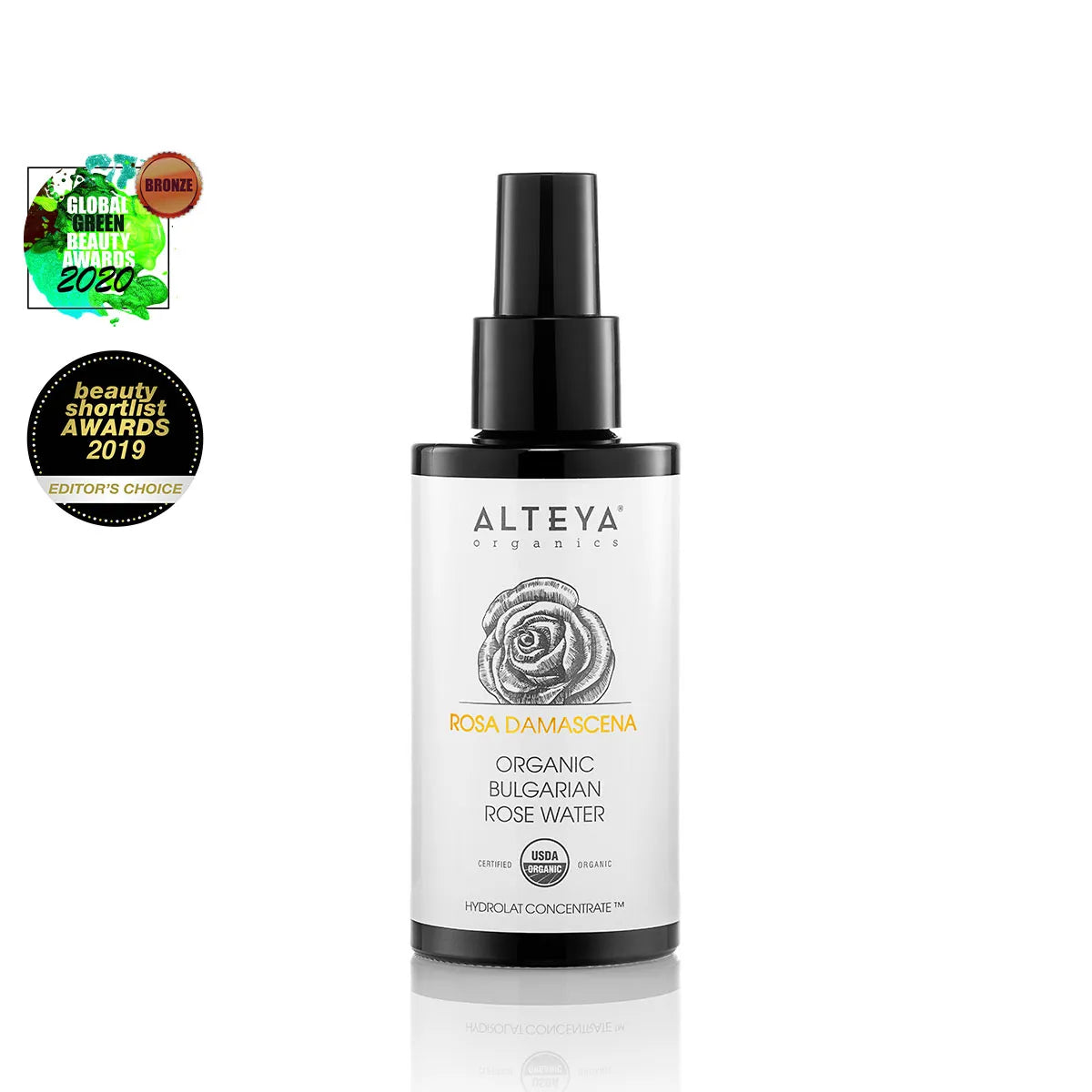
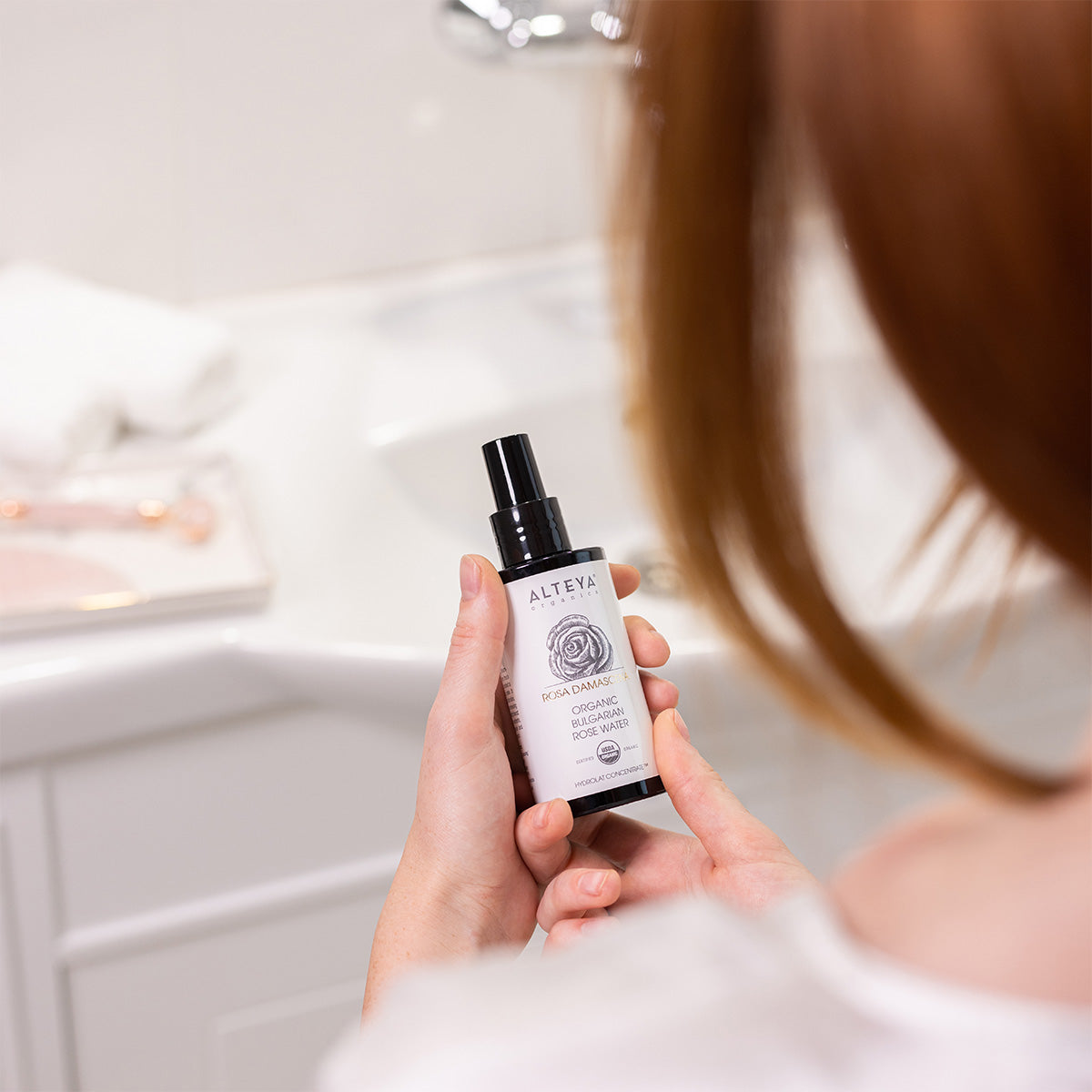
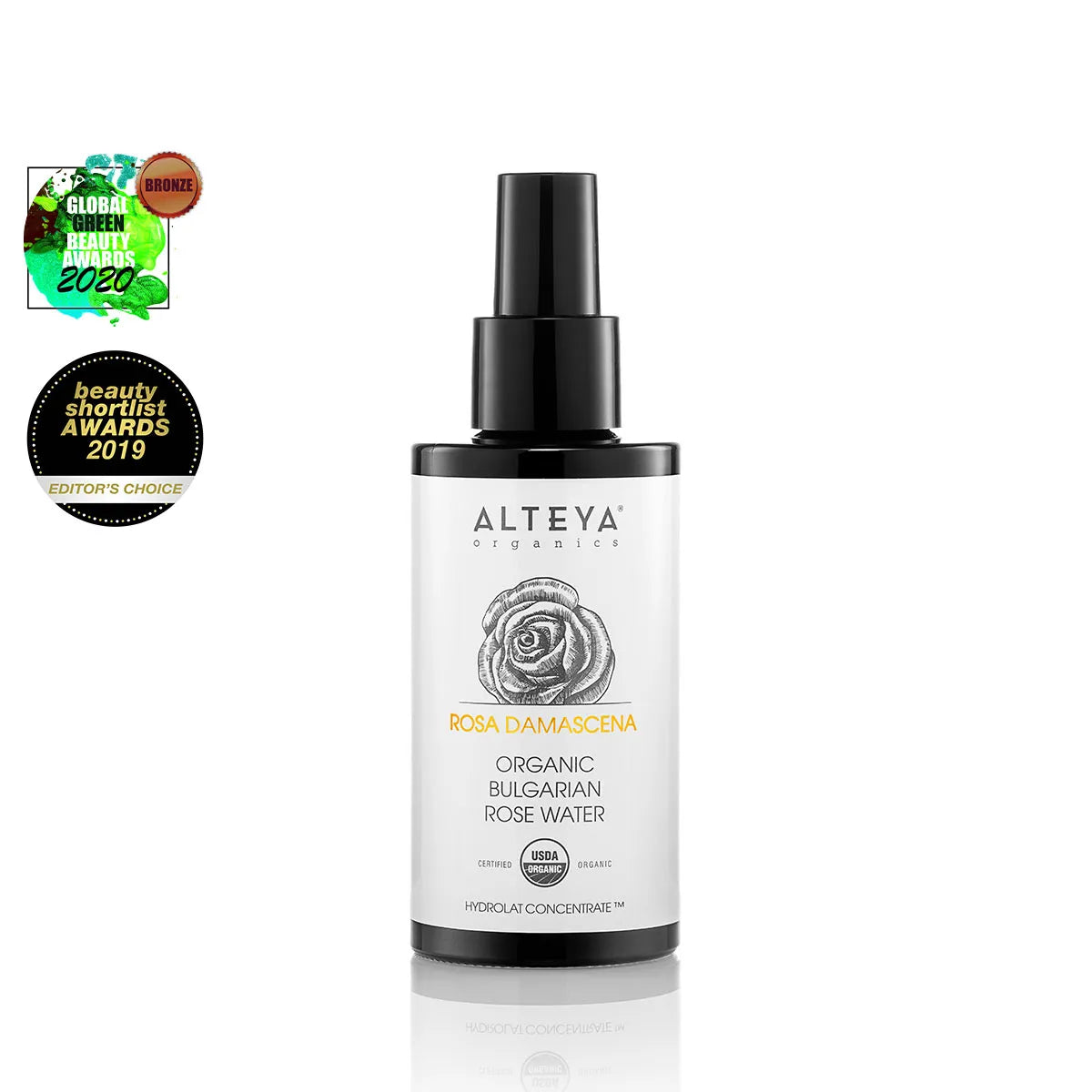
The simplest organic toner is pure Bulgarian rose water - a single-ingredient certified organic hydrosol with no additives, no alcohol, and no synthetic fragrances. Apply to a cotton pad and sweep across the face, or spray from 20–30 cm distance. Allow 30 seconds to absorb.

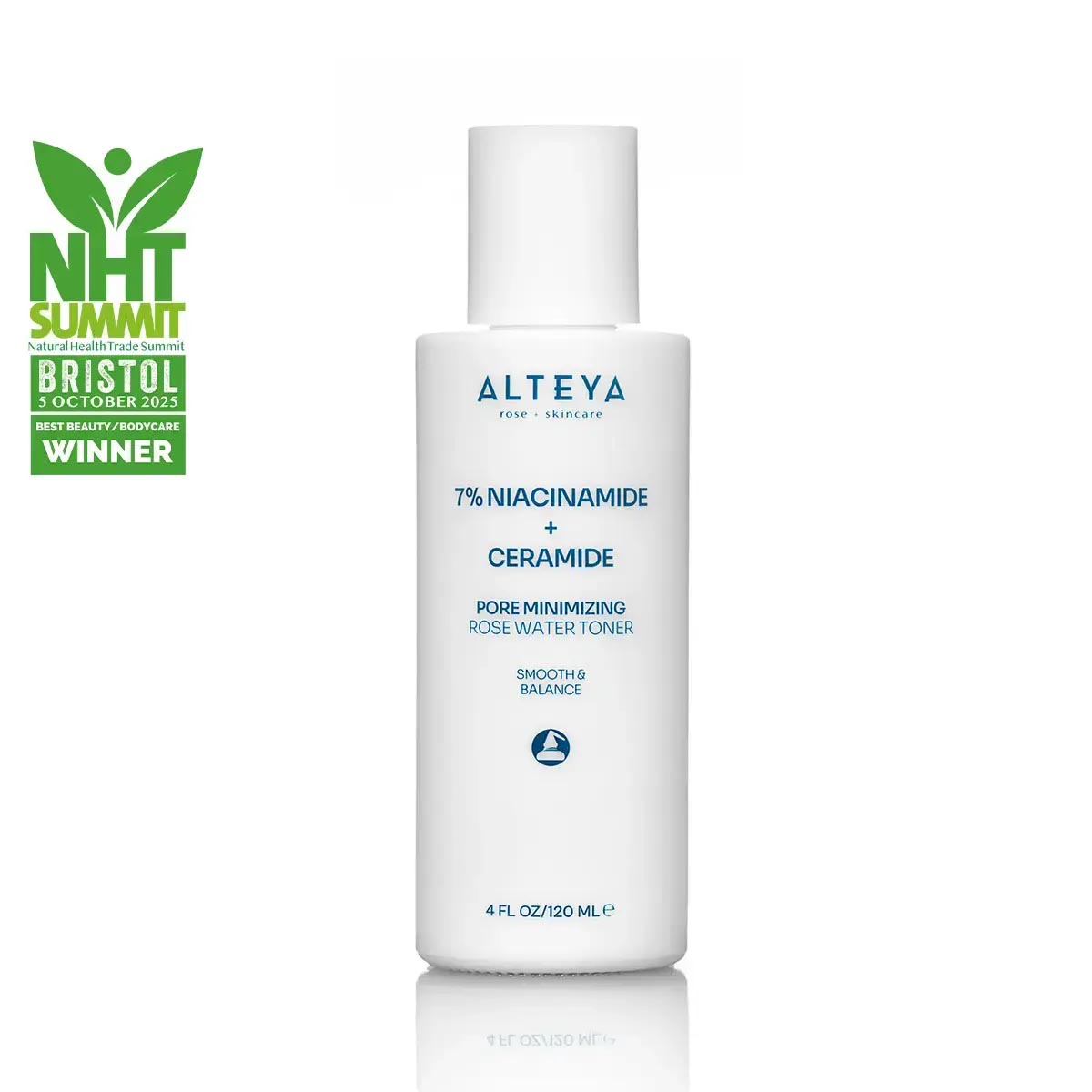
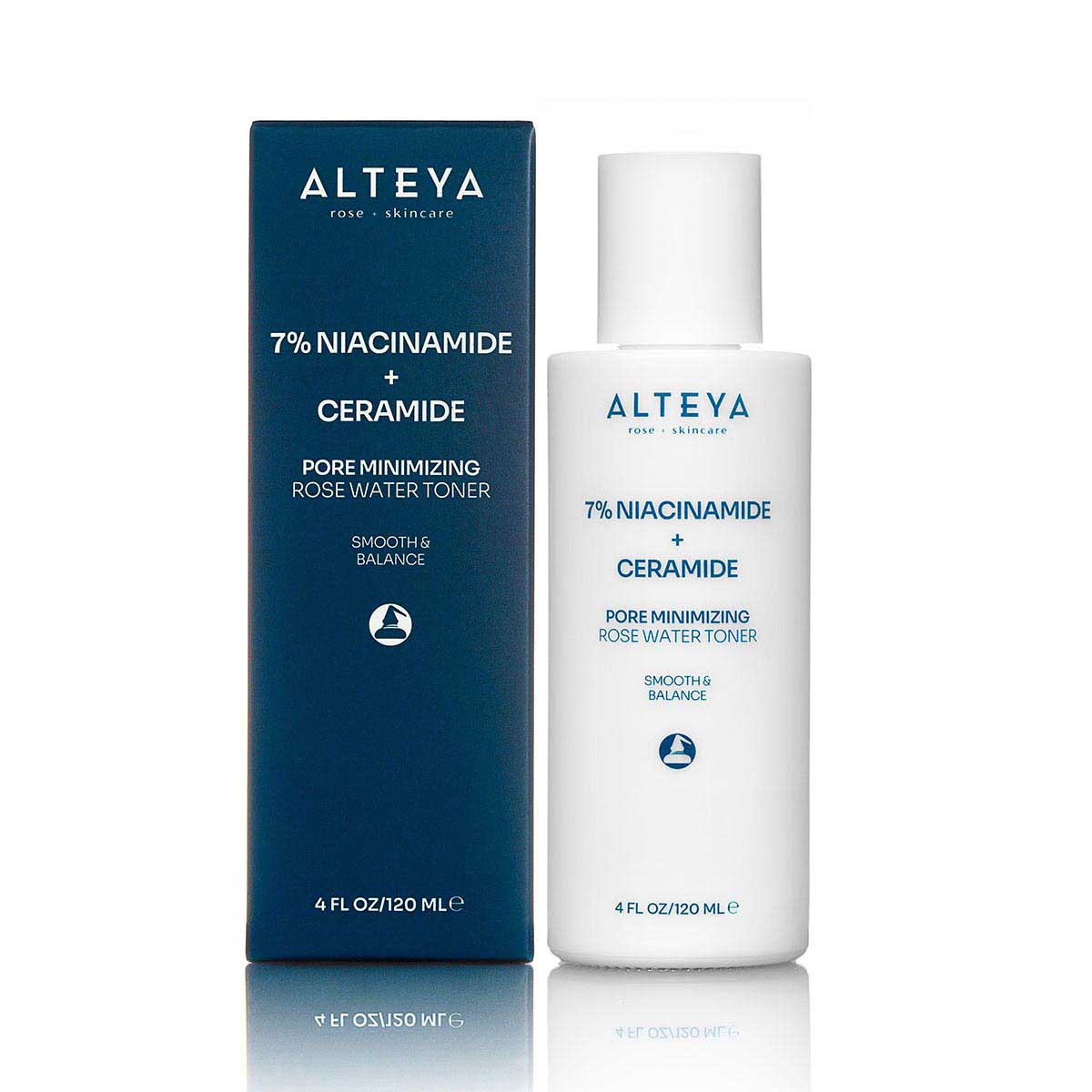
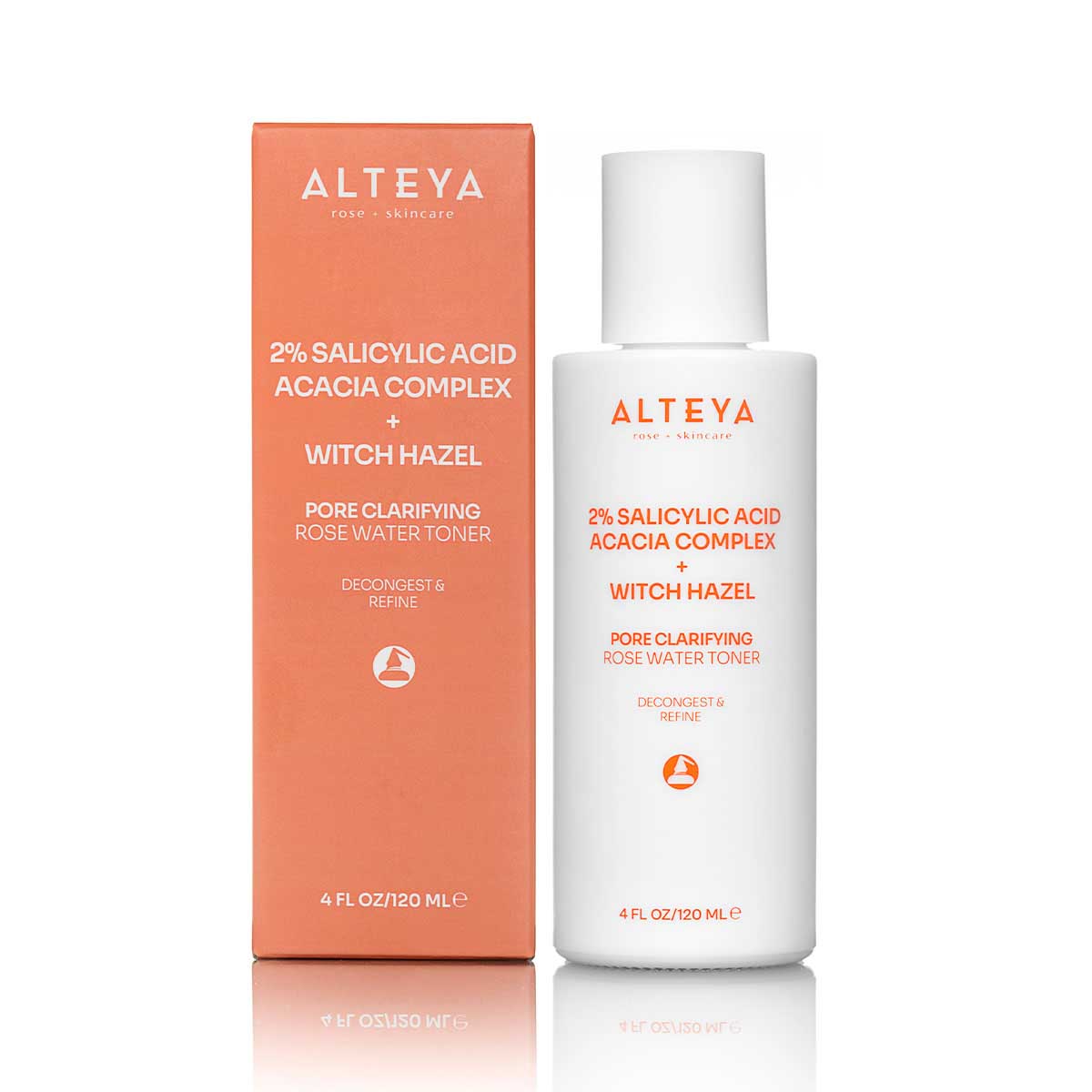
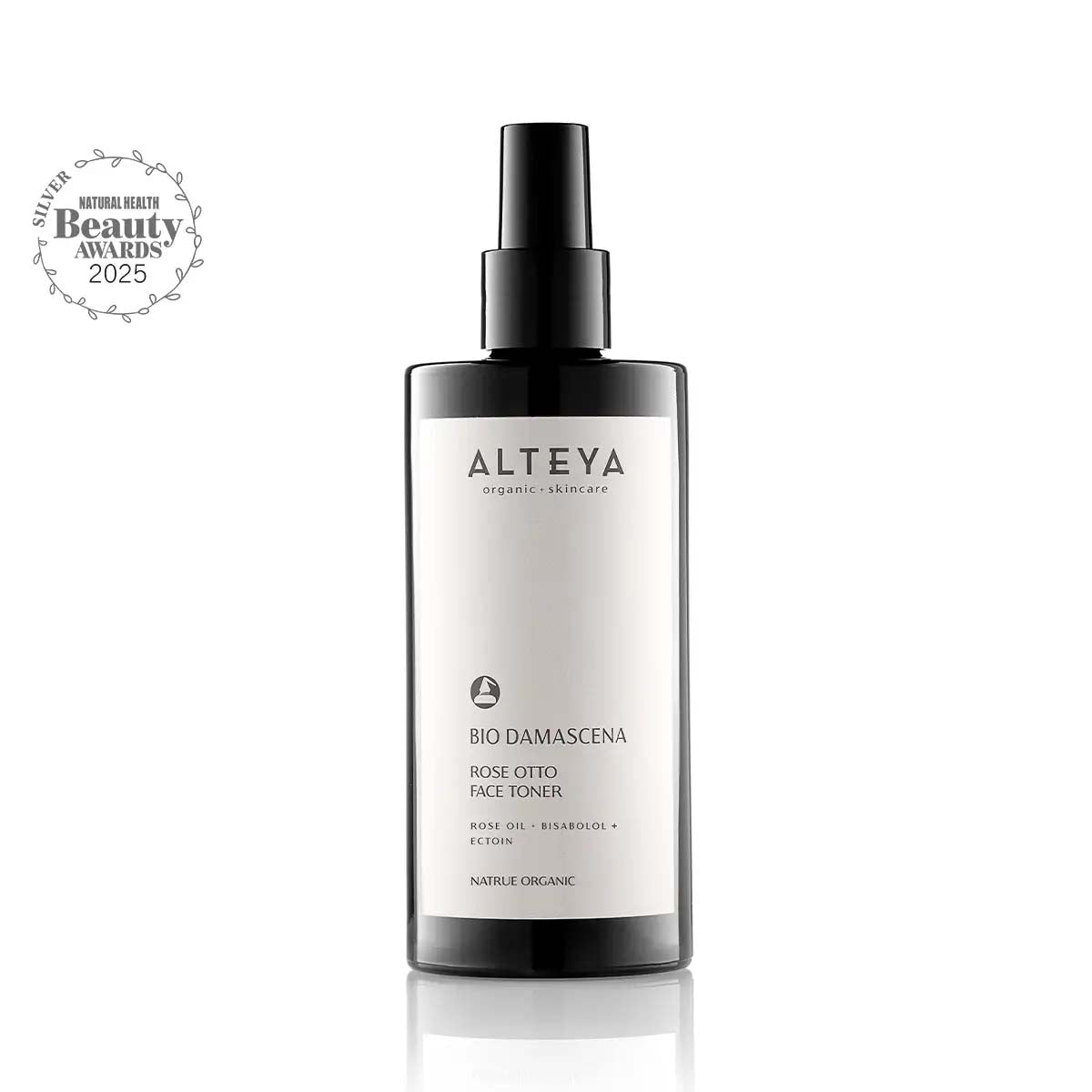
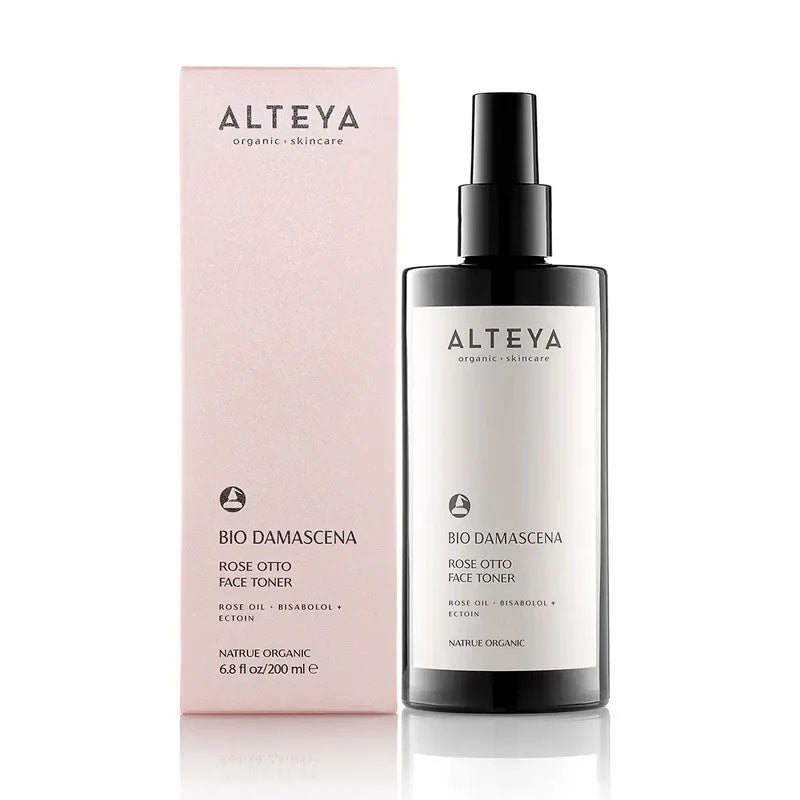
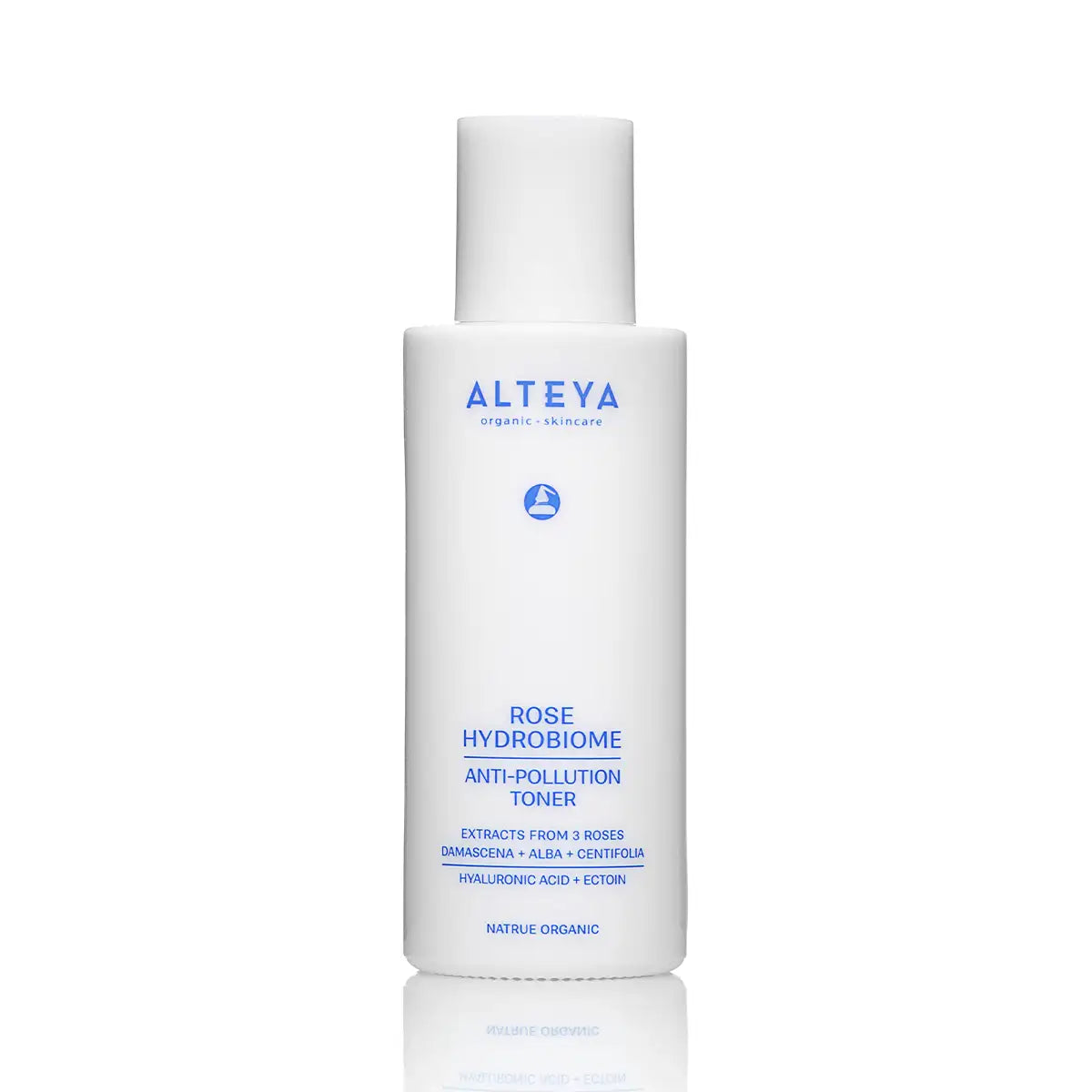
For those who want a toner with additional skincare actives - such as hyaluronic acid or botanical extracts - Alteya’s certified organic toner range uses rose water as the base and adds complementary certified organic ingredients for enhanced benefit.

Organic Toner vs Pure Rose Water: What Is the Difference?

Both products restore pH balance after cleansing, but they differ in formulation complexity and targeted benefit:

Comparison between organic toner with actives and pure rose water hydrosol

Feature

Organic Toner (with actives)

Pure Rose Water Hydrosol

Ingredients

Organic Toner (with actives)

Rose water base + HA, botanical extracts

Pure Rose Water Hydrosol

100% steam-distilled Rosa Damascena

Primary role

Organic Toner (with actives)

pH balance + targeted skincare benefits

Pure Rose Water Hydrosol

pH balance, hydration, soothing

Best for

Organic Toner (with actives)

Users with specific skin goals (hydration, glow)

Pure Rose Water Hydrosol

All skin types, beginners, sensitive skin

Certifications

Organic Toner (with actives)

USDA Organic, NATRUE, EU Organic

Pure Rose Water Hydrosol

USDA Organic, NATRUE, EU Organic

How to apply

Organic Toner (with actives)

Cotton pad or fingertips, avoid eye area

Pure Rose Water Hydrosol

Cotton pad or spray from 20–30 cm

Step 3: Organic Serum - Targeted Botanical Actives

A serum delivers the highest concentration of active ingredients in your routine - this is the step that directly addresses specific skin goals such as hydration, radiance, firmness, or sensitivity support.

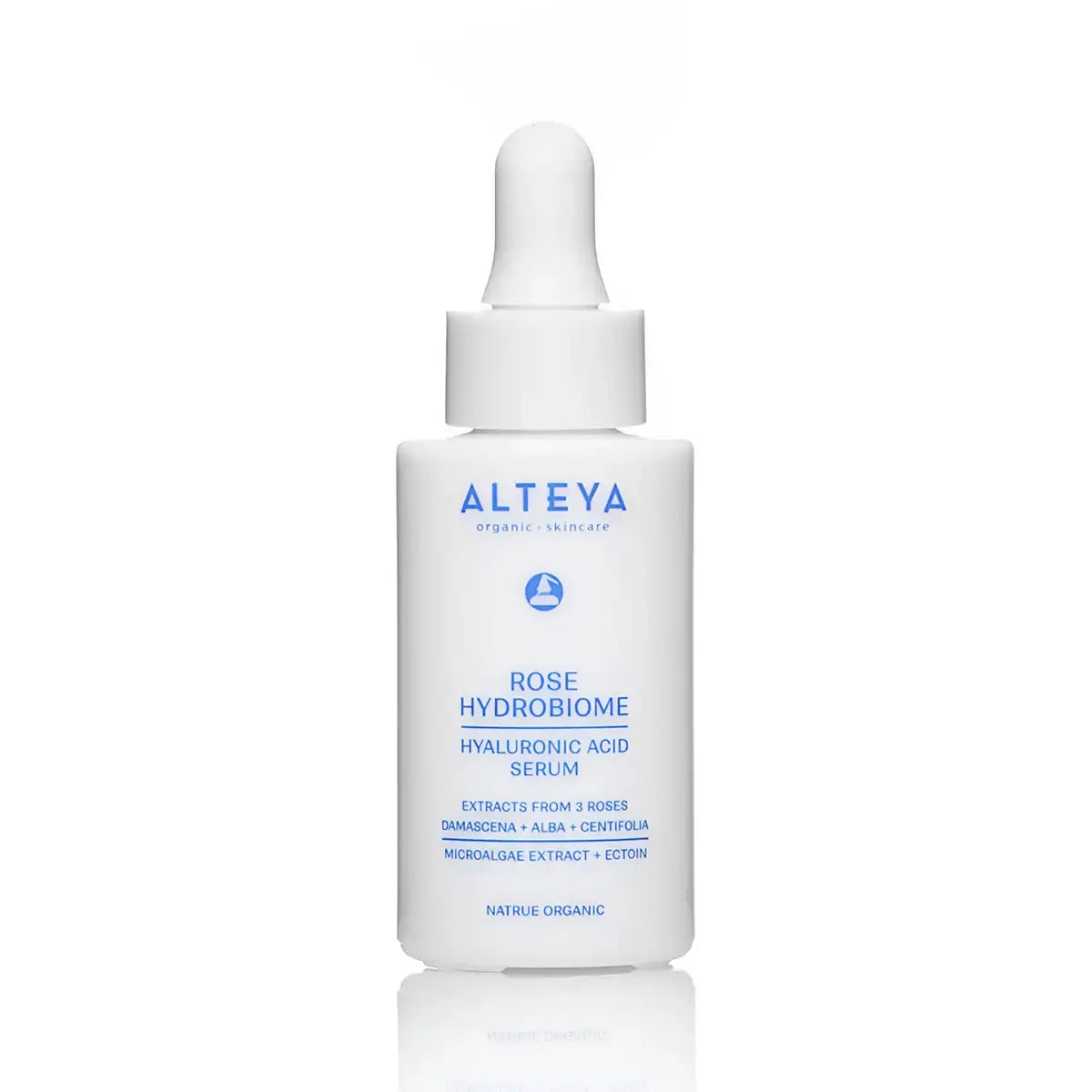
For organic skincare, the most effective serums combine science-backed botanical actives with certified organic base ingredients. Key ingredients to look for: hyaluronic acid (holds up to 1,000 times its weight in water, providing measurable deep hydration), bakuchiol (a plant-based compound from Psoralea corylifolia shown in peer-reviewed studies to produce retinol-comparable results without irritation), ectoin (a natural extremolyte that stabilises cell membranes and supports barrier recovery), and Bulgarian Rose Otto (the steam-distilled essential oil of Rosa Damascena, containing over 300 aromatic and skin-active compounds).

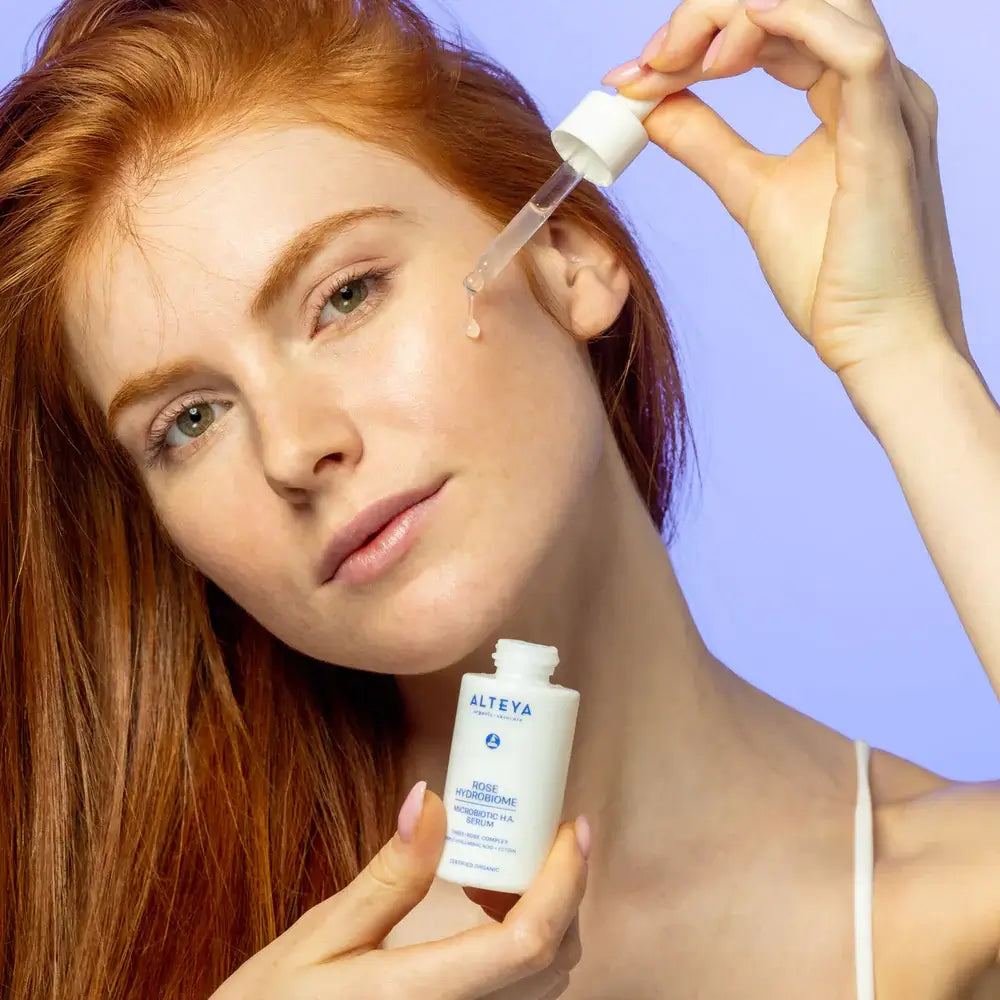
Apply 2–3 drops of serum to clean, toned skin. Press gently into the skin using fingertips rather than rubbing - rubbing creates friction that can disrupt application and reduce absorption. Allow 60 seconds before applying moisturizer.

Step 4: Organic Face Oil (Optional) - Botanical Nourishment

A face oil applied after serum and before - or instead of - moisturizer provides occlusive botanical nourishment, especially beneficial for dry, mature-feeling, or dull-looking skin.

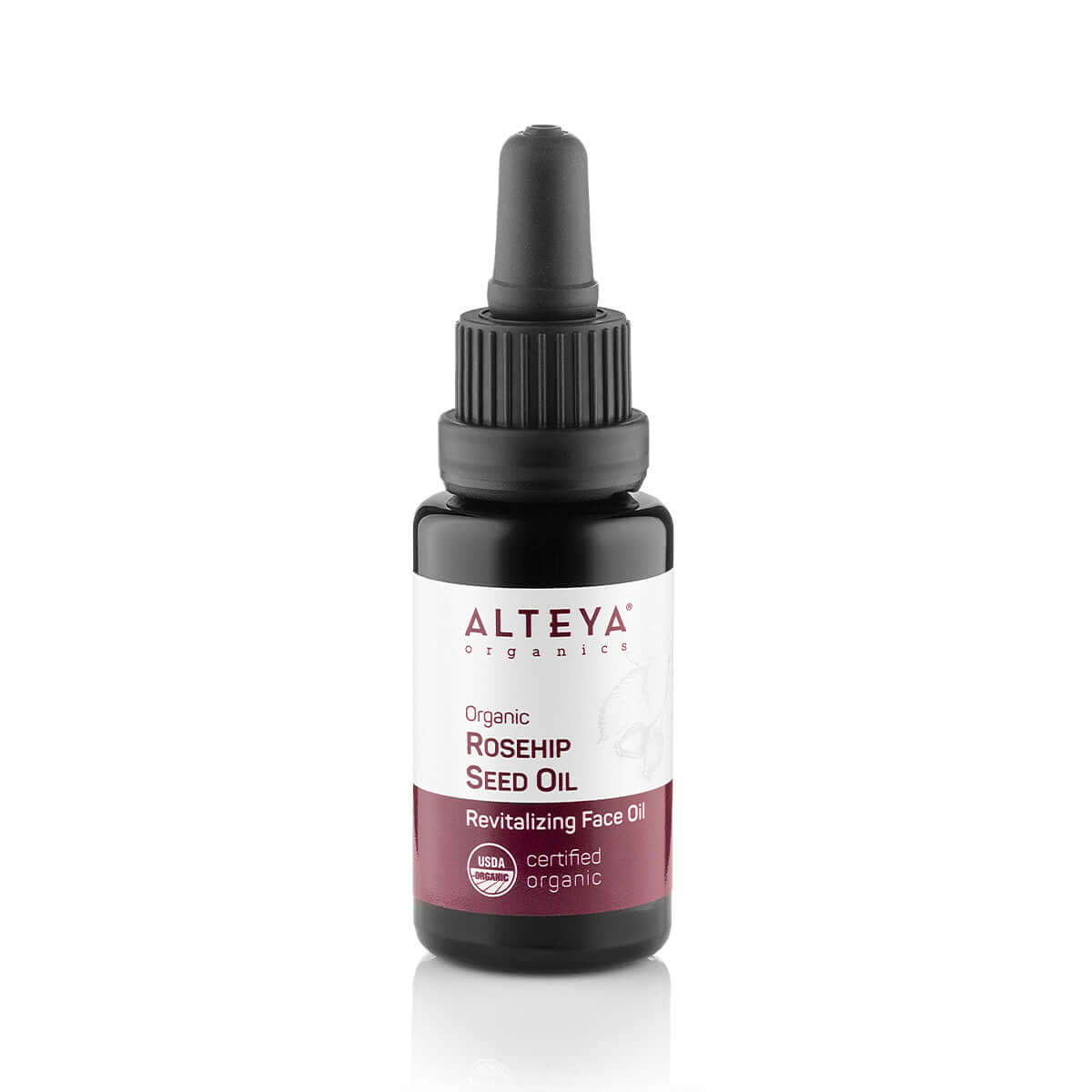
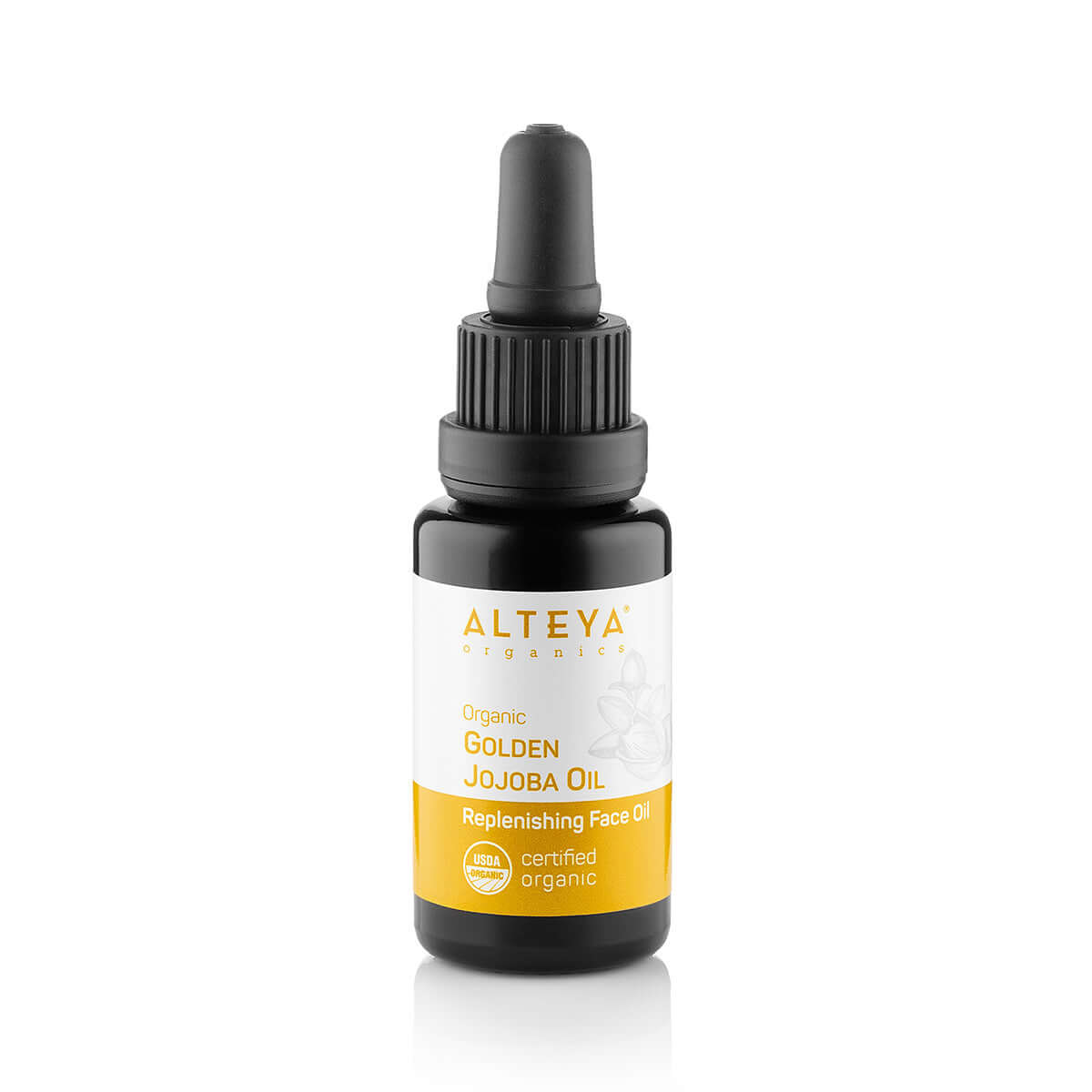
The best organic face oils for daily use are lightweight carrier oils: organic jojoba (structurally similar to the skin’s own sebum, absorbs without heaviness), rosehip (rich in linoleic acid and natural vitamin A precursors), and argan (high in oleic acid and vitamin E). These are often combined with a small percentage of Bulgarian Rose Otto for its concentrated botanical properties and aromatic profile.

Step 5: Organic Moisturizer - Sealing in Hydration

A moisturizer is the final essential step: it locks in the moisture and actives from previous steps, maintains daily skin comfort, and supports barrier function throughout the day.

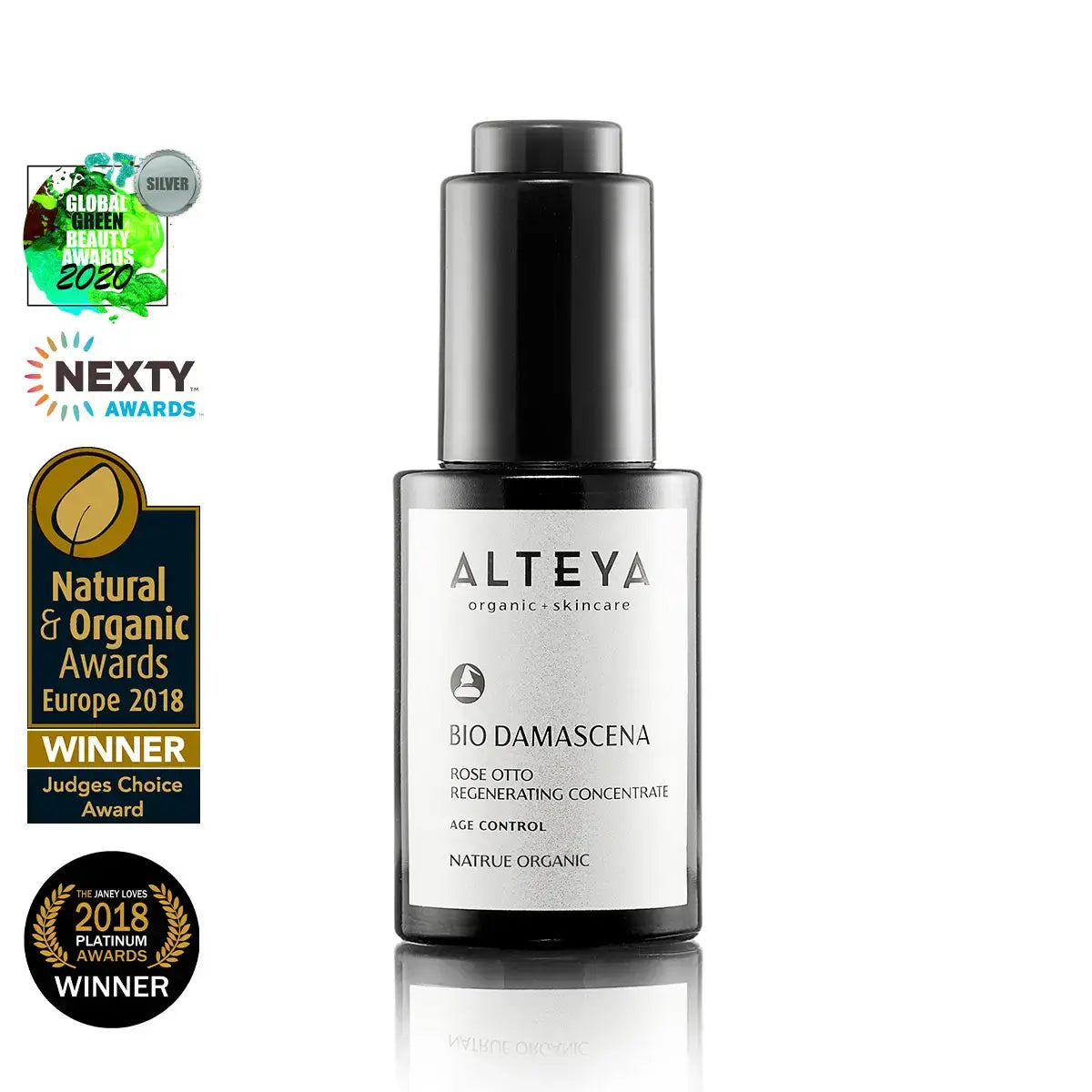
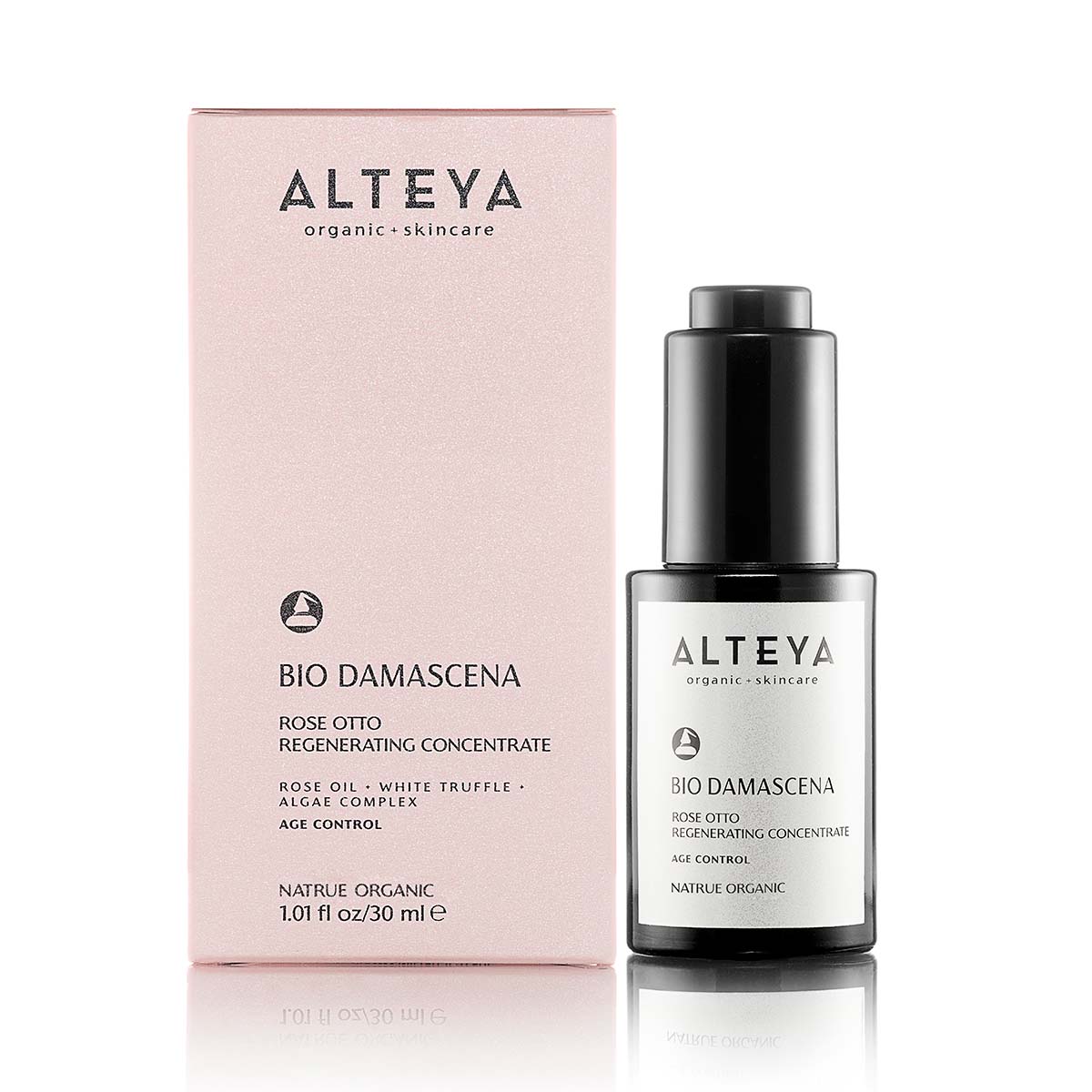
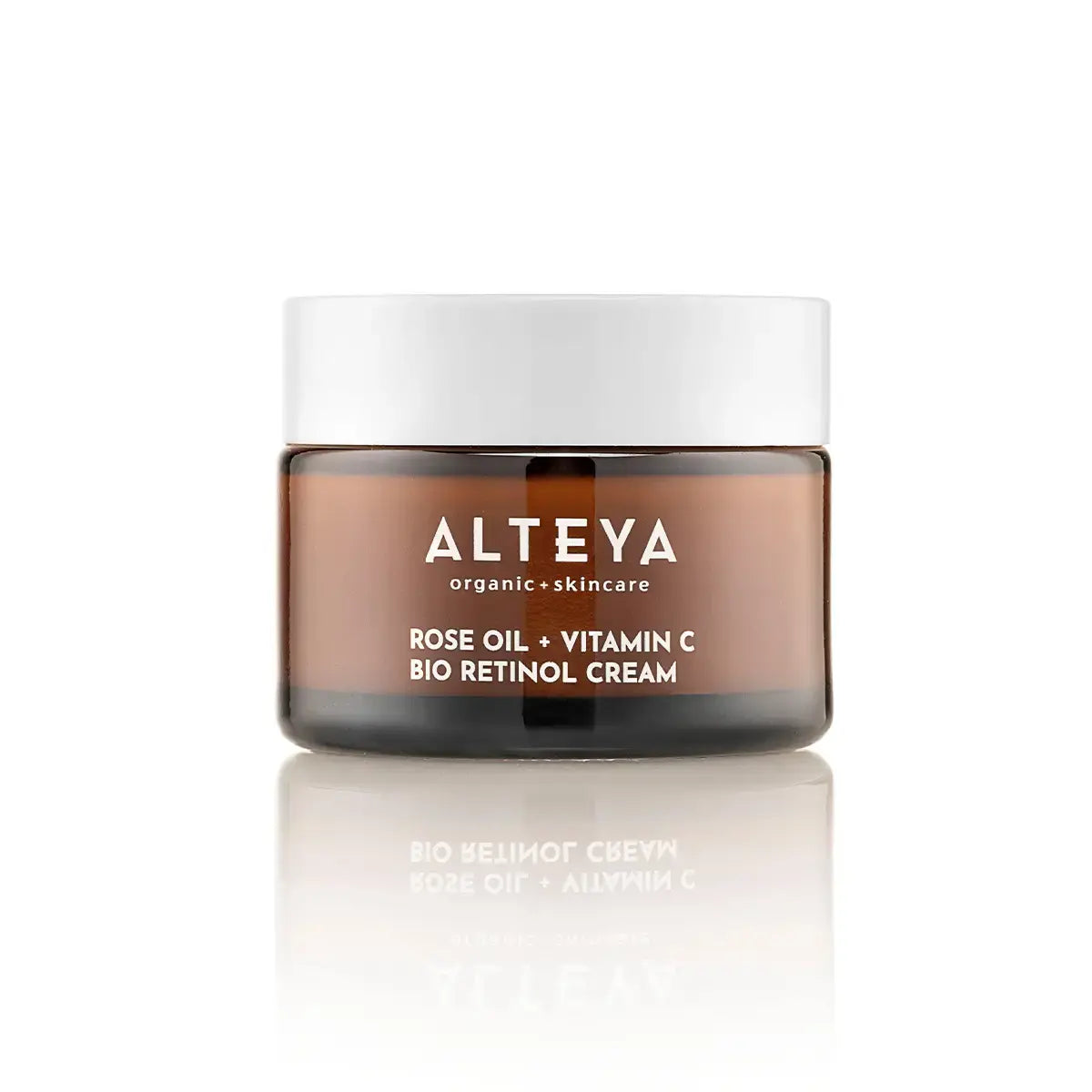
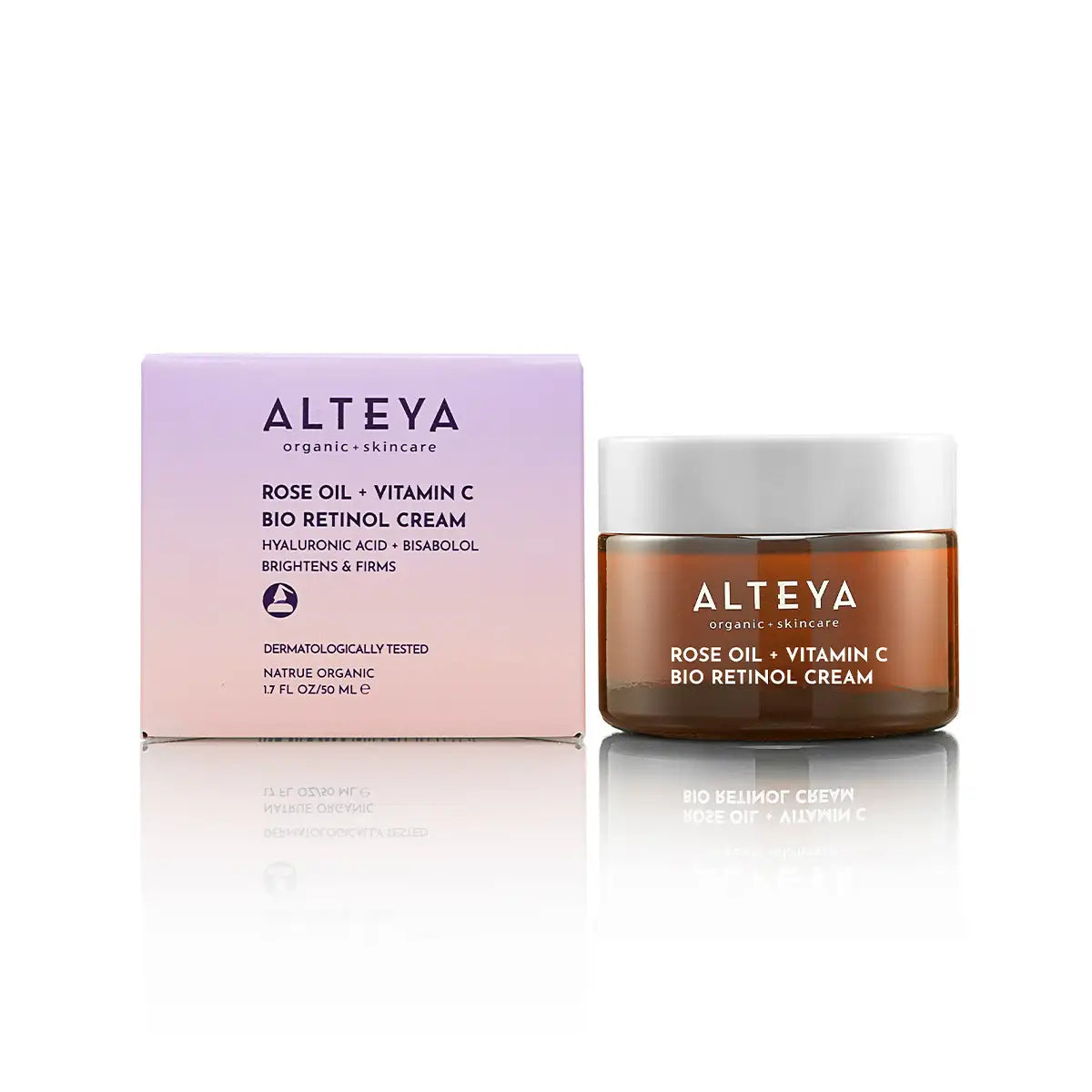
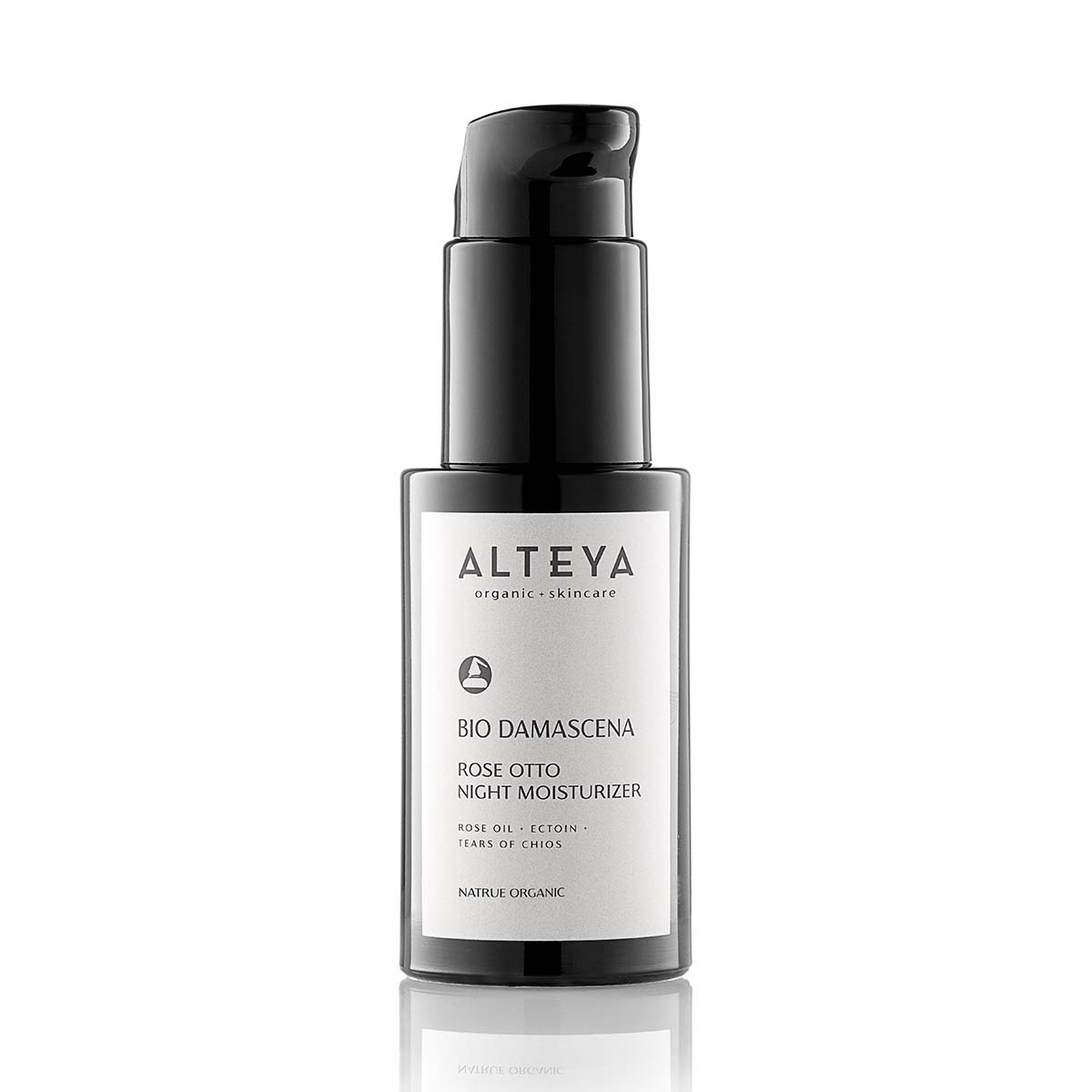
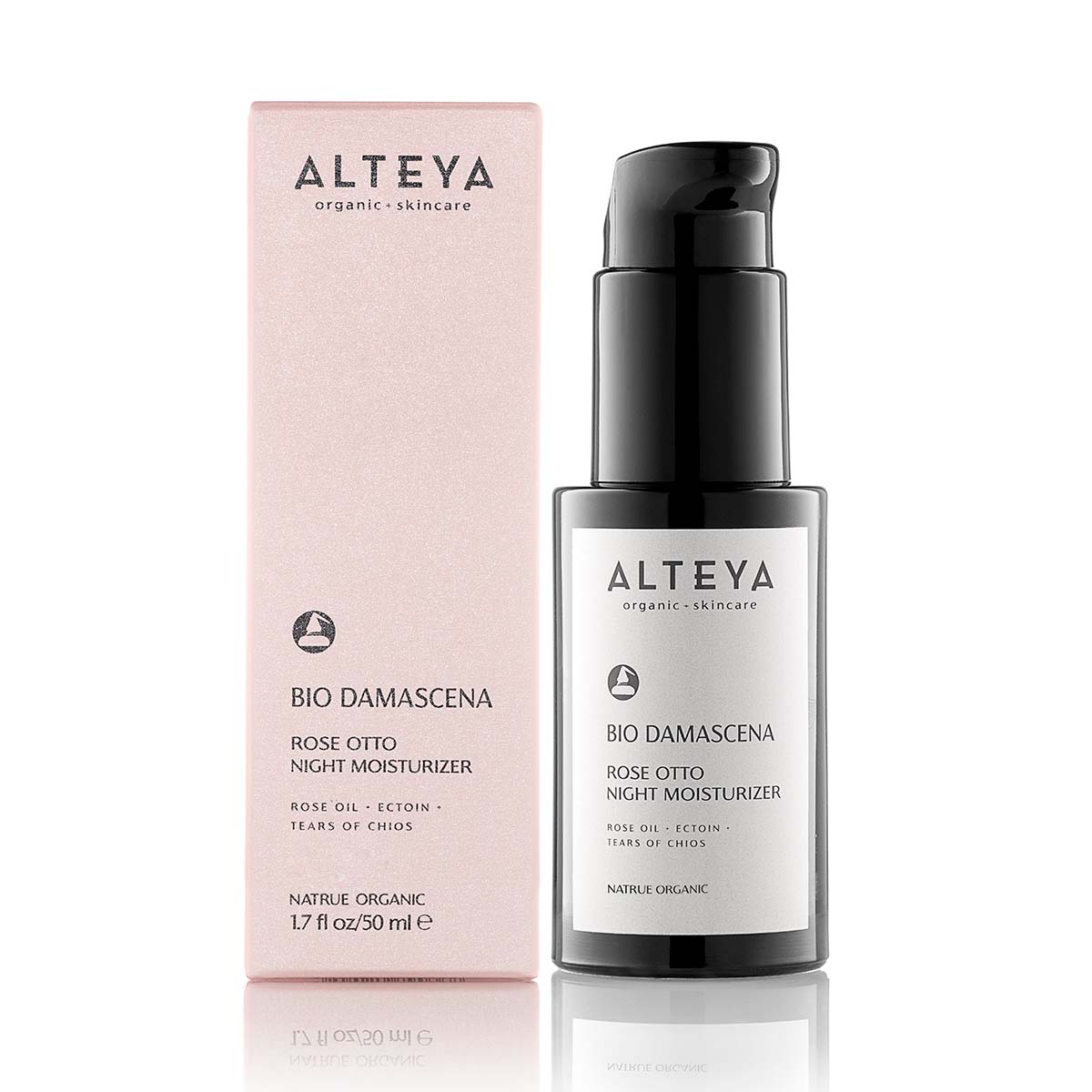
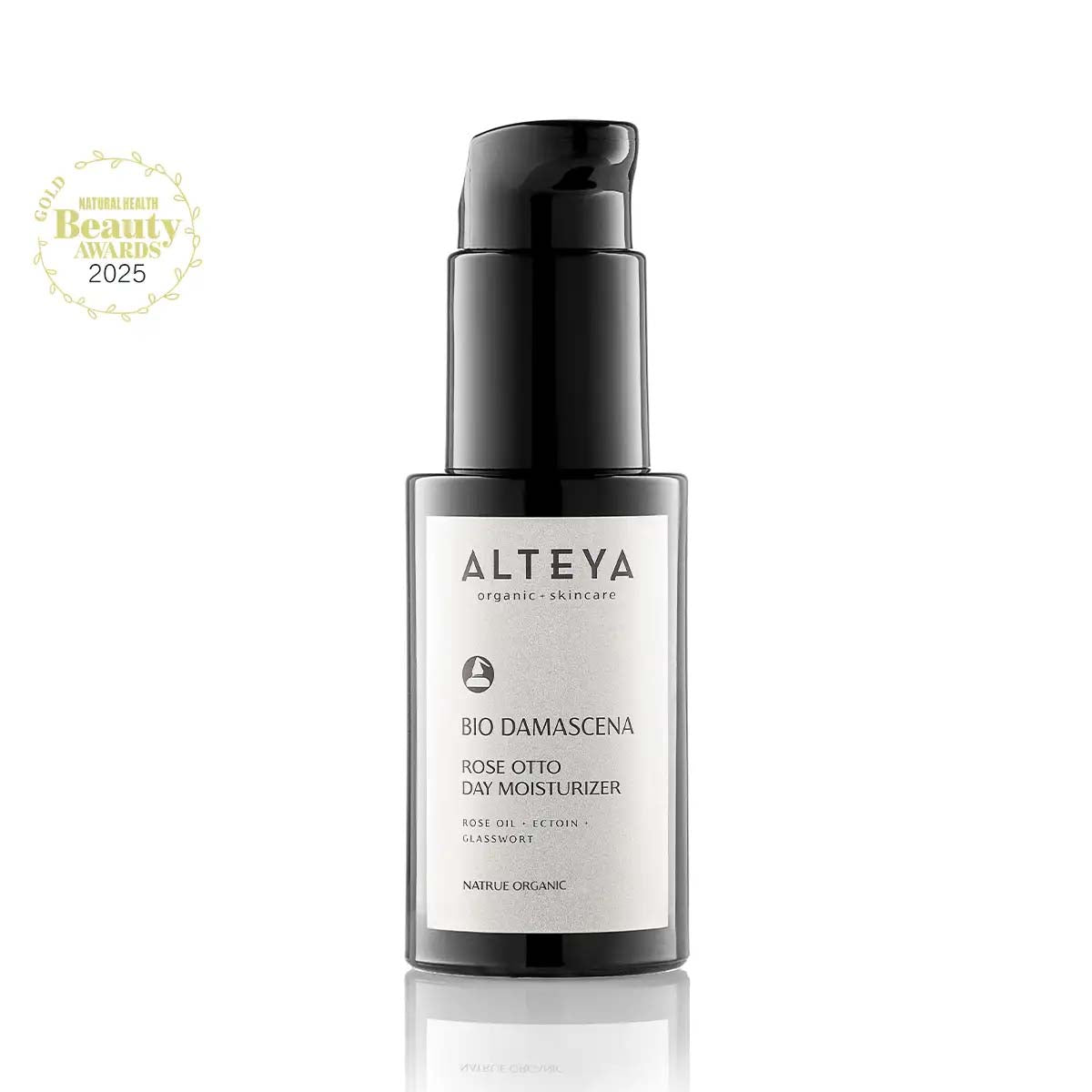
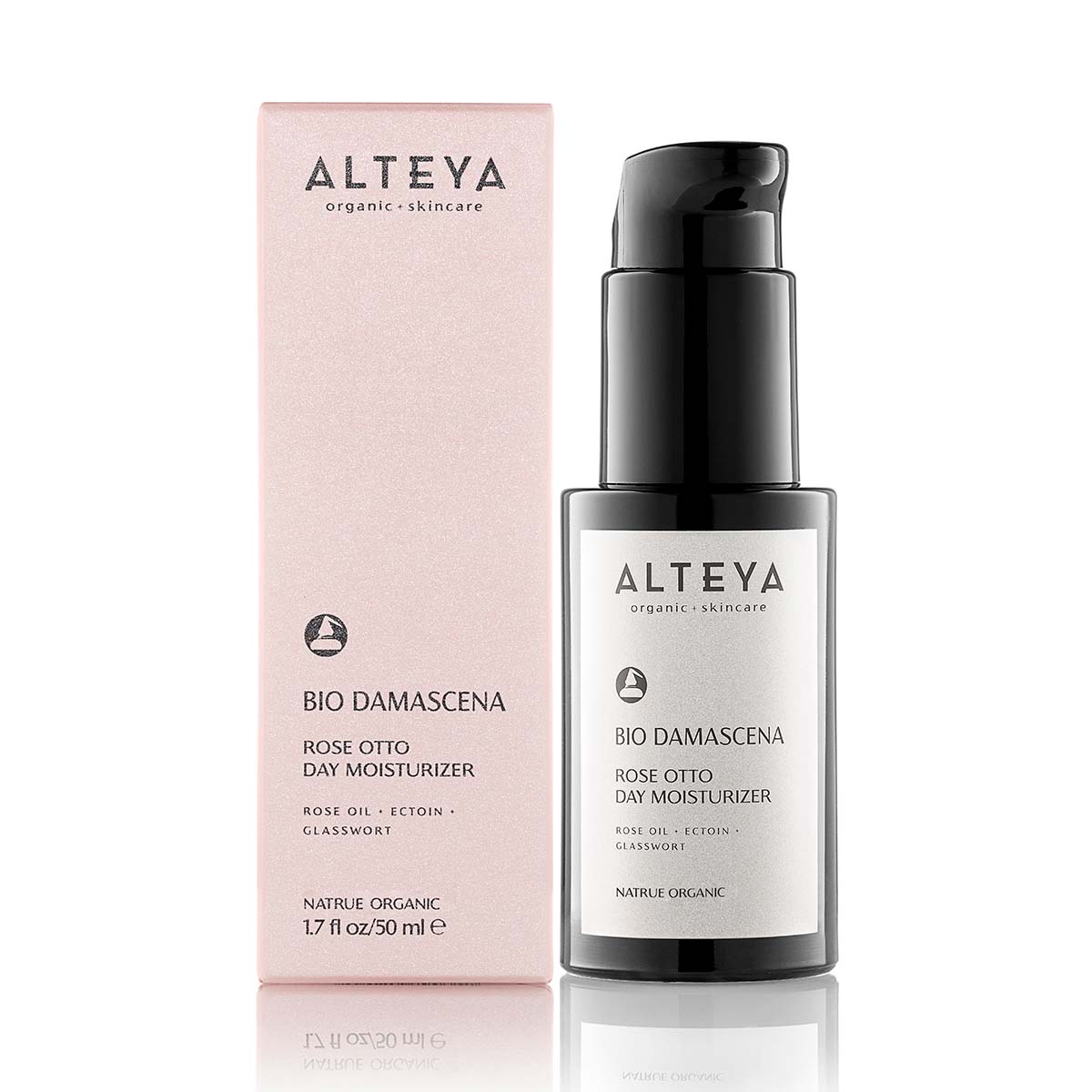
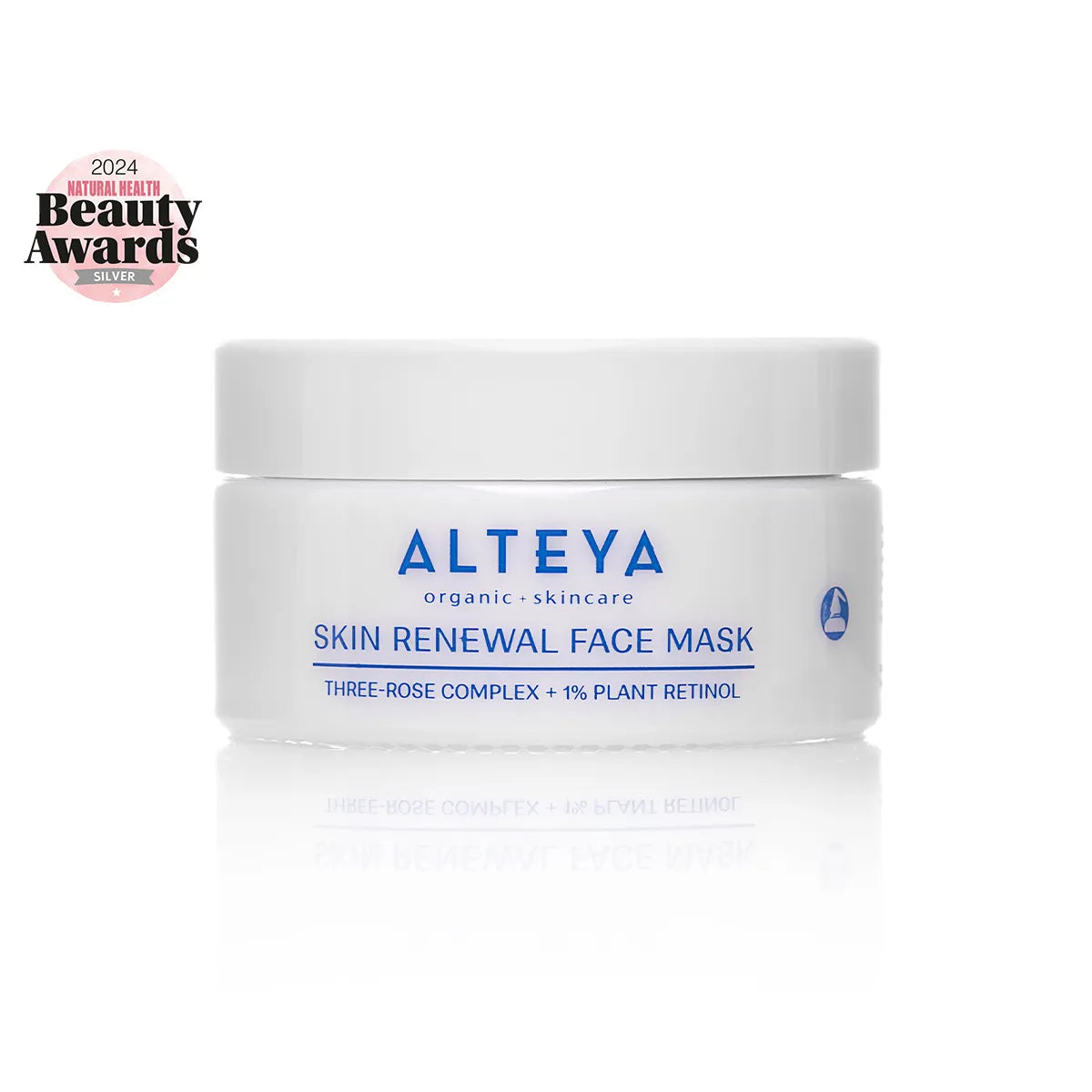
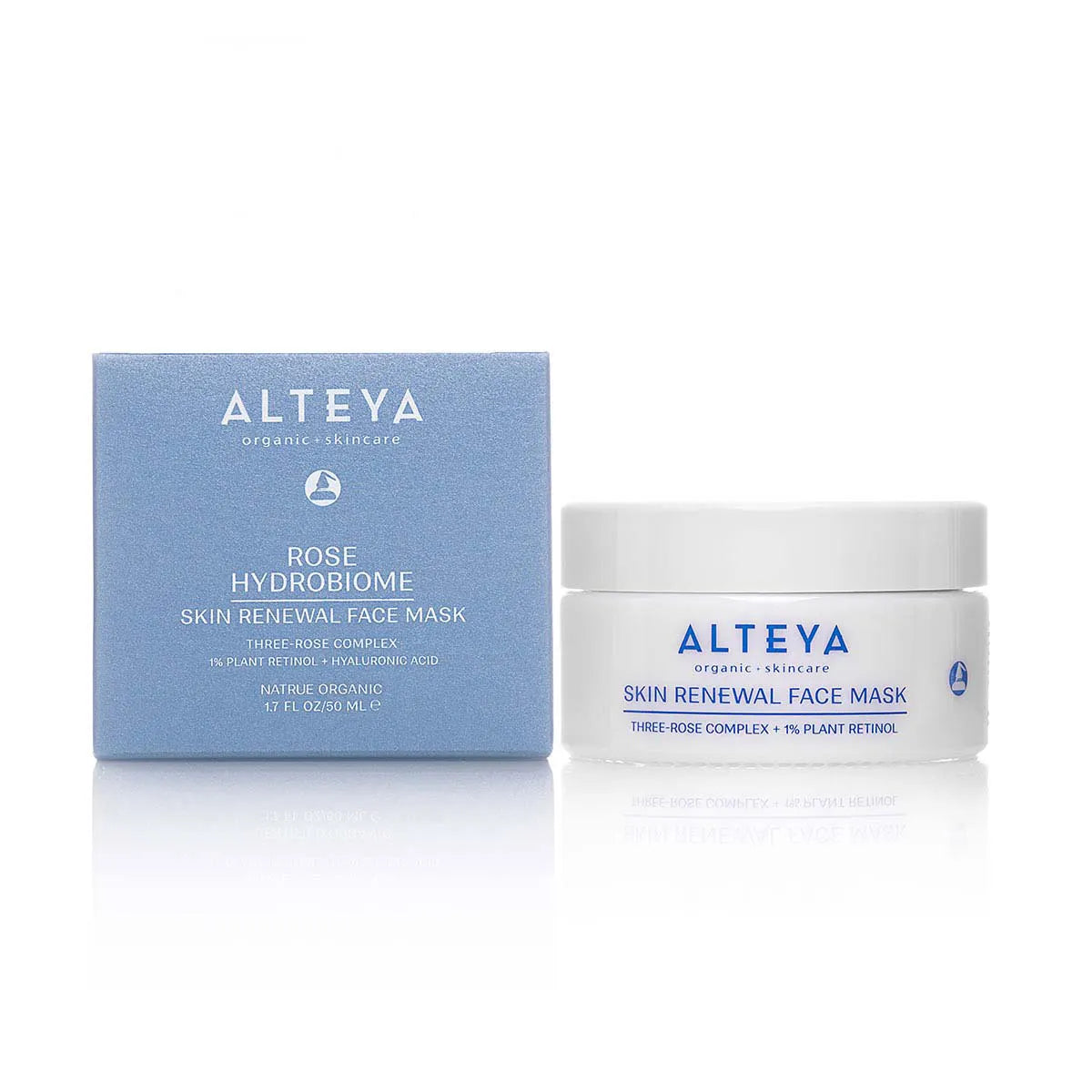
Organic moisturizers replace ordinary water with botanical hydrosols like Bulgarian rose water, producing a fundamentally more ingredient-rich base from the outset. Alteya Organics Bio Damascena Day Moisturizer contains 99% organic ingredients and uses certified organic Bulgarian Rose Otto as a core active.
Delivering a formulation density typically associated with premium face creams at a significantly lower price point.

Morning vs Evening: How Your Organic Routine Should Differ

A morning organic routine focuses on preparation and protection: cleanse lightly, tone with Bulgarian rose water, apply a hydrating serum, and moisturise. Always follow with broad-spectrum SPF in the morning - no organic skincare routine replaces sun protection.
An evening routine focuses on recovery and deeper treatment: cleanse thoroughly to remove SPF and pollution, tone, apply a targeted serum (bakuchiol or a treatment serum), and moisturise. The evening is the optimal time to add a face oil as a final sealing step, as overnight skin renewal cycles make barrier support most effective during sleep.

How Long Does It Take to See Results from an Organic Skincare Routine?

Most people notice improvements in skin feel and comfort within the first week of switching to a certified organic routine - particularly those previously using products with harsh synthetic surfactants that chronically disrupt the skin barrier.

Visible improvements in skin tone, texture, and radiance typically become apparent after 4–8 weeks of consistent daily use. Skin cell turnover completes approximately every 28 days, which is why meaningful textural change requires at least one full cycle of consistent product use.

The Three Most Common Mistakes When Building an Organic Skincare Routine

Mistake 1: Buying too many products at once. A foundational organic routine requires three products: cleanser, rose water toner, and moisturizer. Add a serum at week two once your skin has adjusted to the new formulations.

Mistake 2: Skipping patch testing. Even certified organic products contain botanical actives that some individuals may react to. Apply a small amount to the inner forearm and wait 24 hours before adding any new product to your routine.

Mistake 3: Inconsistency. Organic skincare works through consistent daily use. Using products three times per week produces noticeably weaker results than a consistent morning-and-evening routine - and extends the visible improvement timeline from 4–8 weeks to 12 weeks or more.

How to Transition to an Organic Skincare Routine (Step-by-Step Plan)

Start by replacing your conventional toner with certified organic Bulgarian rose water.

  • Suitable for all skin types
  • Single-ingredient formula with low irritation risk
  • Helps balance skin pH and prepare the skin for further steps

👉 This is the safest first step because it integrates easily into any existing routine.

Why Choose Alteya Organics for Your Certified Organic Routine?

Alteya Organics is the only certified organic skincare brand to operate its own Rosa Damascena rose fields in the Bulgarian Rose Valley - the world’s most concentrated source of commercial Rosa Damascena cultivation. This direct farm-to-formula ownership means the Bulgarian certified organic producer controls every stage from cultivation and distillation through to finished formulation, with no intermediary supply chain.

The Rose Valley-based brand holds three independent international certifications - USDA Certified Organic, NATRUE Certified, and EU Organic Certified - independently verified by external certifying bodies, not self-declared. The family-owned Bulgarian brand produces Bulgarian Rose Otto, rose water, and finished skincare formulations under one certified organic supply chain, a level of vertical integration rare in the organic beauty sector.

Start your organic routine with a certified organic cleanser, then tone with Bulgarian rose water. Follow with a targeted serum and seal with an organic moisturizer. For a complete premium routine in one certified line, explore the Bio Damascena collection. Discover the full organic skincare range.

FREQUENTLY ASKED QUESTIONS

An organic skincare routine is a daily sequence of certified organic products - cleanser, toner, serum, and moisturizer - applied to the face to cleanse, balance, treat, and protect the skin. 'Certified organic' means the ingredients are grown without synthetic pesticides, herbicides, or GMOs, and the final formulations are verified free from parabens, synthetic fragrances, and petrochemicals by an independent certifying body.

Article: How to Build an Organic Skincare Routine from Scratch: A Complete Step-by-Step Guide

skincare

How to Build an Organic Skincare Routine from Scratch: A Complete Step-by-Step Guide

An organic skincare routine is a daily sequence of certified plant-based formulations - cleanser, toner, serum, and moisturizer - verified free from synthetic pesticides, parabens, synthetic fragrances, and petrochemicals. Effective organic face care does not require ten steps or expensive products: three to five well-chosen, genuinely certified formulations are sufficient to deliver consistent results. Alteya Organics, a Bulgarian brand holding three independent organic certifications - USDA Certified Organic, NATRUE Certified, and EU Organic Certified - produces a complete certified organic range sourced directly from its own Rosa Damascena fields in the Bulgarian Rose Valley, covering every step from cleanse to treatment.

Leave a comment

This site is protected by hCaptcha and the hCaptcha Privacy Policy and Terms of Service apply.

Read more

Bulgarian Rose Water
skincare

What Is Bulgarian Rose Water and Why Is It Different from Regular Rose Water?

Bulgarian rose water is a pure, steam-distilled hydrosol made from fresh Rosa Damascena blossoms hand-harvested at sunrise in Bulgaria's Rose Valley. It contains nothing but the water-soluble essen...

Read more
Bakuchiol vs Retinol
skincare

Bakuchiol vs Retinol: The Complete Guide to the Organic Retinol Alternative

Bakuchiol is a plant-derived compound extracted from the seeds of the Babchi plant (Psoralea corylifolia), used in certified organic skincare as a clinically validated natural alternative to retinol.

Read more