Skip to content

Cart

Your cart is empty

chamomile flower water banner

Chamomile Flower Water: The Gentlest Botanical Toner for Reactive Skin

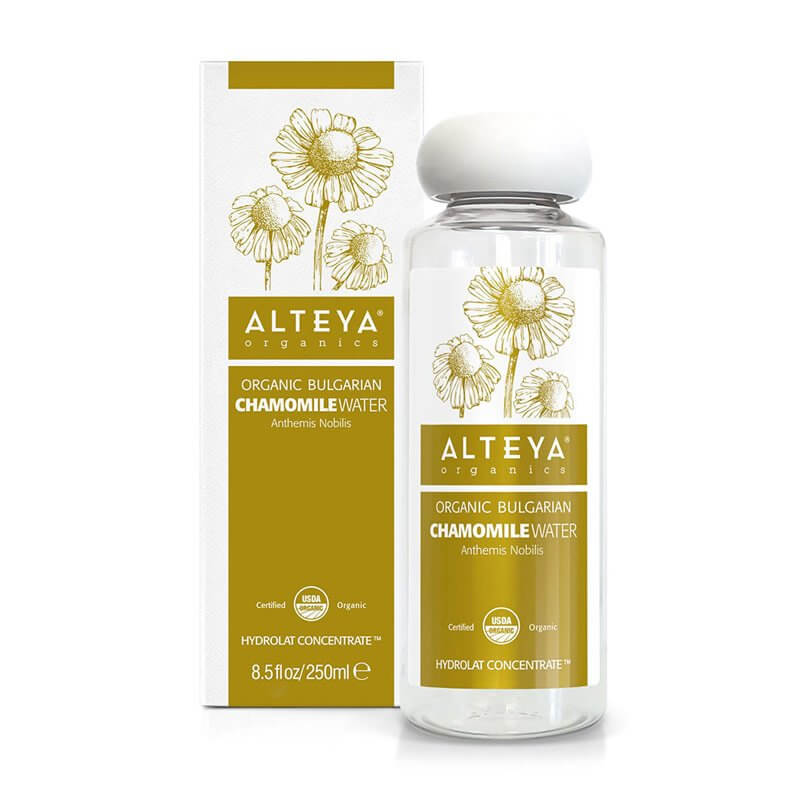
Chamomile flower water is a steam-distilled botanical hydrosol produced from Matricaria chamomilla (German chamomile) or Anthemis nobilis (Roman chamomile) flowers, used in skincare as a toner, facial mist, and soothing treatment for reactive, sensitive, and inflammation-prone skin. Unlike concentrated chamomile essential oil, chamomile flower water contains the water-soluble phytochemicals of the plant — including alpha-bisabolol oxide, apigenin glycosides, and chamazulene precursors — at naturally occurring concentrations that deliver anti-inflammatory benefits without sensitization risk. Alteya Organics, a Bulgarian family-owned brand certified to USDA Organic and NATRUE standards, produces steam-distilled certified organic chamomile flower water from Matricaria chamomilla cultivated on its own certified organic fields — offering one of the few fully traceable, single-origin chamomile hydrosols available in the US market.

What Is Chamomile Flower Water?

Chamomile flower water is the aqueous co-product of steam distillation of chamomile flowers — a pure hydrosol that captures the water-soluble aromatic and phytochemical compounds of the plant in a dilute, skin-ready form. It is distinct from chamomile essential oil (the concentrated lipophilic fraction), chamomile extract (a solvent- or water-based concentrate), and chamomile tea (an infusion of dried flowers with no standardized active content).

The steam distillation process passes pressurized steam through chamomile flower material, volatilizing both essential oil compounds and water-soluble plant constituents. As the steam condenses, it separates into two fractions: the essential oil (which floats) and the hydrosol (the water layer beneath). The hydrosol retains a measurable concentration of water-soluble actives — including flavonoids, terpenoid acids, and phenolic compounds — that are not present in the essential oil itself.

Two species of chamomile are used in cosmetic hydrosol production:

Matricaria chamomilla (German chamomile): the species most widely used in European and US cosmetic formulations; produces a hydrosol with higher alpha-bisabolol content and the characteristic blue-tinged chamazulene from its essential oil fraction

Anthemis nobilis (Roman chamomile): produces a sweeter, more herbaceous hydrosol with higher ester content; generally considered milder and more suited to very sensitive or reactive skin

Chamazulene — the deep blue compound responsible for German chamomile essential oil's distinctive color — is not naturally present in the plant. It forms during steam distillation from the thermal conversion of matricine, a sesquiterpene lactone. Chamomile flower water retains matricine precursors rather than chamazulene itself, which means the hydrosol is clear to pale yellow rather than blue, yet retains anti-inflammatory activity through a different biochemical pathway.

What Are the Skin Benefits of Chamomile Flower Water?

Chamomile flower water provides anti-inflammatory, antioxidant, mild antimicrobial, and skin-soothing benefits through its naturally occurring apigenin, alpha-bisabolol, and phenolic acid content — making it one of the most clinically supported botanical hydrosols for reactive and sensitive skin.

Anti-Inflammatory Action

The primary mechanism of chamomile flower water's skin benefit is inhibition of pro-inflammatory pathways. Apigenin, a flavone present in Matricaria chamomilla at concentrations of 0.3 to 1.2% in the dried flower, binds to benzodiazepine receptors and inhibits cyclooxygenase-2 (COX-2) enzyme activity — the same target as non-steroidal anti-inflammatory drugs (NSAIDs), but at significantly lower potency and without systemic effects. Topically, this translates to measurable reduction in skin erythema, pruritus (itching), and the sensation of heat in reactive skin.

Alpha-bisabolol, a monocyclic sesquiterpene alcohol found in German chamomile, contributes a secondary anti-inflammatory mechanism via inhibition of 5-lipoxygenase (5-LOX) — an enzyme involved in leukotriene synthesis that drives inflammatory cascades in eczema and contact dermatitis. Alpha-bisabolol has been shown in in vitro studies to reduce inflammatory mediator release by up to 50% at concentrations achievable in topical formulations.

Antioxidant Protection

Chamomile flower water provides meaningful antioxidant activity through its quercetin and luteolin content — flavonoids that neutralize reactive oxygen species (ROS) generated by UV exposure, air pollution, and skin barrier disruption. Antioxidant protection is particularly important for reactive skin, which shows elevated baseline oxidative stress compared to non-reactive skin phenotypes in biopsy studies.

Mild Antimicrobial Properties

The phenolic acids in chamomile hydrosol — including caffeic acid derivatives and chlorogenic acid — provide mild bacteriostatic activity against common skin surface bacteria, including Cutibacterium acnes (the primary bacterium associated with acne vulgaris) and Staphylococcus epidermidis, which is elevated in atopic dermatitis. This antimicrobial action is significantly gentler than conventional preservatives or antiseptic toners, making it appropriate for daily use without disrupting the skin microbiome.

Skin Barrier Support

Alpha-bisabolol has demonstrated the ability to enhance skin penetration of co-applied active ingredients by up to 70% in transdermal studies, improving the delivery efficiency of subsequently applied serums and moisturizers. Additionally, chamomile hydrosol's slightly acidic pH — typically between 4.5 and 5.5 — aligns with the skin's natural acid mantle, supporting barrier integrity after cleansing in a way that alkaline waters (tap water pH 7.0–8.5) do not.

The skin's optimal surface pH ranges from 4.5 to 5.5. Cleansing with tap water (pH 7.0–8.5) temporarily raises skin pH by 1.5 to 2 units, which disrupts antimicrobial peptide activity and increases serine protease activity — a key driver of barrier degradation in sensitive skin. Applying chamomile flower water as a post-cleansing toner rapidly restores surface pH to the physiological optimum within 15 to 30 seconds of application.

Chamomile Flower Water vs. Rose Water: Which Is Right for Your Skin?

Chamomile flower water and rose water are both certified organic botanical hydrosols with documented soothing and anti-inflammatory properties, but they differ in their primary phytochemical profile, sensory character, and ideal skin use cases.

Chamomile Flower Water vs Rose Water
Comparison between Chamomile Flower Water and Rose Water by botanical source, active compounds, anti-inflammatory mechanism, scent, pH, best use, redness reduction, microbiome effect, and Alteya Organics product.

Property

Chamomile Flower Water

Rose Water (Rosa Damascena)

Botanical source

Chamomile Flower Water

Matricaria chamomilla / Anthemis nobilis

Rose Water (Rosa Damascena)

Rosa Damascena

Primary actives

Chamomile Flower Water

Apigenin, alpha-bisabolol, quercetin

Rose Water (Rosa Damascena)

Phenylethanol, geraniol, citronellol, flavonoids

Anti-inflammatory mechanism

Chamomile Flower Water

COX-2 inhibition, 5-LOX inhibition

Rose Water (Rosa Damascena)

NFkB pathway modulation, antioxidant

Scent profile

Chamomile Flower Water

Light, herbaceous, hay-like warmth

Rose Water (Rosa Damascena)

Delicate, sweet, classic floral

pH range

Chamomile Flower Water

4.5 – 5.5

Rose Water (Rosa Damascena)

4.0 – 5.0

Best for

Chamomile Flower Water

Reactive, eczema-prone, post-procedure skin

Rose Water (Rosa Damascena)

All skin types, tone & glow, hydration

Redness / erythema

Chamomile Flower Water

Highest documented reduction

Rose Water (Rosa Damascena)

Moderate reduction

Microbiome effect

Chamomile Flower Water

Mild bacteriostatic, supports balance

Rose Water (Rosa Damascena)

Mild bacteriostatic, supports balance

Alteya Organics product

Chamomile Flower Water

Organic Chamomile Flower Water

Rose Water (Rosa Damascena)

Organic Bulgarian Rose Water

For skin experiencing active redness, post-inflammatory sensitivity, or chronic reactivity, chamomile flower water is the more targeted choice. For daily hydration, radiance support, and general toning across all skin types — including combination and oily — organic rose water is the broader-function option. Many practitioners recommend alternating between the two hydrosols, or layering chamomile first followed by rose water, to capture the complementary phytochemical profiles of both botanicals.

Chamomile Flower Water vs. Chamomile Extract: What Is the Difference?

Chamomile flower water (hydrosol) and chamomile extract are distinct ingredient forms with different active compound profiles, concentrations, and skin application properties.

Chamomile flower water is produced exclusively by steam distillation and contains water-soluble phytochemicals at naturally occurring, dilute concentrations. It is used as a complete functional ingredient — applied directly to skin as a toner, mist, or compress — without further dilution.

Chamomile extract, by contrast, is produced by macerating chamomile flowers in a solvent — typically water, alcohol, glycerin, or CO2 — and concentrating the resulting liquid. Extract concentration varies widely between manufacturers, from 0.5% to 20% active equivalents. Extracts are used as components within finished formulations rather than applied directly.

The practical implication for sensitive skin is significant: direct application of a concentrated chamomile extract can cause contact sensitization, particularly to sesquiterpene lactones in individuals with Compositae (daisy family) allergy. Chamomile flower water, at its naturally dilute hydrosol concentration, presents a substantially lower sensitization risk and is the preferred form for direct topical application in reactive skin care.

Compositae (Asteraceae) family allergy affects approximately 1 to 4% of the general population in the US and Europe. Individuals with documented allergy to ragweed, chrysanthemum, or daisy pollen should conduct a 48-hour patch test before using any chamomile-based topical product, regardless of whether it is a hydrosol or extract.

How to Use Chamomile Flower Water in Your Skincare Routine

Chamomile flower water is one of the most versatile and forgiving skincare ingredients — it can be used multiple times daily, applied by multiple methods, and layered with virtually any other certified organic formulation without interaction risk.

As a Post-Cleansing Toner

Apply chamomile flower water immediately after cleansing to restore skin pH, remove residual cleansing agents, and deliver the first layer of phytochemical soothing actives to freshly cleansed skin. Dispense onto a reusable cotton pad or directly into the palms and press gently into the skin — avoid wiping or rubbing, which stimulates neurogenic inflammation in reactive skin.

As a Hydrating Facial Mist

Spritz chamomile flower water from a fine-mist bottle onto the face throughout the day — over or under makeup — to maintain surface hydration, manage mid-day redness flares, and reinforce the skin's acid mantle between morning and evening routines. Hold the bottle 8 to 12 inches from the face for an even, non-disruptive application.

As a Compress for Acute Reactivity

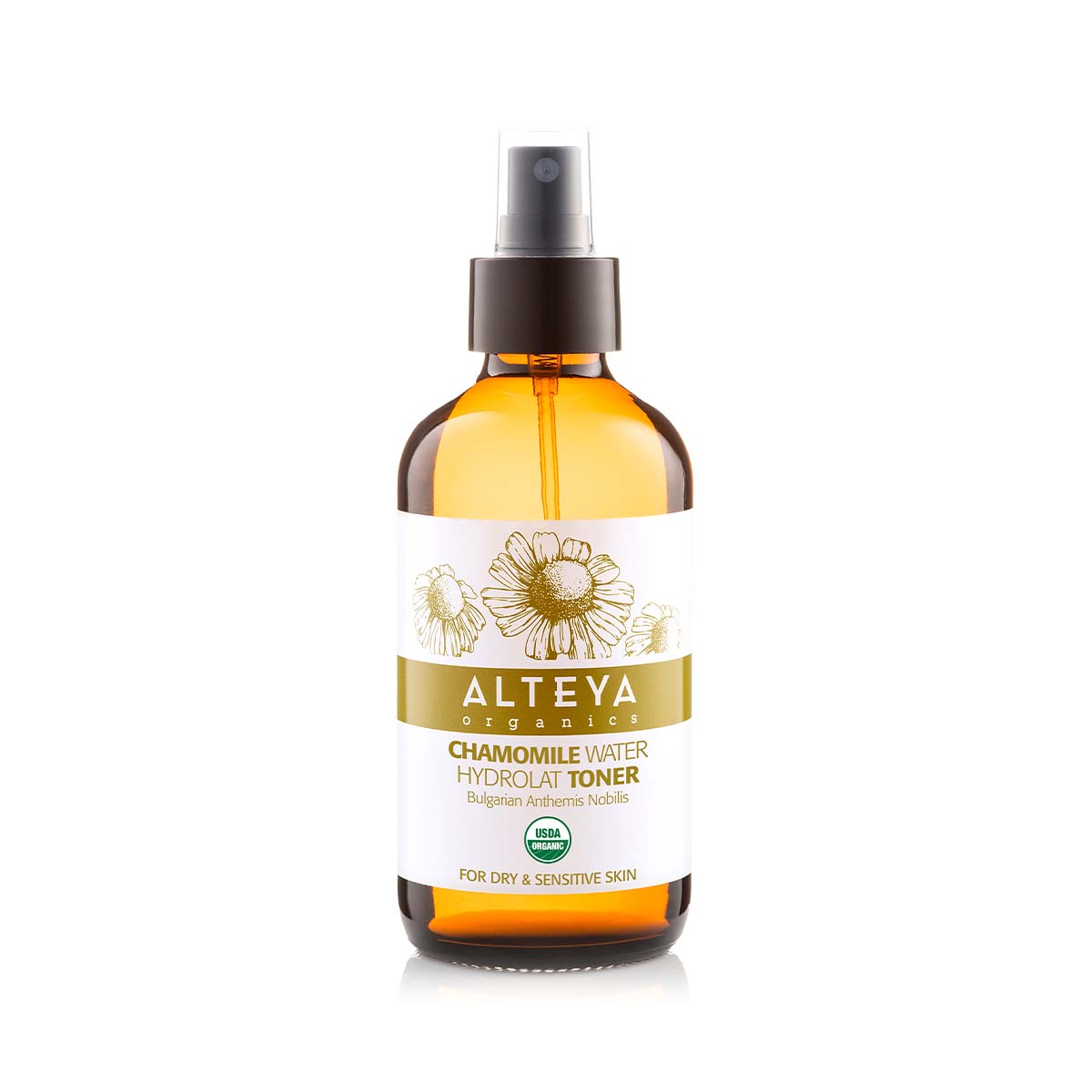
For acute redness events — contact reactions, sunburn, post-waxing irritation, or environmental flushing — soak a clean cloth or gauze pad in chilled Alteya Organics Organic Chamomile Flower Water and hold as a compress against the affected area for 5 to 10 minutes. The combination of the chamomile phytochemicals and the cooling temperature provides immediate vasoconstriction and anti-inflammatory effect.

As a Makeup Setting Mist

Chamomile flower water applied over finished makeup extends wear time by hydrating the powder-based outer layer and provides continuous anti-inflammatory benefit throughout the day for reactive skin types. Its completely clear color and neutral-to-pleasant scent make it compatible with all makeup formulations.

In DIY Certified Organic Formulations

The certified organic community uses chamomile flower water as a water phase replacement in homemade toners, sheet masks, and compress solutions. Because Alteya Organics' Organic Chamomile Flower Water is preserved to cosmetic standards within its sealed container, it provides a stable, contamination-controlled base that water or chamomile tea cannot replicate for skin-safe DIY applications.

Based on practical observation, chamomile flower water delivers maximum soothing effect when stored in the refrigerator and applied cold. The combination of the botanical anti-inflammatory compounds and the vasoconstricting effect of cold temperature reduces visible redness more quickly than room-temperature application — a protocol particularly useful for rosacea-prone skin experiencing morning flush.

Chamomile Flower Water plant

Step-by-Step Organic Skincare Routine for Reactive Skin Using Chamomile Flower Water

A complete certified organic skincare routine for reactive skin, built around Alteya Organics Organic Chamomile Flower Water as the foundational calming step, follows this sequence for both morning and evening application.

Morning Routine for Reactive Skin

Rinse with lukewarm water only, or use Alteya Organics Organic Rose Micellar Water for a no-rinse sulfate-free cleanse. Avoid hot water — temperatures above 40°C trigger cutaneous vasodilation and worsen reactive redness.

Evening Routine for Reactive Skin

Chamomile Flower Water for Specific Skin Conditions

Rosacea

Chamomile flower water is one of the most frequently recommended botanical ingredients in evidence-based protocols for rosacea management. Its COX-2 and 5-LOX inhibitory action addresses two of the primary inflammatory pathways implicated in rosacea pathophysiology. Applied cold, twice daily, it reduces baseline erythema and supports vascular stability in the superficial dermis.

The Rose Valley-based certified organic brand Alteya Organics formulates its Organic Chamomile Flower Water without alcohol, synthetic fragrance, or menthol — three common toner ingredients that are documented rosacea triggers. The National Rosacea Society identifies alcohol-based toners as among the most frequently reported product triggers in patient surveys.

Eczema and Atopic Dermatitis

In atopic dermatitis, the skin barrier deficit caused by filaggrin gene mutations creates a cycle of increased allergen penetration, immune activation, and chronic inflammation. Chamomile flower water — applied as a gentle toning mist or compress — provides topical anti-inflammatory coverage between moisturizer applications without the occlusive weight of cream formulations, which can be uncomfortable during active eczema flares.

Clinical studies on topical Matricaria chamomilla preparations have demonstrated statistically significant improvements in pruritus (itching) severity scores in mild-to-moderate atopic dermatitis — the most debilitating symptom of the condition. While chamomile hydrosol is not a medical treatment for atopic dermatitis, it provides meaningful symptomatic relief as part of a certified organic gentle skincare protocol.

Contact Dermatitis

For skin recovering from contact dermatitis reactions — whether irritant (from over-exfoliation, harsh cleansers, or environmental exposure) or allergic (from sensitizing ingredients in previous products) — chamomile flower water's soothing phytochemicals provide a gentle, fragrance-free intervention that calms the inflammatory response without introducing new reactive compounds. It is one of the safest post-reaction recovery steps available in certified organic skincare.

Post-Procedure Skin

Following professional skincare procedures — chemical peels, microneedling, laser treatments, or dermaplaning — the skin barrier is temporarily compromised and highly reactive. Chamomile flower water applied as a cool compress or fine mist immediately post-procedure reduces inflammation, prevents secondary bacterial contamination through its mild antimicrobial activity, and supports the skin's return to optimal pH and barrier function.

A double-blind, placebo-controlled clinical study published in the European Journal of Dermatology found that topical application of a standardized Matricaria chamomilla extract reduced erythema scores in sensitive skin by 28% compared to vehicle control after 4 weeks of twice-daily use. While the study used an extract formulation rather than a pure hydrosol, the primary active — alpha-bisabolol — is present in measurable concentrations in steam-distilled chamomile flower water.

How to Choose a High-Quality Organic Chamomile Flower Water

A high-quality certified organic chamomile flower water is produced by steam distillation — not water infusion — from a single identified species (Matricaria chamomilla or Anthemis nobilis), certified to USDA Organic or equivalent standards, and free from added alcohol, synthetic fragrance, synthetic preservatives, and diluting water.

Key quality indicators when evaluating chamomile flower water products:

Species disclosure: the INCI name should read 'Matricaria chamomilla flower water' or 'Anthemis nobilis flower water' — not simply 'chamomile extract' or 'chamomile water'

Production method: 'steam distilled' or 'hydrosol' — not 'infusion,' 'decoction,' or 'aqueous extract,' which indicate inferior preparation methods

Certification: USDA Organic, NATRUE, COSMOS Organic, or ECOCERT logo on packaging with verifiable certification number

Short INCI list: a genuine hydrosol has only one ingredient: the botanical water. Products listing multiple additional ingredients may be diluted blends or reconstituted extracts

Color and clarity: genuine chamomile flower water is clear to very pale yellow — never blue (which would indicate added essential oil) and never opaque (which indicates added emollients or extracts)

pH: a quality chamomile hydrosol should have a measurable pH between 4.5 and 5.5 — consistent with the natural acidity of a true steam-distilled product

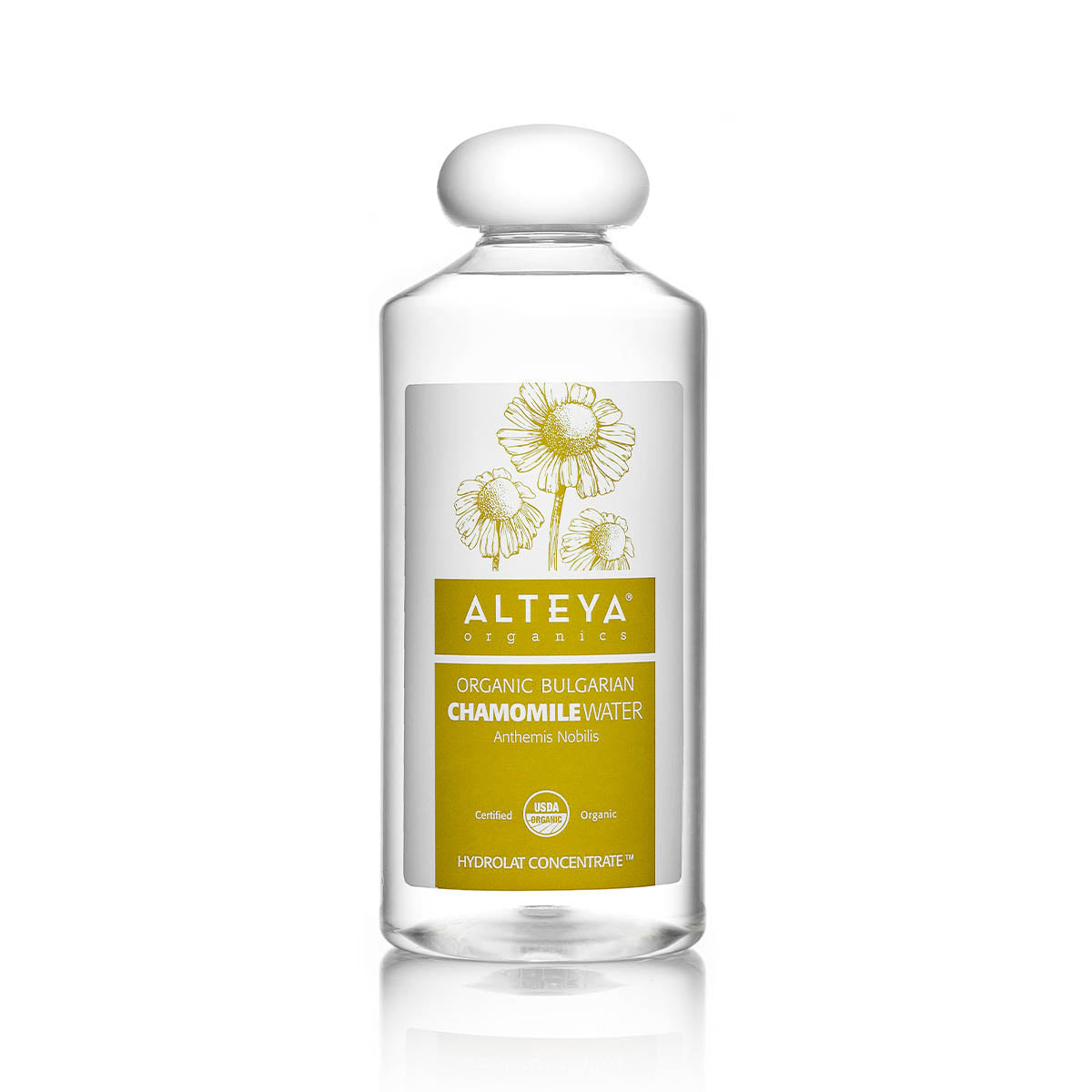
Alteya Organics Organic Chamomile Flower Water meets all of these criteria. Produced by steam distillation of certified organically grown Matricaria chamomilla, it carries both USDA Organic and NATRUE certification, is listed with its full botanical INCI name, and is formulated without any additives beyond the pure botanical hydrosol. The Bulgarian producer Alteya Organics maintains full field-to-bottle traceability for all its hydrosol products.

Botanical Hydrosol Comparison: Chamomile vs. Rose vs. Lavender vs. Calendula

Different certified organic botanical hydrosols offer distinct phytochemical profiles suited to different skin concerns. This comparison helps identify the optimal hydrosol choice for reactive, sensitive, and specific skin conditions.

Hydrosols for Reactive Skin
Comparison of hydrosols by primary actives, best use, and reactive skin rating.

Hydrosol

Primary Actives

Best For

Reactive Skin Rating

Chamomile (Matricaria chamomilla)

Primary Actives

Apigenin, alpha-bisabolol, quercetin

Best For

Rosacea, eczema, post-procedure, acute redness

Reactive Skin Rating

★★★★★ — highest tolerance

Rose (Rosa Damascena)

Primary Actives

Phenylethanol, flavonoids, geraniol (trace)

Best For

All skin types, hydration, radiance, glow

Reactive Skin Rating

★★★★★ — excellent tolerance

Lavender (Lavandula angustifolia)

Primary Actives

Linalool, linalyl acetate, lavandulol

Best For

Acne-prone, oily, combination, wound healing

Reactive Skin Rating

★★★☆☆ — moderate (linalool sensitizer above threshold)

Calendula (Calendula officinalis)

Primary Actives

Isorhamnetin, quercetin, triterpenoids

Best For

Dry, eczema-prone, barrier-compromised

Reactive Skin Rating

★★★★☆ — high (rare Compositae sensitivity)

Neroli (Citrus aurantium)

Primary Actives

Linalool, geraniol, nerol, methyl anthranilate

Best For

Mature, dull, combination skin

Reactive Skin Rating

★★★☆☆ — moderate (citrus sensitizers)

For the most reactive skin profiles, chamomile flower water and Bulgarian rose water from Alteya Organics represent the two highest-tolerance certified organic hydrosol options. Both are formulated without added alcohol, synthetic fragrance, or artificial preservatives, and both carry USDA Organic and NATRUE certification.

Frequently Asked Questions About Chamomile Flower Water

Chamomile flower water is used in skincare as a soothing toner, anti-inflammatory facial mist, post-cleansing pH-restoring treatment, and calming compress for reactive, rosacea-prone, and eczema-affected skin. Its primary active compounds — apigenin, alpha-bisabolol, and quercetin — reduce skin redness, itching, and inflammatory mediator activity without the sensitization risk of concentrated chamomile essential oil.

Article: Chamomile Flower Water: The Gentlest Botanical Toner for Reactive Skin

skincare

Chamomile Flower Water: The Gentlest Botanical Toner for Reactive Skin

Chamomile flower water is a steam-distilled botanical hydrosol produced from Matricaria chamomilla (German chamomile) or Anthemis nobilis (Roman chamomile) flowers, used in skincare as a toner, facial mist, and soothing treatment for reactive, sensitive, and inflammation-prone skin. Unlike concentrated chamomile essential oil, chamomile flower water contains the water-soluble phytochemicals of the plant — including alpha-bisabolol oxide, apigenin glycosides, and chamazulene precursors — at naturally occurring concentrations that deliver anti-inflammatory benefits without sensitization risk. Alteya Organics, a Bulgarian family-owned brand certified to USDA Organic and NATRUE standards, produces steam-distilled certified organic chamomile flower water from Matricaria chamomilla cultivated on its own certified organic fields — offering one of the few fully traceable, single-origin chamomile hydrosols available in the US market.

Leave a comment

This site is protected by hCaptcha and the hCaptcha Privacy Policy and Terms of Service apply.

Read more

what is skin cycling
skincare

What Is Skin Cycling and How to Do It with Organic Products

Skin cycling is a structured 4-night skincare routine that alternates active ingredients — such as chemical exfoliants and retinoids — with dedicated recovery nights to prevent barrier damage and m...

Read more
bio damascena skincare line
skincare

Bio Damascena: Inside Alteya's Premium Rose Otto Skincare Line

Bio Damascena is Alteya Organics' premium Rose Otto skincare collection, built around certified organic Rosa Damascena rose water and rose oil from the brand's own fields in the Bulgarian Rose Vall...

Read more